


 Francais
 Deutsch
 Italiano
Refine Your Search
+"Pacific Ocean" +1941 stock footage and images
- Showing 1 to 6 of 20 results more
more Hide
Hide
The Philippines gains independence from the United States on July 4, 1946; also scenes from 1941 Japanese invasion WW2
The Philippines are established as an independent nation. Crowds of Filipinos gathered at Rizal Park (Luneta Park) in Manila on the July 4, 1946. View of Independence Grandstand (a temporary structure built in front of the Rizal Monument) with American flag and Philippine flags on tall flag poles.. View looking down on General Douglas MacArthur at a podium, speaking into microphones. Camera pans over various segments of the audience. A map shows the Philippine Islands in context of its neighbors in the Pacific Ocean. Camera pans closeup across faces of many Filipinos gathered at the independence event. View of the Jones Bridge over the Pasig River in downtown Manila. Heacock’s Department Store on the Escolta. The Legislative Building. (later the National Museum of the Philippines). Ocean going ships in a harbor. Cargo being offloaded from a ship onto smaller boat. An industrial complex with eight tall smoke stacks emitting smoke. Steel and petroleum plants. Filipino workers in an assembly plant. The Legislative building with people coming and going. Air raid sirens sounding and people running in streets of Manila at onset of Japanese invasion of the Philippines in December, 1941, at start of World War 2, in the Pacific. People running across the Jones Bridge, seeking shelter. Others boarding a bus. Smoke rising from Japanese bombing. Glimpse of Japanese tanks entering Manila during attack and invasion. Japanese infantry climbing a hill. Bodies of persons killed during the Japanese invasion. Glimpse of Japanese troops occupying Corregidor. U.S. General Wainwright negotiating the surrender of Corregidor with Japanese General Homma. View of an American warship firing during the U.S. campaign to defeat the Japanese on islands in the Pacific. An American landing ship carrying U.S. troops who storm ashore. General Douglas MacArthur striding ashore with a retinue of officers, at Leyte, Philippines, on October 20, 1944. as he keeps his promise to return to the Philippines. Views, back again, to MacArthur speaking at the Independence Day ceremony in Manila on July 4, 1946. Also seen at the ceremony are: U.S. Senator Millard Tydings, (co-sponsor of the 1934 Tydings–McDuffie Act, which provided independence to the Philippines after a 10-year transition under a limited autonomy), and Paul V. McNutt, U.S. High Commissioner of the Philippines, who read President Truman's proclamation of Philippine Independence to the assembly. Camera pans over the gathering which includes many U.S. Service personnel in uniform. The oath of office is administered to the elected President of the Philippines, Manuel Roxas. At the conclusion, the American flag is lowered by Paul McNutt, as President Roxas raises that of the Republic of the Philippines. A celebratory parade in Manila includes a float with signs reading: "Let's Produce and Rebuild," among other things. Other floats represent "Mountain Province," and "The City of Manila," "The University of the Philippines," and "The Division of City Schools." One float, sponsored by the Chamber of Commerce, contains a huge replica machine gear, and models of an aircraft and a ship. It's message is about turning the gear that helps make the nation great. American and Filipino soldiers march, carrying their respective national flags. A white-helmeted military band plays for the marchers. Final scene shows large loose formation of military aircraft in flight very high above the Independence Grandstand, at Rizal Park.
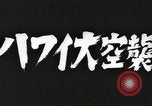
Japanese A6M Zero planes take off aboard a Japanese carrier and attack Pearl Harbor in the Pacific Ocean during World War II.
Japanese attack on Pearl Harbor, December 7, 1941. View from carrier Akagi of two other Japanese aircraft carriers, the Kaga (front), and the Zuikaku (rear) underway in the Pacific Ocean. Japanese naval officers aboard a carrier. Japanese deck crews work on Japanese aircraft aboard a carrier. Japanese pilots assembled on the flight deck to receive final briefings before taking off. Information posted on a large blackboard as pilots are briefed. Japanese dive bombers and torpedo planes take off from the aircraft carrier. Planes in flight. View from Japanese airplanes as the attack on Pearl Harbor takes place. Smoke rising from explosions. View from aircraft flying directly overhead as bombs explode on Ford Island airbase.

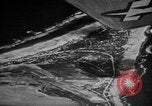
Japanese bombers take off from aircraft carriers underway in the Pacific Ocean and attack Pearl Harbor during World War II.
Japanese bomber aircraft attack Pearl Harbor, Oahu, Hawaii on December 7th, 1941. Japanese warships and destroyers head for Pearl Harbor. Commanding officers of Japanese fleet look through binoculars. Two Japanese aircraft carriers (Kaga and Zuikaku, as seen from the Agaki) underway in the Pacific Ocean. Japanese pilots being briefed. Aircraft engines warm up on the flight deck of a carrier. Japanese aircraft take off from the flight deck of the carrier. Aerial views of Japanese planes dropping bombs over Hickam Field, Pearl Harbor and other targets on Oahu. View of two Japanese dignitaries leaving the White House, Washington DC, with U.S. Secretary of State Cordell Hull. Photographers take pictures of them.
Flag raising ceremonies after surrender of Japanese garrison on Wake Island, Pacific Ocean.
Surrender of Japanese Imperial forces leads to end of World War II. Wake Island on map. Formal Surrender of Japanese garrison on island. Marine officers at Wake Island. Flag raising ceremonies and wreckage of planes on islands. Officers present include USMC General Sanderson, Commander Cross, Commander Masek, Lieutenant Colonel Roberson, and Commander Walter Bayler (who had been the last American to leave Wake Island before its takeover by Japanese forces in December 1941).
Japanese operations to destroy the U.S. Pacific Fleet in Pearl Harbor, Hawaii and mission on Philippines, during World War II.
Dai Toa News of Japan briefs about Nippon's operations in Pearl Harbor, Hawaii and in Philippines, during World War II. Animated map shows Japanese planes on a mission to Pearl Harbor. Japanese carriers and warships in Pacific Ocean. Commander aboard a carrier and addresses pilots. Number of bomber aircraft take off from deck of aircraft carrier one after the other. U.S. Pacific Fleet annihilated by bombers of Nippon during attack on Pearl Harbor on December 7, 1941. View of U.S. Navy ships bombed at Pearl Harbor. American War Losses. Fleet of Japanese warships in ocean.
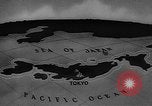
The salvage crew team works on ships after the attack on Pearl Harbor in Hawaii.
Aftermath of attack on Pearl Harbor, Hawaii, during World War 2. An animated map shows Japan in the Pacific Ocean. Nagasaki, Kobe and Otaru in Japan. U.S. propaganda scenes with caricature voice of a fictional "Mr. Tojo" of Japan declaring various U.S. Navy ships destroyed after the Pearl Harbor attack. Scenes of various capsized and damaged ships in Pearl Harbor following the Japanese attack. United States naval personnel and civilian personnel work on salvage and repair. Engineers and personnel recruited. Navy divers get into scuba diving suits and helmets and go under water to collect salvage and make repairs. Destroyed USS Nevada, USS West Virginia, USS California. Salvage crew work aboard these ships. Refloated and refitted U.S. Navy ships departing Pearl Harbor in the war effort. View of the Aloha Clock Tower. Sailors stand with Lurline ship in background. View of people enjoying Waikiki Beach in 1940 or 1941 before the attack. Later scene of the same beach with two young boys playing in the sand, but barbed wire between the beach and the ocean, following America's entry into World War 2. Empty streets of Honolulu at dusk as blackout time hours begin. Narrator speaks out against Japan and states that all they that take the sword shall perish the sword, and text "This is not the End" appears at the end of the film, following by text, "This is but the Beginning!"