


 Francais
 Deutsch
 Italiano
Refine Your Search
+"Panmunjom Korea" +1953 stock footage and images
- Showing 13 to 15 of 15 results more
more Hide
Hide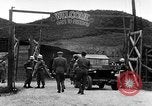
Military Police at Operation Big Switch in Korea. Exchange of prisoners of war at end of the Korean conflict.
Activities of the U.S. Army Military Police during the Korean War. MPs are active in Operation Little Switch repatriation effort involving exchange of prisoners of war. A sign on an entrance gate: "Welcome, Gate To Freedom". Military Police (MPs) standing at the entrance gate to Freedom Village. The U.S. and UN flags and Korean flags fly from flag poles. Red Cross vehicles arrive. Wounded are carried on stretchers. Men walk with belongings. Korean prisoners board buses. Red Cross workers transfer the wounded. (Operation Little Switch was a first phase and was followed by Operation Big Switch in August 1953).

A modern field hospital to receive wounded and ill prisoners from Red captivity, raised at Panmunjom in Korea.
A modern field hospital to receive wounded and ill prisoners from Red captivity, raised at Panmunjom in Korea. Military tents, pre-fabricated buildings, trucks and jeeps at the camp. Soldiers construct roads with heavy equipment and machinery. Barb wires put up for boundaries. Military ambulances parked in the camp area. Supplies stacked in boxes. Nursing and medical personnel at the camp. A United States Medical Department ambulance train. GIs make the beds inside the train.
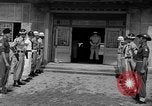
U.S. Army Military Police on duty in Korea and Beirut Lebanon
Honor Guard of UN troops from various nations stand at entrance to the so-called "Peace Pagoda," where negotiations were conducted to end the Korean conflict. U.S. Military Police Officers escort Major General George G. Finch, USAF, Chief negotiator for the U.S. followed by MP officers escorting Lieutenant General, William K. Harrison, Jr. United States Army, Senior Delegate, United Nations Command Delegation, who would sign the truce documents. Separate sequence shows U.S. Army MPs and U.S. Navy Shore Patrol (SP) patrolling streets in Beirut Lebanon, in 1958. MPs talk with a local policeman and point to a map of the Town of Beirut, posted on a wall