


 Francais
 Deutsch
 Italiano
Refine Your Search
+"Papua New Guinea" +1944 stock footage and images
- Showing 1 to 6 of 71 results more
more Hide
Hide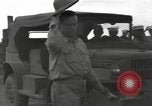
Bob Hope and his USO Troupe visit a U.S. Navy base on Mios Woendi island, Schouten Islands, Papua New Guinea, during World War II.
Bob Hope and members of his USO troupe ride on a PT boat during visit to entertain U.S. Navy personnel during World War 2. In opening scene, Bob Hope doffs his pith helmet as he strolls past the camera to climb aboard a PT boat (PT-331) of U.S. Navy Motor Torpedo Boat Squadron 21, where several naval officers greet him. Members of Hope's USO troupe, Patty Thomas, and Francis Langford, step from jeeps to board the PT boat. Next, the two are seen in the cockpit of the boat next to its captain, Lieutenant Kermit W. Montz, USNR, as the boat speeds along in the water. Among sailors occasionally glimpsed behind them is Radioman 1st Class bill Thielen. In change of scene, Bob Hope climbs out a hatch, holding onto his pith helmet to keep it from blowing off. The boat's number, 331 is clearly displayed on superstructure behind him. Various Navy sailors on deck. (Note: Squadron 21 received a Presidential Unit Citation for outstanding performance during the Huon Peninsula Campaign against Japanese forces from October 1943 to March 1944.)
Soldiers prepare and pack various material and supplies for delivery over Papua New Guinea (WW2)
Troop carriers drop supplies for troops at war over a lake in Papua New Guinea during World War II . Various material and supplies being prepared for delivery. Wheel barrow parts dropped from planes. The parts are then reassembled for use. Barbed wire dropped with the supplies. Soldiers organize and pack mails for the troops in sacks. Soldiers wrap Gelignite between two sand bags for minimum damage during drops. Rations packed in neatly stacked cartons. Soldiers prepare and pack ammunition for machine guns and mortars, as well as grenades for delivery. A soldier packs medical supplies into boxes. Two soldiers wrap the packed supplies in cloth. Another soldier attaches a parachute to the medical supplies.
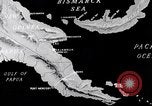
Soldiers pack supplies and parachutes at an Australian Parachute Packing Depot in Papua New Guinea.
March 1943: A map shows Salamaua in Papua New Guinea. An aircraft drops supplies with parachutes over hills. An Australian parachute packing depot. Soldiers pack parachutes on tables in rows. Stacked Australian parachutes to deliver rations, American parachutes used for Ammunition, and 24 foot parachutes for regulation. White parachutes used for medical supplies, blue ones used for rations and red used for ammunition supplies. Aerial view of Goodview, an area of conflict. A soldier radios the requirements to base. Another soldier delivers the plan to the depot. Soldiers pack mortar ammunition. The fuses and sheets are packed together in boxes. Soldiers put boxes into sacks, tie the sacks and attach parachutes. Soldiers pack canned meat: lay straw in big cans, put small cans into those, seal the big cans, secure them with a wiring machine, and attach parachutes. Sacks of rice are put into copper sacks, their mouths tied. Soldiers pack rations including onions, bacon and potatoes for delivery. Supplies are loaded onto trucks and transferred to the aerodrome. (World War II period).
C-47 Skytrains and P-38 Lightning fighters drop supplies with parachutes over Greenview in Papua New Guinea.
March 1943: Australian and American soldiers in Salamaua in Papua New Guinea. Trucks loaded with supplies move to the aerodrome. The Depot officers radio A3 of the 5th Air Force Headquarters, who in turn contact the 54th Troop Carrier Wing for airplanes. Brigadier General Prentiss monitors the mission with Colonel Hampton. Board shows duties of the Troop Carrier Wing. The pilots and crew are briefed for the mission. Soldiers leave in jeeps at dawn for the aerodrome. The pilots are given the time for take off. Supplies are loaded. Planes are ordered off ground. Douglas C-47 Skytrains and P-38 Lightning fighters taxi and take off. Pilot scouts the skies for change in weather and danger. Planes over drop area in Greenview, marked by parachutes from earlier drops on the ground. Soldiers put supplies onto ramps and prepare for the drop. Pilot gives the signal and supplies are dropped. (World War II period).
Allied troops advance as B-24 Liberators bomb target areas in Papua New Guinea.
1943: Animated map depicts Japanese advancement and footholds of Allied troops in Papua New Guinea. Australian 6th Division troops advance through thick jungles towards Salamaua. Soldiers route for enemies in the jungle and fire guns and artillery. Machine gun nests in the jungle. An injured soldier waits to be evacuated. The natives carry soldiers on stretchers. An Australian soldier help a wounded comrade across a river. The Australian troops are relieved by U.S. troops. USAAF B-26 Marauder at a supply depot in Kela village. Native carriers wait for supplies to be dropped from airplanes. 14 August 1943: 5th AAF bombs and strafes targets in the Wewak and Salamaua areas. USAAF B-24 Liberator drops bombs over target areas. Smoke and explosions due to the bombardment. (World War II period).
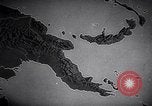
United States B-25 bombers, B-24 bombers, and P-38 fighters attack Japanese positions in Papua New Guinea.
August 1943: Animated map depicts Allied ground advances, 5th AAF air fleet stations, Japanese opposition base at Rabaul as well as Japanese positions and network in Papua New Guinea. Map depicting strategic Japanese positions of Wewak and Boram. 5th AAF soldiers decide to raid the two posts. 17 August 1943: USAAF B-25 Mitchell bombers and P-38 Lightning fighters attack the Japanese post of Wewak. Heavy bombardment by the American bombers. Smoke and explosion from the bombardment. Aerial view of the Japanese airplanes parked on the airstrip. 20 August 1943: USAAF B-24 Liberatoor bombers and P-38 Lightning fighters attack the Japanese position at Boram. Imperial Japanese Navy Air Service Mitsubishi Zeros attack the B-24s, P-38s intervene. Bombs dropped on the target. Smoke and explosion from the bombardment. (World War II period).