


 Francais
 Deutsch
 Italiano
Refine Your Search
+"Paris France" +1918 stock footage and images
- Showing 13 to 18 of 53 results
United States General John J. Pershing and dignitaries of Paris Peace Conference in Paris.
United States General John J. Pershing seen with other dignitaries of Paris Peace Conference at the Murat Mansion (28 Rue de Monceau 75008 Paris, France) in Paris. (World War I; World War 1; WWI; WW1)
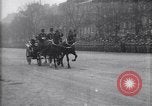
Reception for President Woodrow Wilson in Paris following World War I.
United States President Woodrow Wilson in Paris, France after World War I. A horse-drawn carriage on the road and crowd lined up on sidewalks. President Wilson, Secretary of State Robert Lansing, General John Pershing, and Peace Commissioner Henry White on horse-drawn carriages leaving. The crowd waving hats and cheering for the visiting Allied leaders.
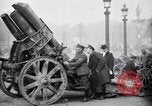
Crowds inspect captured German equipment outside Hotel des Invalides.
Crowds inspect World War I captured German equipment. German tanks, cannons, field guns, railroad guns, and gun carriages displayed outside the Hotel des Invalides (129 Rue de Grenelle, 75007 Paris, France).
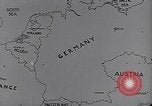
Human Liberty Bell; WWI leaders British General Haig, French General Petain, Italian General Diaz and King Albert of Belgium
Map showing Germany and nearby regions after conclusion of World War I. Writing indicates areas on map including Battle Line at End of Hostilities, Line to Which Germans Must Retreat, and Neutral Zone (between the two areas). Slate indicates that German Kaiser Wilhelm II had just abdicated (28 November, 1918) and shows footage of Kaiser Wilhelm II on horseback at a formal event. Next scene shows a massive human formation of soldiers in the shape of the Liberty Bell known as "The Human Liberty Bell", formed by 25,000 officers and men at Camp Dix, New Jersey to celebrate the armistice in World War 1 and the abdication of German Kaiser Wilhelm II. Camera pans upward to show the human bell from base to top. Next scenes show key Allied military leaders in World War I: British General Haig reviewing troops; France General Philippe Petain emerging from a building; Group of French soldiers marching; Italian General Diaz together with French officers reviewing troops; and King Albert of Belgium exiting a building outside Paris during World War 1 and entering a waiting horse-drawn carriage. View of United States President Woodrow Wilson reading newspaper and seated in a chair. (World War I; World War 1; WWI; WW1)
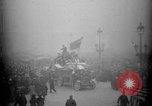
Armistice Day celebrations in Paris. Crowded streets, street lamps , flags everywhere.
Celebrations in Paris marking the signing of Armistice ending conflict in World War I, November 11, 1918. Open bus is packed to capacity with celebrants. Jubilant crowds are jammed together, waving flags, and shouting for joy. Man erects huge banner reading: "LArmistice est signe, La Guerre est gegnee, Vive La France, Vivent Les Allies!" Huge American flag is waved from center of crowd. Flags of the Allies are waved by people on balcony of building with lettering identifying it as "Mme Georgette".French sailors, in crowd, sing and wave flags. French Boy Scouts, in uniforms, run down the street towards the camera, followed by people of every age, size, and sort, all celebrating the end of war. Several French officers stand by as an impromptu parade begins.
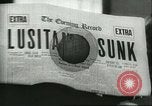
Men aboard U.S. merchant ships underway at sea in the United States after the declaration of war in World War I.
The legislative and maritime history of the U.S. Merchant Marines. Newspaper headlines in the United States read: 'SS Vigilancia', 'Torpedoed', 'US declares war' during World War 1. Women march in a parade with a banner "Wake Up America". President Woodrow Wilson with military and other officials marching on a New York City street decked out for a parade. U.S. infantry and cavalry pass led by General Pershing on streets of Paris France. Buildings along the sides of an American city street decorate with bunting for a parade. U.S. Army soldiers pass in parade review. Soldiers aboard a ship. The U.S. troop carrier ship underway at sea bound for Europe. Women and families on shore dock wave hands and scarves to the departing U.S. forces heading for the war front. Supplies being loaded onto a ship. Shipbuilders quickly working to build both steel and wooden ships to carry forces in the war, due to a lack of transport ships. A newly completed ship slides down the ways and takes float. Men standing on the deck of the ship. A newspaper headlines reads: 'War Ends'. A busy American shipbuilding and port area crammed with ships of all sizes. Ships sitting idle after World War I and some in disrepair including one with name "America" on the bow.