


 Francais
 Deutsch
 Italiano
Refine Your Search
+"Pearl Harbor Hawaii USA" +1941 stock footage and images
- Showing 7 to 12 of 65 results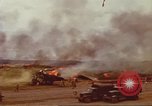
United States army soldiers fight fires on airfield and aircraft struck during Japanese attack on pearl Harbor, December 7, 1941
A U.S. Army Air Forces Douglas B-18 bomber burning after the Japanese attack on Pearl harbor. At first it is obscured by flames and smoke. United States soldiers run around the burning aircraft. Cars and other army vehicles drive past the burning aircraft. A fire fighter is seen on the broken wing of the airplane, directing water on the fuselage, while flames and smoke are all around. The nose canopy is missing from the bomber and half the right wing and engine are broken off. Its tail is damaged. Burned out remains of the aircraft is shown at end of film. (World War II period).
Japanese aircraft bomb USS battleships in Hawaii during Pearl Harbor attack. Raw footage of attack on December 7, 1941
Japanese attack on Pearl Harbor in Hawaii during World War II. The bow of USS Argonne. A row of battleships underway including USS Maryland, capsized USS Oklahoma, USS Tennessee, USS West Virginia. Burning USS Arizona, USS Vestal and USS Nevada. Smoke rises in the foreground. An attacking Japanese aircraft in flight and flak in the sky. USS Neosho starts to back clear of her moorings at the end of a row of battleships. USS Helena and USS Oglala being pulled clear of cruisers side. A Japanese airplane under anti aircraft fire. Battleship USS Nevada tries to reach open sea. The ship is heavily bombed forward. Her guns are firing back at her Japanese attackers. USS Oglala (CM-4) sinks in the foreground.
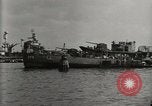
Ship wreckage at Pearl Harbor, Hawaii following Japanese attack of December 7,1941.
The Japanese attack on Pearl Harbor in Hawaii during World War 2 leads to destruction of U.S. Navy warships. A dock area. Destroyer USS Shaw (DD-373) partially submerged in floating drydock with USS Pennsylvania BB-38 in the background. The camera travels around the wreck of Shaw in the drydock. Men at work in the dock area. Various debris in water. A close up view of Shaw's damaged bridge area. Smoke comes out of a ship's stack.
Pearl Harbor bombed by Japanese during World War 2.
Pearl Harbor in Hawaii during and immediately following bombing by Japanese forces on December 7, 1941. Harbor installations and warships burn from attack by Japanese aircraft. Many US Navy ships seen burning in harbor. View from a high point overlooking the harbor. Camera pans and black smoke is seen rising from many burning ships. Destroyed planes in hangar. Finger points upward and then USS Arizona (BB-39) is struck and explodes. Black smoke rises from USS Arizona as it burns in the harbor. Burning U.S. Navy warships partially submerged. Capsized USS Oklahoma (BB-37). Fire boats spray water on the burning ships.
Japanese sailors and pilots prepare for, and execute the attack on Pearl Harbor in World War 2.
After a speech by an admiral, Japanese newspapermen are given the news of the declaration of war against the United States on 8 December 1941. A Japanese fleet underway in the Pacific. Sailors on the deck of a carrier. A captain looks through binoculars. Sailors prepare the dive bombers on the ship deck. Japanese pilots during a final briefing. A Japanese sailor erases a board, while another stands before a writing on the ship. Bombers on the carrier deck. Japanese Sailors watch as pilots board their planes and take off. The bombers in flight with bombs attached onto the belly. Japanese bombers drop bombs on U.S. ships in Pearl Harbor. U.S. Pearl Harbor Base under attack.
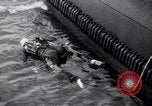
Aftermath of Japanese attack on Pearl Harbor in World War 2; Recovery of Japanese B5N2 torpedo bomber and one Japanese crewman
Aftermath of Japanese attack on Pearl Harbor in Hawaii during World War II. Approximately one week after the December 7, 1941 attack, this is a view of a Japanese crewmember from his torpedo bomber floating face down in the water. He was the radioman (gunner) on the aircraft which was downed in Southeast Loch by antiaircraft fire: Nito Hiko Heiso (Petty Officer Second Class) Yoshiharu Machimoto. Prior to this opening image, a U.S. diver had cut the harness from Machimoto in the still submerged aircraft, and his body had risen to the surface, losing his boots in the process. The mangled wreckage of the recovered Japanese torpedo bomber, a Nakajima B5N2 "Kate" (AII-356 serial 3178) from the Japanese aircraft carrier Kaga, is seen hoisted on a crane, dangling in the air.