


 Francais
 Deutsch
 Italiano
Refine Your Search
+"Peenemunde Germany" +1944 stock footage and images
- Showing 7 to 12 of 81 results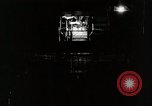
A propulsion unit on the support releases smoke during test firing in night in Peenemunde, Germany.
Experiments with rocket propulsion units in night in Peenemunde, Germany. A light on top of static test stand in Peenemunde. A vertically raised platform, the frame support of the mounting units at the stand. The propulsion unit on the support is fired. A jet of fire appears at the tail end on the unit. It releases smoke. (World War II period).
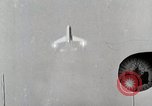
An HS-117 missile is test fired from a launch station in Peenemunde, Germany.
An HS-117 missile test fired from a launch station in Peenemunde, Germany. The needle of the timer rotates continuously. The missile somersaults in sky. A trail of smoke appears at the tail end of the missile. (World War II period).
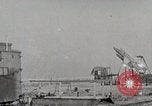
An Henschel Hs 117 Schmetterling (Butterfly) missile on the launch pad is test fired from Peenemunde, Germany., in World War II
An Henschel Hs 117 Schmetterling (Butterfly) TV-guided German surface-to-air missile, on the launch pad in Peenemunde, Germany, in World War 2. Its two booster rocket engines ignite propelling the missile skyward. After a short while, the boosters burn out and a main rocket fires. Pieces of a booster can be seen falling to the left of the missile as it continues its ascent under main rocket engine power.
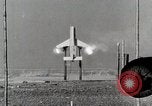
A test fired HS-117 missile takes an approximately parabolic pathway from Peenemunde, Germany, in World War II
An HS-117 missile on the launch pad at Peenemunde, Germany, during World War 2. It is test fired. The needle of the timer rotates continuously. The missile moves in sky taking an approximately parabolic pathway. A trail of smoke appears at the tail end of the missile.
An HS-117 missile on a slant launch pad is test fired from Peenemunde, Germany.
An HS-117 missile on a slant launch pad in Peenemunde, Germany during World War 2. The missile is fired during a test. The needle of the timer rotates continuously. The missile somersaults in sky. A trail of smoke appears at the tail end of the missile.
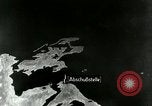
Animated maps of path showing missile trajectory from Peenemunde Germany to target at sea
Trajectory of German missile from Peenemunde Germany. Hand drawn animated map shows missile launch and tracking from land base towards sea, during World War 2.