


 Francais
 Deutsch
 Italiano
Refine Your Search
+"Russia" +1917 stock footage and images
- Showing 7 to 12 of 79 results more
more Hide
Hide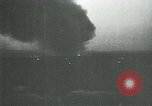
Destruction from 1917 Kingsland Explosion; and aftermath of 1918 Gillespie Shell Loading plant explosion in World War I
Scenes in Lyndhurst, New Jersey after explosion in the Canadian Car and Foundry Company in Kingsland (in Meadowlands of New Jersey) during World War 1. The company built shells for shipment to Russia in World War I. Over 500,000 shells were destroyed in the blast and fire, bombarding the surrounding areas in Kingsland - Lyndhurst. Black smoke rising in the distance, at night, seen from the coast. Close views of industrial buildings and homes on fire. Night views of homes and buildings engulfed in flames. People walk through smoking wreckage afterwards and pick through debris. Devastation covers area flattened by explosion and fire. Twisted railroad tracks covered by debris. A pile of munitions shells in a heap in the burned out shell of a building. View of the D.L.&W (Delaware, Lackawanna & Western) Railroad Shops building at Kingsland (now Lyndhurst), with DL&W train car 605 parked in front. Railroad Shops building is pitted with holes and broken glass from 3-inch shell bombardment. Two men inspect a damaged railroad car with broken glass and a 3-inch shell embedded in the side of the car. A heavily damaged residential house with holes and blown-out windows, and a shell embedded in the front door. Citizens pick through wreckage in front of a building where only cement pilings remain. Scene shifts to Perth Amboy area, October 1918. View of displaced families made homeless by the T.A. Gillespie Shell Loading Plant explosion (Morgan Depot Explosion; largest munitions factory in the world). Refugees sit in a town square. Men, women, and children among the refugees. An Army soldier and Navy sailor seen near refugees as they eat and drink. View of Smith Street in Perth Amboy with shops damaged by the blast. Under Martial Law, U.S. Army troops patrol with rifles to prevent looting. Pedestrians and a streetcar pass. Sign along sidewalk for entrance to Michaels & Co. at 178 Smith Street. (Suspected cause of incidents: Gillespie - worker error; Kingsland - sabotage as in the 1916 Black Tom explosion.)
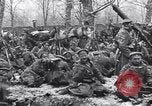
Russian forces in World War I, during Winter of 1917, and pledging allegiance to Bolsheviks
Russian troops eating while settled in a field during a snow storm, in World War 1. They are all dressed in warm clothing. Their rifles are stacked amongst them. Several soldiers entertain others by dancing, accompanied by a violinist and a man playing accordian. A mascot dog is held on leash by an onlooker. Scene shifts to infantrymen marching loosely, behind mounted officer, along path in a snowy field. Later, they proceed single file through snow. A town square in Russia is seen jammed with soldiers and civilians around time of Russian Revolution. Several hold large banners. A uniformed man passes out paper fliers to the crowd. Troops are seen carrying flags as they march through the snow. Then they form in a large circle, and are addressed by a senior officer, as a clergyman stands behind him. Inserted view of Lev Kamenev addressing troops, in a warmer time and place. Sequence then reverts back to troops in the snow, displaying red flag, and seemingly pledging allegiance to the Bolsheviks. Final scenes show troops parading in snowy Red Square, in Moscow.
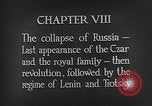
Czar Nicholas II reviews his soldiers and Alexander Kerensky and then Bolsheviks come to power in Russia, during World War I.
Czar Nicholas II out of power in Russia and the Bolsheviks gain power after the October Revolution (Russian Revolution). Romanav dynasty Emperor Nicholas II with his family including son Alexis and his four daughters and his wife at his palace in Moscow. Czar Nicholas II and his courtiers review troops of Russian Cossack soldiers at his palace for the last time. Czar's Russian soldiers march across frozen and snow-covered battlefields. Wounded Russian soldiers return to their villages from World War 1. Soldiers see the starving Russian citizens and begin to mutiny and the front and stop fighting. View of Alexander Kerensky with a crowd after he comes to power in Russia in February 1917 revolution and soon after the Bolsheviks gain rule of Russia in October Revolution. Parade of people and soldiers with pro Bolshevik signs and banners during the revolution. Russian soldiers of the Red Army parade with Commander Leon Trotsky at Red Square in Moscow. A famine strikes Russia and people struggel during the famine. View of snow covered streets and Russian citizens struggling with famine. Young children and orphans are fed at group tables assembled outside on a snowy plaza. Bolshevik leader Vladimir Lenin seen at his desk in his office in the Kremlin, talking. View of Lenin's wife, Nadezhda Krupskaya, taking notes.
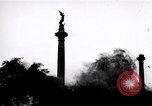
Bolshevik mobs destroy symbols of the Romanovs, in Petrograd, Russia, during the Russian Revolution
The October, 1917 revolution in Russia, during World War 1. Opening scene shows an explosion at the base of a tall column topped by a winged figure with outstretched arms. The column and statue teeter and then fall in a crash to the ground. Within the same scenes another similar collumn stands, but any statue it contained is gone. Next, a Bolshevik rioter is seen on a ladder, prying a large bas relief statue of Romanov double eagle from face of a building. It falls and breaks into many pieces on the ground.
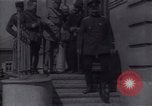
General Kornilov and Minister of War Alexander Fyodorovich Kerensky, with French General Joffre, review troops in Russia
During World War I (and near timeframe of Russian Revolution of 1917), view of Russian General Lavr Kornilov and Minister of War Alexander Kerensky coming down through stairs in Petrograd, Russia. They salute and greet other officers, some Russian and some French, including General Joseph Joffre. Russian and French Troops marching. Russian and French Generals review troops.
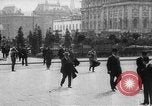
Russian soldiers salute their officers and celebrate during the Russian Revolution in Russia.
Alexander Kerensky, War Minister of the Russian Provisional Government and Russian Army Commander-in-Chief, General Lavr Georgiyevich Kornilov, enter a building in Petrograd .They are accompanied by many staff officers. Dramatization of ending hostilities between Russia and Germany. A Russian and a German soldier shake hands and are joined by soldiers from both sides. German and Russian soldiers celebrate. Russian troops returning from the front. A Russian soldier adjusts his socks and boots. Russian troops hike and move cargo in horse-drawn wagons. Russian troop train with soldiers on roof. Caption refers to Lenin being in Petrograd on October 7, 1917. Places, in Petrograd, inhabited by Vladimir Llyich Lenin, and Joseph Vissarionovich Stalin. Newpapers and letters pertaining to the period.