


 Francais
 Deutsch
 Italiano

Refine Your Search
+"Russia" +1941 stock footage and images
- Showing 55 to 60 of 94 results more
 Hide
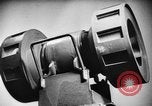
Scenes of destruction in Leningrad as German forces attack the city during World War 2
The Siege of Leningrad, Soviet Union, during World War 2. German Army bombs Russian city of Leningrad. German artillery fired. Fire and explosion. Smoke rises up in the sky. Streets burn in Leningrad. The native people of Leningrad, Russia. Women remove rubble from streets. Animated maps show Leningrad blockade.
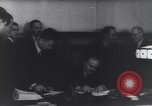
Signing of the German-Soviet Border and Commercial Agreement, by German Friedrich Werner von Schulenberg and Soviet Vyacheslav Molotov.
German diplomat Friedrich Werner von Schulenberg, of Nazi Germany, and Vyacheslav Molotov, of the Soviet Union meet together in Moscow, Russia, to sign the German-Soviet Border and Commercial Agreement. View of the two men and other representatives from each country at the signing ceremony. Narrator indicates that the agreement document covers expanded trade and commerce between the countries, establishes the northern border, and covers repatriation of Germans from republics including Lithuania and Estonia. View of the German and Soviet leaders each signing the document. Wax seals are added and a close-up of the signature page of the agreement is shown. (The Agreement also included the third set of secret protocols of the Hitler-Stalin Act or German-Soviet Treaty of Nonaggression. It followed the German-Soviet Frontier Treaty, which was the second secret protocol. Despite the pact, Germany attacked the Soviet Union 6 months later.) (World War II period).

Soviet men and women workers working in a munitions plant of Moscow, and Russians prepare Battle of Moscow defenses (WW2)
Shows sandbagged and barricaded streets in Moscow, Russia, Soviet Union. Russian soldiers operating antiaircraft gun shoot down a German airplane in the outskirts of the city. Russian Officer holds the identification card of the German Lutwaffe Pilot and inspects the wreckage of the plane. Body of the dead pilot beside the German aircraft. Civilians dig trenches and antitank ditches to aid defense of Moscow. Soviet women and men work in a munitions plant. Ordnance and small arms manufactured on assembly line by war production workers. Artillery shells made by workers. Workers making wooden snow skis for soldiers to use in snow. Workers in another munitions plant assemble machine guns before the Battle of Moscow in World War II.
Japanese actions leading to 2nd Sino-Japanese war and attack on United States at Pearl Harbor in World War II
Japanese army officers examining foreign military equipment. A Japanese worker employing electric drill developed in a Western country. The Japanese freighter, Tatsuno Maru, loading scrap iron at a port in the United States. Other Japanese freighters loading coal and oil for shipment back to Japan. View of the Washington Naval Conference in Memorial Continental Hall, Washington, DC, held in 1921-22 and again in 1927 and 1930, to deal with several lingering issues. Glimpse of Japanese people holding flags while gathered near the Imperial Palace in Tokyo. Glimpse of Japanese army troops on parade. Japanese Navy warships at sea. A fleet of Japanese Mitsubishi G3M bombers and Nakajima Ki-27 pursuit planes, parked on an airfield. A loose formation of Ki-27s airborne. Animated map illustrates Japanese fortification of Mariana, Caroline, and Marshall islands in the Pacific. Animated map illustrating China's greater size and population vis-a-vis Japan. Animated map illustrating Japanese occupation of Manchuria in 1931. New York Times newspaper with headline "Japs Seize Manchuria" hovers over fires burning in Manchuria. Other newspaper headlines reporting on Mussolini's invasion of Ethiopia; the Spanish civil war; surrender of Czechoslovakia; invasion of Poland; assaults on France, Belgium, and the Netherlands by Nazi Germany; the London Blitz; and Nazi advances against Russia on the Eastern Front. Fnally, a Boston Hearald extra edition headline reports: "Pearl Harbor Bombed." A still photograph of Japanese Baron Tanaka Giichi (on left) with two other dignitaries, circa 1929. Japanese infantry streaming into Manchuria and then celebrating as they walk into local town. A busy street in a Chinese city. Japanese soldiers in Manchuria escorting local prisoners along a street. Animated map illustrating Japananese warships surrounding harbor of Shanghai, China. View from a Japanese ship bombarding Shanghai. Smoke rising from shell striking on Shanghai waterfront. View from land of severely damaged buildings on a street, and a shell exploding in background, as Chinese defenders move to successfully repel the Japanese forces. New map illustrates subsequent Japanese move, annexing Jehol, from occupied Manchukuo, and Korea. Japanese troops entering a town in Jehol. Sun newspaper headline: "League Censures Japan." Chinese diplomat protesting at League of Nations. Japanese troops exiting railroad trains in Jehol. Aisin Gioro Puyi aka Henry Pu Yi, Kangde Emperor (Kang-te Emperor) of the Japanese puppet state of Manchukuo, is seen saluting Japanese troops on parade. Closeup of Puyi wearing shaded glasses, looking directly into the camera. chiang Kai-shek, with other Chinese officers. Reenactment of barbarian forces riding against China and thwarted by the Great Wall. Many Chinese walking in a long line along the Great Wall. Map tracing the Great Wall across China. Aerial view of the Great Wall from overflying airplane. Japanese troops marching through a city gate; infantry climbing a sheer cliff; and helmeted Japanese soldiers marching past civilians in a city. Map illustrated progress of Chinese unification by year 1937. Japanese officers conferring during occupation. Japanese troops leave a barracks, riding in open trucks. A line of the troop trucks moving along the dirt street of a town. The troops climb from their trucks in the town.
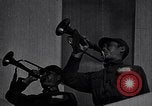
Chinese youth join the Army as Japan advances further in land and isolates China; Colonel Chennault and Flying Tigers.
Japanese invasion of China. Chinese soldiers blow the trumpet. Young men march in a field. Young men register in the Army. Millions of young people answer the call to fight for China. Volunteers from south, north, east and west China to form the people's army. Men and women with their children leave to join the forces. Drumming sound. New recruits train and perform a drill to drum beats. Soldiers practice martial arts, rifle handling, and shooting. Others train to care for the sick and wounded. Women soldiers in uniform. They learn to fire a gun. Pilots crowd around an officer. Planes in the background. Men from other countries prepare to fight for China. U.S. Colonel Claire Chennault of the American Volunteer Group Flying Tigers, talks to his men. The Curtiss P-40 Warhawks with the shark face emblems take off. Chinese soldiers march. Japan: Japanese officials in a meeting. Japanese troops penetrate China along the rivers. They rebuild destroyed rail roads using slave labor. A map depicts the Japanese strategy of cutting off Chinese supply lines. Japanese warships blockade the coast with the aim to isolate China. Japanese occupied ports in China. Japanese warships and boats in a Chinese port. Gas plants, gun factories and planes. Indochina map: The narrow gauge railway from sea to Kunming and a truck road to Chungking. The camel trail from Russia across the Gobi Desert. The railroad from Rangoon to Lashio in Burma. (World War II period).

Soviet Union builds railroads and mines natural resources for war effort west of Urals in World War II
Views of Moscow, and the Kremlin, in the Soviet Union, during World War 2. View of snow covered mountains in the Urals. Map of Russia and environs focusing on areas east of the Ural mountains including Siberia. A pointer highlights areas where raw materials such as coal, bauxite copper, oil, and nickel are found. View from above of numerous Soviet workers in the Steppes, where blasting occurs during road building. Giant trees are seen being felled to clear the way for roads. Young Russian men and teenage boys are seen at a camp, marching with shovels and other tools over their shoulders. Next some are seen driving spikes as others in teams swing iron rails into place for a railroad. A group of boys are seen shoveling sand into the road bed as a steam locomotive passes pulling a train of box cars on an adjacent completed track. Siberian engineers, examine a construction site and converse. Workers digging a deep ditch for a pipe line to cross the plains. A field of oil derricks and oil drilling operations are seen, with Soviet roughnecks tending the drills and pipes of the oil wells. A pump operating and crude oil flowing. A camel is seen behind a roughneck tending an oil drill.