


 Francais
 Deutsch
 Italiano

Refine Your Search
+"Russia" +1945 stock footage and images
- Showing 37 to 42 of 71 results more
 Hide

UN Charter signed in San Francisco Conference; President Harry S. Truman addressing General Assembly; Franklin Roosevelt speech about peace
Delegates arrive in San Francisco for United Nations Conference for World Organization in San Francisco, California. U.S. President Truman arrives by airplane at the conference and is met by representatives from U.S. delegation including Stettinius. Delegates from other countries are also present and greet the President including Jan Smuts of South Africa and William Lloyd Mackenzie King of Canada. Views of presidential motorcade traveling through streets of San Francisco in a parade-like environment, with crowds lining the sidewalks and cheering. Delegates sign the United Nations Charter during the conference. First to sign is Dr. Wellington Koo from China, signing with a traditional Chinese brush. Also shown signing is Gromyko from the Soviet Union, Lord Halifax from Great Britain, and the delegation from France led by acting delegation chairman Joseph Paul-Boncour. Next is Edward Stettinius and Senator Tom Connally, Senator Arthur Vandenberg, Commander Harold Stassen, from the United States. U.S. President Harry S. Truman addresses the general assembly. Representatives of different nations like Lord Halifax of Great Britain, Mackenzie King of Canada, Jan Christian Smuts of South Africa, Andrei Gromyko of Russia and Pandit Jawahar Lal Nehru of India can be seen. Flashback to President Franklin D Roosevelt, shortly before his death, addressing Congress about the coming San Francisco Conference. Roosevelt speaks, expressing his hope that Congress and the American People would "accept the results of this conference as the beginning of a permanent structure of peace, upon which we can begin to build, under God, that better world in which our children and grandchildren -- yours and mine - children and grandchildren of the whole world -- must live and can live."
History of Germany as a group of 300 medieval princely states with feudalistic rulers.
Mix of actor portrayals and actual footage: Church, homes and schools of America. Various United States soldiers. Views of German soldiers. German soldiers marching in a parade ground. Rulers and dictators of Germany: Adolf Hitler (World War II), Kaiser Wilhelm II, Otto Von Bismarck who laid identity of Germany as Nazi, Huns, and Prussians respectively. Historic overview of Germany. Princes and feudalistic rulers of the states. In contrast the US, French and British parliamentary system. King Frederick, the Great of Prussia with his cavalry and in his court. Prussian war against Austria, Russia, Sweden, France. German women wave for victorious troops. Portraits of Scharnhorst and Gneisenau. Dictums of Clausewitz, crushing of the 1848 revolt in Prussia. Germans emigrate to the U.S. Otto Von Bismarck addresses the ministry his policies of blood and iron.
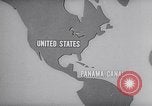
Mutual aids to one another by Allied nations under the lend lease program, fighting against Axis powers during World War II.
Charles Winninger narrates facts about the lend-lease and mutuals aids by Allied nations fighting against the Axis powers during World War II. Animated map shows Japanese threaten eastern coast of United States. British aid under the lend lease flies to U.S. German attack on Suez canal countered by British and U.S. Armies. Map shows timely aids allowed munition factories at work and new recruits joining the military. Australia and New Zealand aid the fighting Allied nations. U.S. warships to Russia in return to graves of German. Aid to China in return to the death of Japanese. Animation shows dropping of atom bomb and unconditional surrender of Axis nations.
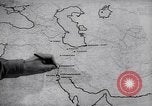
Lend-Lease material to Russian seen in Iran and Iraq; and view of General Motors plant in Khoremshar, Iran (WW2)
World War II Lend-Lease activities to Russia via American outposts in Iran and Iraq. Traces routes of American shipments from Basra to other positions in Middle East. A convoy of trucks takes war material under lend lease activities from Basra. An officer checks the papers of the shipment. Freight trains carry shipment. A map traces route of war material shipment from Basra to Tehran. Workers at General Motors assembly plant in Khoremshar, Iran.

Aircrafts assembled under Lend lease activities in Persian Gulf
Lend lease activities at an air field in Persian Gulf. A plane flies over an Anglo Iranian oil refinery serving Allied planes. Containers containing disassembled air crafts unloaded and aircrafts assembled. Russian pilots onboard from a plane. Brigadier General Macmillan with a Russian General. Mechanics work on planes. A P-40 takes off for Tehran and then to Russia. (World War II period).

German soldiers and civilians prepare to cross Tangermünde Bridge at end of World War 2 in Germany.
Defeated German soldiers and German citizens prepare to cross damaged Tangermünde bridge over River Elbe in Germany at end of World War II. They are fleeing westward away from the advancing Soviet forces (fearing Soviet retribution more than being in American or British controlled areas of Germany). A board reads 'American 102th Division greets the fighters of Russia'. It is signed by the 405th Infantry regiment and stands ready to greet the Soviet forces who have not yet arrived. Surrendered and defeated German soldiers and civilians prepare to cross the damaged Tangermunde Bridge.