


 Francais
 Deutsch
 Italiano

Refine Your Search
+"Solomon Islands" +1945 stock footage and images
- Showing 19 to 21 of 21 results more
 Hide
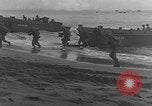
U.S. soldiers use natural vegetation to camouflage artillery and hide vehicles behind bare trees in Italy during World War II.
A film underlines the importance of tactical exploitation and counteraction of shadows and use of nets, underbrush and other camouflage during World War II. U.S. soldiers land on an island in Guadalcanal, Solomon Islands. The soldiers try to eliminate the black hole made by a tent opening by using a blanket. U.S. 5th Army in Italy. To remove shadows of oil tanks, engineers use steel wool on chicken wire. Soldiers use natural vegetation to camouflage artillery in Anzio, Italy. In Casino, U.S. soldiers use bare trees to hide vehicles. U.S. soldiers in Sicily. A garnished fish net is draped over a tank to hide it. At Anzio beach troops dig a trench to hide a tank and then cover it with hay. Soldiers try to camouflage a jeep.
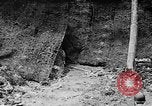
U.S. soldiers receive training on enemy camouflage during World War II.
A film underlines the importance of tactical exploitation and counteraction of shadows and use of nets, underbrush and other camouflage during World War II. The film shows camouflaged aerodromes which are covered with chicken wire and feathers in jungles of the Solomon Islands. A man opens a window of an Italian hot dog stand which was actually a German pillbox. A German pillbox camouflaged as a farmhouse. A U.S. Army soldier handles mats of a matted house. A soldier looks at windows painted on a pillbox. A German pillbox camouflaged as an entertainment outlet. A dummy building which hides a bridge. A German airfield disguised as a decoy village in Belgium. Buildings in the village. A jeep drives on a road in the village. Men move a sliding wall of a phony building. Helmets and shirts on branches to appear as dummy soldiers. A man near a dummy soldier. Vehicles roll past in France. An artillery piece hidden in thick vegetation. U.S. soldiers watching the film in a theater in the United States.
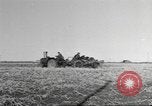
Food and rations supplied by New Zealand to U.S. Army Quartermaster South Pacific operations during World War II.
Cooperation between New Zealand and the U.S. Army Quartermaster Corps during World War II. A tractor on a farm in New Zealand. A tractor plows the field. The Pukekohe Golf Club, near Wellington, converted from golf to farm to grow crops for the war effort. New Zealand farmers works in the field. Farmers load a truck with sacks of potatoes. Close up view of potatoes on a sorting belt and farmers sort potatoes and bag them. Women workers sort cabbage and package the cabbage for shipment. Men and women farmers picking fruits and vegetables in farm fields. A factory shows apples being moved on a belt driven machine, and peeled and cored by a machine, cut into very small pieces and dehydrated in order to conserve shipping space. Canning operations are shown as the dehydrated fruits and vegetables are packed in moisture proof tins in packing houses. Meat and vegetable are mixed in proportions to prepare Quartermaster combat rations. Combat ration cans being filled and sealed at a factory plant. A machine re-generating chocolate bars from old chocolate by melting them down and reprocessing them. Soldiers unloading cartoons from the truck. Rations from New Zealand are loading on to ships by cranes with nets at large shipyards, with ships bound for the Solomon Islands. A dairy warehouse of the New Zealand Co-op Dairy Company (later Tatua) is seen at an airport near Auckland (Possibly Tatuanui or Pauanui). Milk is loaded into a specifically converted B-24 aircraft at the airport. Soldiers loading the aircraft with milk containers. The B-24 aircraft takes off. The aircraft arrives at the Tontouta Air Base in New Caledonia. A nurse serves milk to a wounded soldier patient in a hospital. Sign over the patient's bed says "Pappy Shooter, 27th Division; Saipan; Oahu, Hawaii". The patient drinks milk. Bread being made in Quartermaster bakery. A group of Army bakers working together to form loaves of bread dough on a large work surface. Workers making bread. A worker opens an oven revealing many loaves of baked bread. Ice slabs being formed at an ice plant, and soldiers picking up ice blocks for use in preserving meats and other foods, and in making ice cream. A soldier making ice cream using an ice cream churn in the field. View of a larger Quartermaster ice cream plant that was setup at a large base.