


 Francais
 Deutsch
 Italiano
Refine Your Search
+"South Vietnam" +1969 stock footage and images
- Showing 1 to 6 of 31 results more
more Hide
Hide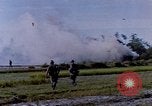
U.S. Marines in action during Vietnam war and training at Camp Camp Pendleton, Calfornia
U.S. Marines in action in the Northern Provinces of South Vietnam, near the DMZ. They are seen in full combat gear, carrying small arms, including recoilless weapons, as they move across green fields where smoke is rising. Next, they are seen spread out and moving across muddy rice paddies. A U.S.jet fighter streaks across a shoreline at low altitude. Views from a Marine jet fighter bomber dropping bombs on Viet Cong targets from low altitude. Explosions on the ground are seen from behind the aircraft as it passes. Brief view from ground of bomb striking and black smoke rising. Closeup (in 1969) of two McDonnell Douglas F-4 Phantoms from U.S. Marine Fighter Attack Squadron 232 (with Red devil insignia on their tails) flying in tight formation. View of pilot in front cockpit an F-4. Aerial view from below of the pair of F-4s. Closeup view from below, as an F-4 releases ordnance in flight. A huge explosion fills the screen as film title slate appeared reading: "Counterpunch." (narrated by Jack Webb). Sign at Marine Corps Air Station, El Toro, California, is shown. Marine sentry at entrance checks identifications of persons arriving at the gatehouse. Marines seen firing mortars, during training. A C-47 transport airplane airdrops supplies to Marines on the ground. Marines in jeeps drive across sand where a bulldozer is working on an airfield under construction. Front view glimpse of a Douglas A-4 Skyhawk aircraft taking off. A pair of Marine Boeing CH-46 Sea Knight helicopters in flight. Group of U.S. Marine Corps officers looking over a model of terrain while being briefed by a Lieutenant Colonel during training "Operation Alligator Hide" in 1967, at the White Beach Marine Corps Base Camp Pendleton in California. Closeup of the detailed mockup of the terrain. Another officer briefs about the use of F-4 and A-4 aircraft support prior to a helicopter assault. Bombs exploding near a bridge. Marines using small 4-wheeled self-propelled open vehicles as they move along a hillside during the exercise. A Captain at a field command post states he will mark a target with white phosphorus (Willy Pete). A tank is seen maneuvering. Pilot is seen responding from cockpit of an A-4 Skyhawk aircraft. An M48A3 Medium Tank is seen on the ground and two F-4s of Squadron 232 in the air. The tank crew fires a white phosphorus round into the hillside, where it generates white smoke. An F-4 is seen flying low toward the area and a bomb explodes on the marked target. Amphibious training is seen, with Marines charging a beach from a landing craft; a tank wading ashore; Marines hit the beach from an LVTP-5 (Landing Vehicle, Tracked, Personnel); Fighter bomber dropping a bomb from offshore; glimpse of Douglas A-4 Skyhawk.
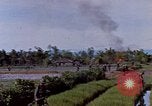
U.S. Marine Air and Ground teams in action during Vietnam War.
Excerpt from film entitled "Counterattack- Marine Air Ground Team," about U.S. Marines in the Vietnam War. Marines are seen walking cautiously across irrigation ditches in cultivated region of South Vietnam. Scene shifts to one marine looking down at a hole where smoke is rising at the base of a berm. Vietnamese families evacuating their village where marines are burning houses and huts. View from riverbank strung with barbed wire, where marines are relaxing while gunfire is heard and black smoke rises from fires burning across the river. Next, a city is seen jammed with Vietnamese refugees with their belongings (some being assisted by ARVN soldiers) making their way through the crowds. A fallen civilian seen on the ground, victim of the Viet Cong (VC). Buildings and places of worship severely damaged by the VC. A bearded old Vietnamese man wearing a non la (conical hat) and smoking a cigarette, is questioned by a U.S. soldier. (Narrator says civilians are reluctant to say much for fear of reprisals.) Marines walking slowly through a village, and then through areas of trees and brush, open areas, and dense jungle. View of underbelly of a U.S. jet fighter bomber in flight over water, carrying two BLU-10 250 lb Napalm Bombs. A Marine A-4 Skyhawk jet aircraft dives down and drops a bomb that explodes with large fireball and black smoke. Closeup of an A-4 in flight. View of pilot in cockpit and sound of conversation with ground controllers. Pilot asks if there are any more requests from the "grunts." Anachronistic Inserted images of two Marine F-4 aircraft from VMFA 232 (Marine Fighter Attack Squadron 232). They display "Red Devil" insignia on their sides. (They flew ground support in F-4s from Chu Lai Air base, Vietnam, commencing 1969.) View shifts to Marines "Grunts" in sandy area, with one communicating by radio. Next, a jet fighter bomber swoops down and unloads bombs that explode in succession on the ground. Marines in heavily sandbagged trenches. A jet fighter flies low overhead at very high speed. Another succession of bomb bursts is seen. Sea-going Marines arrive and exit Boeing CH-46 Sea Knight helicopters, at landing zone. Views of Marines exiting the choppers and then a variety of views of CH-46s in flight. Closeup of one in flight. View of interior, with a squad of Marines, inside, in battle gear. CH-46s landing and taking off.

U.S. President Richard Nixon addresses people in the United States on withdrawal of remaining U.S. troops from Vietnam.
Television broadcast of U.S. President Richard Nixon's speech from the White House in Washington DC, United States on the withdrawal of remaining U.S. troops from Vietnam on 29th March 1973 during the Vietnam War. The White House. The Seal of the President of the United States. The President talks about that period of the Vietnam War when he joined the office and speaks about the program he initiated to end the war. He says American prisoners are on their way from Vietnam and people of South Vietnam are now free to choose their government. He says North Vietnam is not complying with few provisions of the Peace Agreement. He says that they should honor all those American soldiers who died during the Vietnam War. He refers to the difficult days of the war including the moratorium to end the war which was organized on October 15, 1969 when millions of Americans took day off from work and schools to participate in local demonstrations against the war. Nixon refers to the period of April 1971 when he ordered attacks on Communist bases in Cambodia. He talks about the period of May 1972 when he ordered air strikes in North Vietnam and the period of December 1972 when he ordered more air strikes.
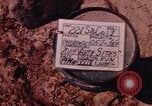
Bunker atop Hill number 88 at Fire Station Base, South Vietnam.
View of a bunker atop Hill number 88, at Fire Station Base in South Vietnam. United States soldiers with 155 mm guns on M-109 Howitzer. Barrels placed in line next to dirt road. (Vietnam War period).
United States soldiers fire M-110 Howitzer from mountainous position at Fire Station Base Roy, South Vietnam.
United States officer speaks over phone at Fire Station Base Roy in South Vietnam. Soldiers fire M-110 Howitzer. They rotate barrel of the gun. Soldiers load and fire M-110 Howitzer form mountainous position. (Vietnam War period).
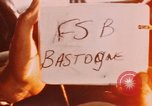
United States soldiers fire from M-42 and M-55 Quad tanks at Fire Support Base Bastonge in South Vietnam.
Aerial view of Fire Support Base Bastonge and mountainous terrain in South Vietnam, during the Vietnam War. United States soldiers fire 40 mm gun from M-42. At dusk, muzzle flashes and fires tracers from M-42 and M-55 Quad .50 caliber machine guns at night.