


 Francais
 Deutsch
 Italiano
Refine Your Search
+"Soviet Union" +1959 stock footage and images
- Showing 1 to 6 of 15 results more
more Hide
Hide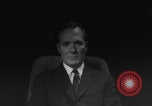
U.S. world aid, African dancers perform at Carnegie Hall 1959
The narrator and host of the film is seen sitting on an armchair. He speaks about United States’ lack of desire to establish a global hegemony. “We have constantly reiterated by word, by deed, that we have no desire to establish a colonial empire” the host said. Wilson Line SS Ariosto ship unloads a tractor. Ship loads sacks of cement in Puerto Rico. A doctor adjusts the x-ray machine. A nurse tends to a ward with patients lying in bed. Sign for Africa Freedom Day on April 15, 1959 at Carnegie Hall. African musicians playing drums as dancers perform a traditional folk dance. A man speaking to the audience at Carnegie Hall. African Americans clapping. New York Times newspaper article by Tad Szulc titled “New Latin Accord is Offered By U.S.” with a photo of United States President John F. Kennedy on the right side. The host explains that the Soviet Union accuses the United States of imperialism to deflect Soviet colonialism. “Now on the face of things, one would assume both imperialism and its twin colonialism are on the way out” the host said.
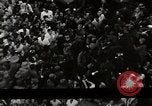
Events related to Cuban Missile Crisis: Cuban revolution in 1959; Khrushchev and Castro in 1960; Soviet missiles withdrawn 1962
Cheering Cuban crowds seen celebrating Fidel Castro's successful overthrow of Batista, in 1959, in Havana, Cuba. Fidel Castro with Nikita Khrushchev outside Hotel Theresa in Harlem, New York City, before meetings at the United Nations building in New York City, during the opening of the 15th General Assembly (September 19, 1960). View of Castro walking in front of UN building entrance. View of Soviet Navy ships carrying missiles from Cuba, back to the Soviet Union, in 1962. Nikita Khrushchev gesturing and talking outside a building. Newspaper photograph of Soviet Foreign Minister Andrei Gromyko conversing with U.S. President John F. Kennedy, who is seated in his rocking chair at the White House.
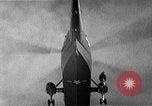
Events leading to Cuban Missile Crisis as United States military prepares for emergency in October 1962.
Events leading to the Cuban Missile Crisis of October 1962 when the United States and the Soviet Union confronted each other with nuclear destruction. A helicopter lands on the White House lawn in Washington DC. Scenes of Cuba and emergence of Castro in recent prior years. Beach views in Cuba. A military parade in an earlier time, with Cuban troops marching in front of the Monument to the Battleship Maine. Next scene shows desecration and destruction of the Battleship Maine Monument in Cuba.. A crowd of cheering Cuban people as Fidel Castro enters Havana, Cuba in 1959. Exterior view of United Nations building in New York City. Fidel Castro and Soviet Premier Nikita Khrushchev embrace during meeting in New York in September 1960. Deputy Premier of the Soviet Union Anastas Mikoyan deplanes and is greeted by Fidel Castro in Havana. A trade agreement between Russia and Cuba signed by Fidel Castro. Russian cargo ships en route to Havana. Cuban refugees in small boats. A map depicts proximity of Cuba to the U.S. U.S. surveillance aircraft heading for Cuba. A sign reads 'HQ. 4080 S W Intelligence Division'. Men examine reconnaissance photographs of Soviet nuclear missiles in Cuba. The photographs show transports and tents for fueling and maintenance. A sign reads 'Strategic Missile Facility GAM 77 Combined Systems'. U.S. missiles rolled out of hangar and readied for emergency. A U.S. Air Force B-52 bomber aircraft takes off from an airfield. U.S. Navy ships in the Atlantic Ocean. A U.S. submarine underway at sea.

Soviet Premier Nikita Khrushchev and President Eisenhower meet at Camp David in Maryland, United States.
Major events of the year 1959. United States Vice President Richard Nixon with Soviet Premier Nikita Khrushchev where they engaged in the so-called "Kitchen debate" at United States Trade and Cultural Fair in Moscow, Soviet Union. Nixon talks to Khrushchev leading to the former's visit to United States. Khrushchev arrives in United States and President Dwight D Eisenhower welcomes him at the airport. Soldiers march as the Presidential motorcade follows them. President Eisenhower and Premier Khrushchev after a meeting at Camp David in Maryland.
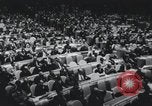
Mao Zedong's stand on war, China's foreign policies and aggression towards neighboring nations.
Propaganda piece about living conditions in the People’s Republic of China under Mao Zedong, with images photographed by Indians visiting the country. Delegates from all over the world at an international conference. Representatives from Iraq, Canada, Romania, Australia, and Pakistan among others. Elderly Chinese communist revolutionaries pose. Mao Zedong's views (according to a narrator) are presented: He believes that war in inevitable between capitalist and socialist nations. View of a rally and military parade in China. Explosions during the Korean War in 1951 with Chinese troops in action. In Tibet, homeless, displaced Tibetan children and families after the Chinese take over in 1959 as part of Communist China expansion. Indian Army soldiers return after China's attack on India during the Sino-Indian War in 1962. View of Soviet Union Premier Nikita Khrushchev. Map of Asia depicts Chinese aggression towards its neighbors. Explosions during the Chinese aggression in Vietnam and Laos. Mao Zedong intent on risking a war with the West.
Images pertaining to advance of communism during 20th century, especially in East Germany
Statue of Karl Marx on his grave stone in Highgate Cemetery, London. A picture of Karl Marx. Scenes in Russia around the time of the Russian Revolution circa 1917 and creation of the Soviet Union. Soviet soldiers walking slowly in loose formation. Bolsheviks standing with a large banner. Images spanning many years thereafter: Damaged shops on a street. "One way" street signs in several languages. Large gathering of people carrying signs reading: "Frieden" (Peace, in German). A sign reading: "HALT, Landesgrenze" marking a German provincial boundary. A sign in German, designating the customs border at Furth im Wald, Bavaria ("Zollgrenz-Bezirk, Furth i.Wald"). East German border guards setting obstacles and sentry paths at barbed wire barriers (constituting the Berlin Wall, early on). Picture of Günter Litfin, a twenty-four-year-old tailor, who swam across the Spree Canal to West Germany on 24 August 1961. View of him being fatally shot from across the border, by East German guards, as he is being pulled into West Germany (the first such fatality at the East West German border). Animated map of the world with label references to Berlin,1961; Havana, 1959; Budapest, 1956; Coyoacan, 1940; and Kronstadt, 1921.