


 Francais
 Deutsch
 Italiano
Refine Your Search
+"Tunisia" +1943 stock footage and images
- Showing 13 to 18 of 92 results more
more Hide
Hide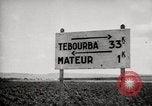
U.S. and British troops capture the cities of Tunisia during the Battle of Tunisia.
The Battle of Tunisia in North Africa during World War II. A sign board noting distances to Tebourba and Mateur. U.S. troops on trucks enter Ferryville. The troops on trucks hold rifles. Aerial view of American tanks arrayed on battlefield. U.S. tanks advance. Firing from across a lake. Buildings in Bizerte city in the foreground. U.S. troops on a truck fire guns. The troops in a jeep enter the city with little resistance. A sign reads 'Bizerte'. A tank drives past on a road and fires. Buildings on either side of a street. Smoke rises due to the firing. The troops advance forward. A soldier with a gun checks a building for German forces. The troops stand in a group. A damaged building in the foreground. British troops in jeeps and on motorbikes enter Tunis. British troops and a tank fire at German soldiers holed up in a building.
French crew demonstrates operation of ship's twin guns in Tunisia after Allied occupation in World War II
French gun crews in steel battle helmets scramble aboard their warship docked in the Port of Tunis, Tunisia, after the fall of Tunisia to the Allies, during World War II. Scene shifts to twin guns being raised and lowered in tandem from turrets on the ship's deck. Crew members obtaining shells from ship's armory and loading them into the twin guns. The left gun fires. Crew bring more shells to the gun turrets.

U.S. soldiers of the 1st Signal Corps release messenger pigeons in Tunisia, North Africa.
U.S. soldiers in Tunisia, North Africa. An oasis near El Guettar, Tunisia, North Africa. U.S. soldiers of the 1st Signal Corps take out carrier pigeons from cages. Attach messages and release the birds. The pigeons in flight. A soldier comes out of a tent. (World War II period).
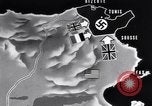
Allied Forces defeat Axis forces in Tunisia during World War II
The final battle of Tunisia, North Africa during World War 2. An animated map shows Allied Forces moving on all sides pressing forward against German forces still remaining in Northern Tunisia. in World War 2. Map outlines battles of Hill 609, Longstop Hill, Goubellat Plain, and Dejebel Mansour, and Takrouna. U.S. forces move 200 miles from the south to confront German forces in the north. Views of U.S. soldiers in trucks and M3 half-tracks, and towing heavy artillery with a tractor. Views of hills where Germans are positioned, west of Tunis and Bizerte. Allied guns firing. French forces sweeping for mines and digging some up with bayonets. French General Alphonse Juin confers with his staff as they review a large map laid out on a jeep. Brief view of French infantry in the field and gunners firing artillery. German Panzer IV tanks moving to counter British attacks. German tanks and artillery firing barrages against the British. Camera pans over destroyed German armor. British 78th Division attacks Longstop Hill. A long line of British infantry moving single file up a hillside. British soldiers firing Vickers machine guns from protected positions and infantry moving uphill, carrying small arms and Bren light machine guns. British troops scaling steep hills, using ropes, as shells burst close to them. One throws a hand grenade that explodes on the hilltop. After reaching the hilltop, the infantry scamper down the other side and continue moving forward, firing their weapons. Several dead German soldiers are seen as the British troops overrun the German positions. British engineers and pioneers working with caterpillar tractors and shovels to build roads. Later, trucks are seen using a new road. In the meantime U.S. troops are seen arriving to commence their assault on Hill 609. It begins with long range artillery firing from camouflaged positions and shells exploding all over on Hill 609. It continues into the night. View of soldiers in artillery headquarters, under a tent illuminated by lanterns. Long sequence of nighttime artillery fire. Medical Corps doctors treating wounded as the nighttime artillery barrages continue. U.S. infantry digging in after taking Hill 609. View of American soldiers walking up Hill 609. View of British Field Marshal Bernard Montgomery consulting with staff officers in the field. British 8th Army commander, Lieutenant General Sir Oliver William Hargreaves Leese, looking through binoculars as he stands with staff members at the front. Scene shifts to U.S. airmen arming machine guns on a parked P-38 fighter plane. Others roughly handling bombs to be placed into U.S. bombers. Bomber with nose art of devil riding a bomb and name "Hell a Poppin." Air crews arrive by jeeps at their B-25 Mitchell bombers and others arrive at their B-17 bombers. View of B-25 number 41-13202 named "Idaho Lassie" of the 321st BG, 445th BS, 12th Air Force. Engines running on bombers and on a British spitfire fighter plane. Formations of Allied aircraft, including B-24 liberator bombers, Martin B-26 Marauder bombers, British spitfire fighters, and B-17 Flying fortress bombers. British and American armor moving forward firing guns. French artillery firing and French infantry advancing. French machine gunners in white hats. U.S. B-24 Liberator aircraft dropping bombs. German fighter planes attacking allied bomber formations. Gunners in the bombers firing at them. Gun camera view of German fighter being shot down. More views of Allied aircraft bombing and strafing. Map shows American forces reaching Bizerte, the British capturing Tunis and German forces split and defeated.
Allied troops mobilize and advance in Algiers and Tunisia.
Allied Armies mobilize in Algiers and Tunisia. Algiers: An all Greek battalion of volunteers marching. Troops hold flags. Troops assemble at the docks of Algiers. French Foreign Legion troops and the British 8th Army troops near a ship. Soldiers share cigarettes. French colonial troops, Canadian troops and other Allied troops climb aboard a ship. Military supplies, equipment and vehicles at the docks. Men work at an assembly line, while others repair vehicles. Trucks transfer material. Tunisia: Allied troops advance over the plains. Troops, tanks and artillery move ahead. Troops in jeeps and on motorbikes on muddy roads. (World War II period).
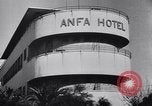
Allied leaders at the Casablanca Conference in Morocco during World War II. Allied forces battle Germans in Algeria and Tunisia
Film begins showing the Anfa Hotel in Casablanca, North Africa. Inside, Allied generals meet to plan further steps in World War 2, against the Axis powers. Charles de Gaulle and French General Henri Giraud are seen walking together at an airport. Closeup of the two. View of Allied General staff members around a table. U.S. principals include Army Chief of Staff, General George Marshall and Air Force Chief, Lieutenant General Henry H. Arnold. Views of General Dwight D. Eisenhower, Supreme Commander of Allied forces, His deputy for land forces, British Field Marshal Harold Alexander, his deputy for sea forces, British Admiral Andrew Browne Cunningham, and his deputy for air operations, British air marshal, Arthur William Tedder (1st Baron Tedder) Outdoors. President Franklin D. Roosevelt and Prime Minister Winston Churchill are seen seated, conversing. Churchill's airplane, named Commando, a very long range Consolidated Liberator II aircraft adapted for passenger transport is seen ready to take him to Tripoli to greet the victorious British 8th Army. Churchill greeting British Field Marshal Bernard Montgomery at Tripoli. Animated map shows battle lines and disposition of Allied forces along the Algiers-Tunisian front. View of German Field Marshal Erwin Rommel inspecting defenses at the Mareth line in Tunisia. Fifteen divisions of German, and 7 divisions of Italian troops entering the front lines. German Panzer IV aus d tanks moving on a dirt road. German infantry marching along a road. Seasoned German troops in camouflaged vehicles. Formation of German Focke Wulf 189 aircraft and view of one dropping bombs. General Rommel pointing to something at the front. Animated map showing the battlefront. (Narrator says German orders were to hold Tunisia at all costs.) View of Rommel, eating a sandwich as he studies document in a defensive position behind the Mareth line. German soldier using periscopic binoculars to view the front. German forces initiating an attack westward driving Allied forces back. Map show German forces advancing beyond the Kasserine pass. Rommel in a staff car, as he learns that the Allied forces have counter-attacked and are driving his forces back to the original battle lines. American infantry marching Eastward to reoccupy Kasserine Pass and beyond, past destroyed German tanks. Rommel's forces make an attack Southward toward the British 8th Army positions. View of new Tiger tank employed by the Germans. A British soldier removes the cover from their new 17 pounder anti-tank gun. View of burning Tiger tanks destroyed by the new British guns. (Narrator says 52 were left burning hulks.)