


 Francais
 Deutsch
 Italiano
Refine Your Search
+"United Kingdom" +1943 stock footage and images
- Showing 193 to 198 of 214 results more
more Hide
Hide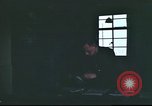
U.S. 8th Air Force activities at RAF Station Chelveston, England, in World War II
U.S. 8th Air Force B-17 Flying Fortress bombers in England during World War 2. Interiors of an operations building shows an operations officer making a call on a phone. Displayed on a board is a chart of the airfield, RAF Chelveston (USAAF Station 105) in Northamptonshire, England. Airmen inside the operations building measure distances on a large wall map. A tower operator fires a flash signal gun. British and American airmen stand on an observation platform and watch B-17s overhead, while several aircrew members sit in the grass below. A British airman on the platform holds a very pistol.
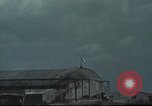
B-17s of the U.S. 91st Bomb Group, returning to their base at RAF Bassingbourn, England in World War II
B-17s of the U.S. 91st Bombardment Group, returning to their home base at RAF Station Bassingbourn following a bombing mission,in World War 2. B-17, tail number 41-24617, named "Southern Comfort," taxiing on outboard engines, only, after landing with a large chunk of its rudder shot away. Crew members and other airmen gather around the battle-damaged aircraft. Closeups of the damage to its rudder. Dim views of the B-17, "Memphis Belle," tail number 41-24485, with skin missing from wing exposing its internal ribs. It also has holes in its rudder and its nose. Closeup of a B-17 engine stained by fire-fighting foam. Other views of battle damage to a B-17.
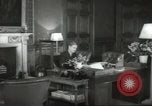
Secretary of State for Foreign Affairs Anthony Eden and French Diplomat Rene Massigli look at documents in London, England.
British Secretary of State for Foreign Affairs Anthony Eden speaks with Foreign Minister for the National Committee for Liberation Rene Massigli in London, England. British Secretary of State for Foreign Affairs Anthony Eden, and Foreign Minister for the National Committee for Liberation Rene Massigli seated at a table. Rene Massigli takes out documents from a bag. The officials look at documents.
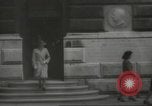
Secretary of State for Foreign Affairs Anthony Eden and French Diplomat Rene Massigli leave in their cars in London, England.
Foreign Minister for the National Committee for Liberation Rene Massigli (French Diplomat) in London, England. French Diplomat Rene Massigli gets into a car and leaves. British Secretary of State for Foreign Affairs Anthony Eden comes out of a building and leaves in the staff car. A guard walks in front of the building with rifle in hand. Plaque, on the wall, of Viscount Gray of Falloden.
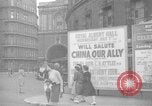
British and American soldiers talk to girls and pedestrians walk the sidewalk of a street in London, England.
Activities of civilians on streets in London, England during World War 2. People walk on a sidewalk in London Square. Buildings in the background. A poster reads as 'China Rally to be held at the Albert Hall on July 7th'. Views of the street: pedestrians, British and American soldiers and airmen. People walk along the street. Many stores and shops are seen. People walk along a sidewalk. American soldiers and girls walking in the street. A group of British soldiers talk to a girl. Traffic seen on Magdalen Bridge.
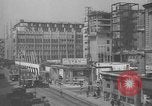
Workmen prepare a site which was bombed for an army exhibition and Piccadilly Circus in London, England.
General views of London, England. View of Oxford Street showing the site of John Lewis's store which was bombed during World War II. This site is being cleared and is now being used for an army exhibition. A sign: 'John Lewis'. Workmen prepare the site for army exhibition. A 16 year old boy paints signs for the exhibition. Traffic on a road. View of Piccadilly Circus with Statue of Eros. Piccadilly Circus with 'County of London Plan' posters on boarded up Eros Statue. American soldiers cross a street. Entrance to an underground, Piccadilly Circus. Entrances are now protected from blast by a wall.