


 Francais
 Deutsch
 Italiano
Refine Your Search
+"United Kingdom" +1943 stock footage and images
- Showing 25 to 30 of 214 results more
more Hide
Hide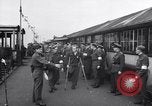
Prisoners of war return home and casualty group get into Red Cross van in England (WW2)
Prisoners of war return home in England during World War II. British and Canadian casualty groups leave railroad train. Casualty group with their belongings. Soldier band plays instruments. British and Canadian soldiers get into Red Cross van. Van drives off.
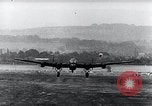
Aircraft recognition tips for the British Lancaster Bomber
Aircraft recognition instruction for the British Lancaster Bomber during World War II. Lancaster moves on runway and takes off. Diagrammatic description of the Lancaster design. Lateral view shows four engines attached to the flat wing which is oval at the end. Long flat fuselage curved from tip and tail. Oval shaped small wing at the tail. Side view describes the design of tip in shape of number 3. One of the egg shaped twin tails at the end. Front view diagrammatic design shows four under slung engines and other specifications of the Lancaster.
Design description of the British Lancaster Bomber and differentiation from other bomber aircrafts
Aircraft recognition training film. British Lancaster Bomber in England. Lancaster moves on runway and takes off. Lancaster is the modified version of Manchester bomber used earlier. Differentiation of Lancaster from other heavy bomber aircraft. Drawings contrast the design of the British Lancaster with the following: Manchester, Russian TB-7, German FW-200, British Halifax, American B-17E, British Stirling and American B-24 heavy bombers.
British Navy training program teaches the sailors chin jab, shin stamp, knee blow as attack and counterattack methods.
British Navy training program demonstrates attack and counterattack methods of hand to hand combat and defense against an attacker. A navy officer holds the back of a chair and addresses a group of sailors about defense against the enemy. Some sailors sit on benches and some on the ground. Two sailors don gear to demonstrate different methods of attack and counterattack. They demonstrate a chin jab. One of them shows the edge of his palm and demonstrates the edge of the hand blow. He puts his foot on the foot of the opponent to show the shin stamp. He also demonstrates knee blow, boxing punch and kick. (World War II period).
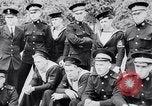
A training program for the sailors of the British Navy teaches them about homemade weapons and use of helmet as a weapon.
British Navy training program teaches attack and counterattack methods of hand to hand combat to its sailors. Sailors of the British Navy. A sailor demonstrates the use of helmet as a weapon. The other sailor on the ground. A navy officer holds the back of a chair. He explains how to make a homemade weapon. A sailor demonstrates the use of this homemade weapon. (World War II period).
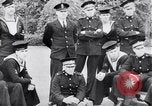
A training program for the sailors of the British Navy teaches them attack and counterattack methods of hand to hand combat.
British Navy training teaches the sailors how to tackle the enemy from behind. Sailors of the British Navy. A navy officer explains attack and counterattack methods of hand to hand combat. A sailor comes running from behind and shows how to jump, deliver a knee blow in the back, cover the mouth of the opponent and make him fall on the ground. Other sailors look. A repetition of the same act. (World War II period).