


 Francais
 Deutsch
 Italiano
Refine Your Search
+"United States USA" +1915 stock footage and images
- Showing 19 to 24 of 39 results more
more Hide
Hide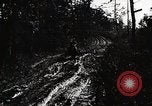
American man rides a horse cart on muddy road,United States
American man rides a horse cart on muddy road. Horse cart stuck in mud. Man fixes a cart wheel on the horse cart. Steam engine railroad train passes by a country house.
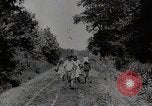
American school children walk along a muddy road carrying books and lunches
American school children walk along a muddy road carrying books and lunches. Beside forest. Boy carries a water bottle. Three girls walk behind the boy. They carry baskets and parcels. Another man walks behind all of them in background.
American children ride on a horse sleigh on snow and play in snow during winter,United States
American children ride on a horse sleigh on snow during winter. When the sled stops the children enjoy snowball fight. Children climb up ladder on to a leafless tree. Children swinging on branches of the tree.
Wilbur H. Durborough, America's famous Press photographer, goes to Germany during World war I
Closeup scenes show Wilbur H. Durborough-America's famous press photographer, seated behind the steering wheel of a 1911 Alto touring car parked on a street in Chicago, Illinois, getting ready to depart for Germany, during World War 1. Sitting behind him is his assistant cameraman, Irving G. Ries. Both have goggles pushed back on their foreheads. and both smoke cigars. Some spare tires are seen behind Mr. Ries. As camera moves back, they are seen surrounded by numerous friends and well-wishers as they prepare to depart from Chicago. Next, Durborough is seen standing on the bridge of the Holland-America steamship, S.S. Nieuw Amsterdam, with ship's Captain Jan Baron, who is on lookout for mines and submarines. Captain Baron passes his binoculars to Mr. Durborough. Captain Baron and Mr. Durborough stand on the deck looking at some documents. Lifeboats on davits behind them are ready for emergency. Durborough drives his car from the ship terminal onto a street in Rotterdam, with Captain Baron standing on a running board. The car is loaded down with luggage and equipment. He drives away as the Captain and others wave goodbye. Displaying an American flag on the hood, Durborough arrives at the German border. Dutch officials examine the car's contents, including a look into the engine compartment. Next, Durborough is stopped by German border guards, who examine his passport and greet him in a friendly manner. Durborough is seen in the offices of U.S.Ambassador James W.Gerard, as he describes his plans for visiting. He is honored by a visit from Prince of Reuss of German General Staff, Prince Max of Baden and Count Von Bernstorff- son of German Ambassador to the United States, who are seen chatting with him, before entering their car to depart.
Miners cleaning themselves and changing at 'Wash and Change House' in mines
Sanitary and hygienic practices in coal mine and other mining villages. Miners use shovels to dig. A `Wash and Change House` in the mine. Miners clean themselves and change there. Several mines do not have 'Wash and Change House'. The miners use water filled in tubs to clean themselves. The technique is called 'Tubbing'. A row of children walk behind a woman. A man uses 'Tubbing' to clean himself. The children watch him as the woman helps to clean his back.
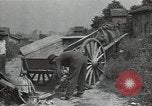
A man cleans the roads and flies sit on food
Sanitary and hygienic practices in mining villages. A man picks up filth from the road and puts it in a horse driven lorry. A man stands on his side while he cleans. Village houses in the background. A housefly in view. Houseflies sit on fish. Fish spoilage due to putrefaction. The flies sit on a bowl of fruits and other articles. The flies spread infections.