


 Francais
 Deutsch
 Italiano
Refine Your Search
+"United States USA" +1916 stock footage and images
- Showing 103 to 108 of 108 results more
more Hide
Hide
Dramatization: Racial tensions and violence in South Carolina
Excerpt from the fictional film "Birth of a Nation". A pro-Southern dramatization by actors on the effect of the Civil War and the Reconstruction. A man talks to a woman named "Elsie". He tells her that her brother has slain an African American. Elsie stands with the man in front of a house. She expects her father's arrival. She sits on a chair in the house. Men and women in a house. Soldiers in a field. Other people on horse-carts leave the place. They live in a little cabin. They sit inside the cabin. They come out and discuss. The North and South enemies unite again for common defense. African American soldiers arrive at the place with guns in their hands. They search out people.
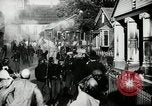
Dramatization: Ku Klux Klan members rally and enter a town to fight African American forces
Excerpt from the fictional film "Birth of a Nation". A pro-Southern dramatization by actors on the effect of the Civil War and the Reconstruction. A house situated aside a street in South Carolina. People and African American soldiers stand. Firing of guns. Smoke arises from firing of guns. Summoning the Ku Klux Clan, or KKK. The clansmen gather together and discuss on the issue. Clan members wear white clothes and masks on the horses. They run on the field. African American soldiers also gather. African American people on street. Clans assembled. Flags in their hands. They ride off toward the gathering of African Americans.
Dramatization: An African American man compelling a white woman to marry him
Excerpt from the fictional film "Birth of a Nation". A pro-Southern dramatization by actors on the effect of the Civil War and the Reconstruction. In this segment, Elsie goes to Lynch to help as her father is unable to return. She sits in a room. African American soldiers stand on the door. She talks to an African American soldier. The soldier talks to other people in the house. The mulatto Lynch stands at the door. He comes to Elsie. They talk amongst themselves. Lynch proposes that marry him. She rejects his proposal. He argues with her. He tries to convince her. He tells her that she will be the queen of the Black's empire. She tries to run out of the room. The room is locked. He tries to scare her. People listen the whole thing outside the room. Drunk Lynch orders a man to start preparations for a forced marriage. She again tries to get out of the room. A man arrives at the house. Lynch talks to him. He tells him that he wants to marry a white woman. They both discuss. He again tells him that the woman is his daughter. A soldier stands behind the man. Elsie again tries to run but another woman holds her. She is made to sit on the chair. Man tries to escape with his daughter but he fails. They both are seated on the chairs.
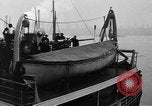
Ocean liner SS Chicago underway to France, leaving from New York harbor.
Passenger ship S.S. Chicago, of the French line Compagnie Générale Transatlantique CGT, leaves New York harbor. Men aboard the ship. The ship getting underway toward the ocean. Other ships in the background.
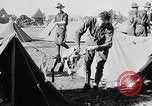
U.S. National Guard troops encamped at Fort Bliss before commencing the Punitive Expedition into Mexico
National Guard soldiers, called up for the Punitive Expedition into Mexico, are seen at camp in Fort Bliss. They attend to ordinary tasks, such as hanging clothes to dry on their tent ropes. A group are gathered together for mail call and receive letters and packages from home. Next, many are seen seated on the ground, writing letters, themselves. Troops gather around an outdoor mess stove where food is being prepared. Next they are seen carrying their personal mess gear as they walk past tents. They then line up for food in a chow line at an outdoor kitchen. Troops seated on the ground, eating a meal from their personal mess kits. Some of the soldiers gather where they are filmed playing with two puppies and a small goat. Much of the remaining footage shows soldiers engaged in all manner of competitive physical games such as horse and rider, and various team races. The final shots show Brigadier General John J. Pershing posing with members of his staff, and closeups of him seated in a chair and then standing outside his rustic quarters.
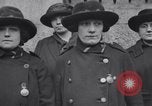
Women join ranks of police reserves in New York City, during World War I.
Closeup of women in the New York City Police reserve, during World War 1. They stand outside the 23rd Police Precinct ("Tenderloin") Station House on West 30th Street, Manhattan, New York City. Their uniforms include round-brimmed hats and overcoats, and they have round badges topped with eagles, pinned to their coats. Next, about 15 are seen, walking two abreast. All wear white gloves and badges, but otherwise, their uniforms are not identical. One supervisor woman walks beside the group, wearing a slightly different badge. Walking casually, a short distance behind the group is a woman (probably Mary Noonan) in the uniform of a captain (with "railroad tracks" insignia on her collar). Scene shifts to a street filled with a traffic mix of horse-drawn and motor vehicles, all staying fairly clear of trolley tracks visible in the center of the road. A police reserve woman stands in the center of the street, directing traffic. Next, a large group of school children is seen standing on a street corner, accompanied by a woman police officer. They begin to cross the street under the watchful eye of another woman reserve police officer, directing traffic in the street. Some adults cross behind the children. (Note: On May 9, 1918, the New York City Police Department announced formation of a new Police Reserve, that would include a women's contingent. This was the idea of Special Deputy Commissioner Rodman Wanamaker, who reasoned, since New York women had received the vote, on November 6th 1917, they should have a role in enforcing the laws. Over 3,000 women were recruited. Their Captain was Mary Noonan. Their duties did not involve direct dealings with criminals. According to the New York Times of May 10, 1918, "If need arose for use of the nightstick or other instrument for curbing crime,the work would be referred to the men members of the force.")