


 Francais
 Deutsch
 Italiano
Refine Your Search
+"United States USA" +1937 stock footage and images
- Showing 133 to 138 of 260 results more
more Hide
Hide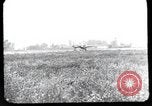
Amelia Earhart Putnam takes off in Electra aircraft in the United States.
Amelia Earhart Putnam in Electra aircraft in the United States. Electra aircraft taxis and takes off from the runway. Aircraft in flight with mountainous terrain and fields on ground.

Amelia Earhart Putnam stands in front of Lockheed Vega and speaks with men and women in the United States.
Amelia Earhart Putnam at an airfield in the United States. She stands in front of her Lockheed Vega aircraft. Amelia Earhart speaks with men and women at the airfield. Photographers take pictures.
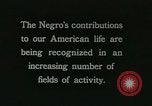
African American men and women contributions to business, science and industry in the United States
Academics and fine arts education in African American schools in the United States. Contributions made by African American men and women in every sphere of American economy. African American men at work in a factory. Men work on various machines. African American scientists conduct experiments in a laboratory. Students pour chemicals into test tubes. An African American farming family works on a farm field, and examines cows at a dairy farm. African American young man operates an adding machine. African American woman typist at work typing. Close-up views of her hands on the typewriter. African American dentist works on a young girl's teeth.
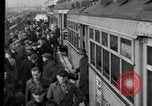
Crowd of workers march after leaving streetcars and police controls the crowd in the United States.
Police disperse picketers in the United States during Battle of the Overpass. Crowd of workers leave streetcars at a station. Workers walk up steps. Men parade with signs. Police sits behind an open truck as men parade past. Police disperse marchers. Men run in all directions. Police chases some men across railroad tracks and through a field.
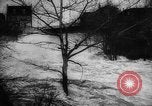
WPA workers help rescue people from the flooded area and Harry Hopkins visit the flooded area in the United States.
WPA (Works Progress Administration) units carry out relief projects in flooded areas in the United States in the Great Depression. The floods in a town. The water entering the town. The fields flooded with water. Damage due to floods. Aerial view of the flooded area. Houses submerged in water. The water on streets. Several views of damaged buildings and submerged houses in water. The workers of the WPA help the people to rescue. They take the people stucked in their houses aboard a boat. Several views of the workers helping the people to rescue. The WPA workers on the snow area. The victims are provided woolen clothes by the workers. Red Cross nurses in a hospital. They treat the wounded. The workers carry wooden planks on their shoulder. The WPA workers fill sand bags. The workers lay sand bags near a river. Director of WPA Harry Hopkins inspects flooded areas. The workers remove the wreckage. The wreckage on the ground. The workers remove the wreckage.
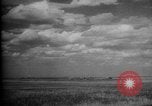
WPA workers provide food and medical supplies to dust storm victims and give employment to the farmers in the United States.
WPA (Works Progress Administration) units carry out relief projects in dust bowl sections in the United States, during the Great Depression. A drought and dried area thick with dust. The hot dry winds blow. A dust storm occurs. Two people - a woman and a boy, are seen walking with difficulty in the dust storm. Food and medical supplies are delivered to dust storm victims. The women fill water from a hand pump. Nurses treat the children and examine them for respiratory problems and other ailments. The children seated on a bench. A nurse writes into a paper. A close up of a boy with a thermometer in his mouth. A nurse checks eyes of a boy. Horse drawn equipment and teams of farmers with horses . The farmers employed by the WPA work. The farmers are hired by the WPA to construct a new road, with much of the digging and leveling done with horse drawn power. The farmers on horse drawn carrier move on a road. They are at work during the project. Relief workers and men who suffered from drought construct dams to help stop land erosion. The workers building the dam substructure and hauling rocks during the construction.