


 Francais
 Deutsch
 Italiano
Refine Your Search
+"United States USA" +1941 stock footage and images
- Showing 55 to 60 of 303 results more
more Hide
Hide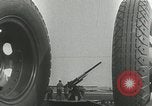
Soldiers fire anti-aircraft gun during air raid drill.
Soldiers fire anti-aircraft gun during air raid drill. Formation of Douglas B-18A Bolo and Curtiss P-40D aircraft in flight. Pilots and crew members inside the aircraft. (World War II period).
American women work as part of the National Defense Program, United States (WW2)
Wartime activities of women in United States during World War II, narrated by Hollywood actress Katharine Hepburn. A statue of a historic “Pioneer” American woman. American women work to save and help the nation. Women work at a laboratory as scientists. A woman looks under a microscope. Test tubes and other equipment on tables. Women handling chemicals in various flasks without protective gear. They work for the National Defense Program. A woman works near a machine that tests rubber or cloth for parachutes. Woman conducts abrasion test on clothing using a Wyzenbeek machine. She feeds guinea pigs and records their weights. Another woman works in the field of science. A woman gives a lecture on nutrition. A nutrition chart on wall. Other women attend the lecture. Women design working clothes for women. A woman wears a factory jumpsuit uniform.
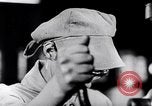
American women actively participate in the National Defense Program as war production workers in United States.
Wartime activities of women in the United States during World War 2. American women wearing uniforms work at machines in factories, assisting with the war production effort. They perform work in operating machines including drill presses, sewing, and fine detail work with precision instruments. They sew airplane wing fabric and parachutes. They assemble and inspect precision instruments employing tiny bearings. The women war workers operate drill presses and lathes in a machine shop.
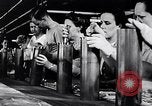
American women actively working and participating in the National Defense Program of the United States in World War II.
Wartime activities of women in United States during World War 2. American women war production workers busy in an ammunition factory helping men with war production. They check the shells at the munitions plant. A woman gives a lecture. A chart on wall. Other women attend the lecture. They wrap surgical dressings for the Red Cross. A woman gives blood to blood bank. Doctor and nurses take the blood in a glass container and put it in a box. The women participate in the defense program and war effort, filling many roles previously occupied by men fighting in World War 2.
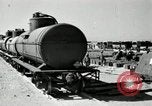
American soldiers load five gallon gasoline cans onto a truck in a desert in the United States
Gasoline railroad tankers in a desert, United States. A gasoline tanker truck parked beside. American soldiers load five gallon gasoline cans onto a military covered truck. (World War II period).
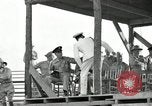
General George C Marshall, General T Roosevelt, Sir John Dill and Lord Louis Mountbatten review troops in United States.
General George C Marshall, General T Roosevelt, Sir John Dill and Lord Louis Mountbatten review troops during maneuvers. Soldiers lying on the ground use field telephones to communicate. (World War II period).