


 Francais
 Deutsch
 Italiano
Refine Your Search
+"United States USA" +1941 stock footage and images
- Showing 97 to 102 of 303 results more
more Hide
Hide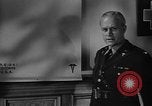
Officer talks about the symptoms of the gonorrhea diseases in United States (WW2)
World War II military sex education in the United States. Dramatization showing soldiers causes of the contraction of the diseases. Soldiers watch the film on the basic anatomy, symptoms and preventive measures of the diseases in the War Department Theater. The officer of the Army Medical Corps addresses the soldiers. He talks about the gonorrhea disease. If the germ is not discovered early, then it spreads rapidly into the body. He also states about the symptoms of the disease. The germ can also cause blindness, heart trouble and other diseases as infection spreads from hands to other parts of body.
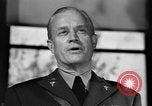
Officer talks about the symptoms of the chancroid diseases in United States (WW2)
World War II military sex education in the United States. Dramatization showing soldiers causes of the contraction of the diseases. Soldiers watch the film on the basic anatomy, symptoms and preventive measures of the diseases in the War Department Theater. The officer of the Army Medical Corps addresses the soldiers. He talks about the chancroid disease. A diagrammatic representation shows the symptoms and spreading of the germ. If the germ is not treated, it can spread rapidly inside the body. Soldier in a medical shop. Soldiers in a club play snooker. Infected soldier smokes. The infection can spread to other people. Demonstrate the precautions to be taken for the prevention of disease.
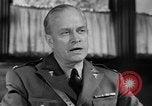
Officer instructs the soldiers for prevention of the venereal diseases in United States (WW2)
World War II sex education for soldiers in the United States. Dramatization showing soldiers causes of the contraction of the diseases. Soldiers watch the film on the basic anatomy, symptoms and preventive measures of the diseases in the War Department Theater. The officer of the Army Medical Corps addresses the soldiers. He gives instruction to the soldiers for the prevention of such diseases. He states that the soldiers should visit the army hospital if they suspect any such diseases. The army hospitals have latest drugs, equipment and well trained medical operators. He also instructs the soldiers not to drink too much so that they do not loose control. They should have a strong body free of diseases to serve the Nation.
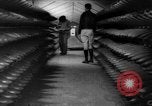
Men work on gun barrels and other ammunition inside an ammunition factory in the United States.
Men work in an ammunition factory in the United States. Artillery gun shells stacked inside a building. Men write down information about the shells. Interior of the factory. Men work on a gun barrel inside the factory. Other men watch. An officer discusses with a man. Artillery lined up on the battlefield. Soldiers stand near the artillery. (World War II period).

Colonel Charles Lindbergh addresses people about the position of the U.S. in the war at the Manhattan Center in the United States.
Colonel Charles Lindbergh addresses people in New York City, United States. Interior of the Manhattan Center during the America First Committee rally. People gather inside the building. Colonel Charles Lindberg at a microphone. He talks about the position of the United States during World War II underway in Europe. He speaks the protectionist and anti-war sentiment, stating, "When England asks us to enter this war, she is considering her own future, and that of her Empire. In making our reply, I believe we should consider the future of the United States and that of the Western Hemisphere." People cheer and applaud.
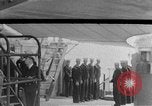
British Prime Minister Winston Churchill and top ranking British officials board USS Augusta to meet U.S. President Roosevelt
U.S. President Franklin Roosevelt and British Prime Minister Winston Churchill meet for the Atlantic Conference in World War 2 aboard USS Augusta in Placentia Bay, Argentia, Newfoundland. U.S. General George C. Marshall, Vice Admiral Ernest J. King, and Admiral Harold R. Stark, descend steps to main deck of U.S. Heavy Cruiser, USS Augusta, where they greet top ranking members of the British military establishment as they arrive for the Atlantic Conference. U.S. General Marshall is seen greeting British Field Marshall Sir John Dill. President Roosevelt is assisted by his son, Franklin, Jr. who helps him obtain a handhold on a fixture of the ship. (This is a rare shot of President Roosevelt where he is seen walking a few steps with his cane, assisted, as his disability was typically not captured on film to be shown to the public.) President Roosevelt greets British Admiral Sir Dudley Pound, Admiral of the Fleet, First Sea Lord and Chief of the Naval Staff. He also greets British Field Marshal Sir John Dill, Chief of the Imperial General Staff. British Prime Minister Winston Churchill arrives, salutes the President, and walks past. Franklin Roosevelt, Jr. steps forward and guides Churchill back to stand with President Roosevelt, for the camera.