


 Francais
 Deutsch
 Italiano
Refine Your Search
+"United States USA" +1942 stock footage and images
- Showing 211 to 216 of 520 results more
more Hide
Hide
Miners drill for iron ore and conveyors fill railroad cars with coal during World War 2 in the United States
Iron ore mine in U.S. Miners drill for iron ore. Cars filled with ore coming out. Men separate ore. View of mountains near mine. Conveyors fill railroad cars with coal. Railroad cars bear labeling for D&RGW or Denver and Rio Grande Western Railroad.
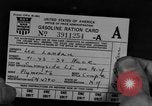
View of Gasoline ration cards, and people stand on long line for rationed goods at stores in U.S. during World War II.
Close up views of a World War 2 Gasoline Ration Card, and of the application to apply for the card. A late 1930's car driving up to a gasoline service station in Washington DC with the dome of the U.S. Capitol building visible in the background. People stand in a long line in front of stores in a busy city, waiting to obtain a rationed good.

Women crowded at a counter waiting to purchase silk stockings in U.S. during World War 2
During war ration period in the United States, women crowd around to buy silk stockings from stores in the U.S., during World War II. Women look at silk stockings in windows. Interiors of store. Crowd of women shoppers gathered at a store counter waiting to purchase silk stockings. Women buying stockings.
Series of test in which automatic detonator 'mole' is tested for effectiveness in disabling railroad trains.
A research film in which 'mole', an automatic detonator, is tested for effectiveness in disabling railroad trains when a train suddenly enters darkness as in a tunnel. Railroad train approaching camera position near track. Point of view shot from left side of railroad locomotive train as it approaches and enters a tunnel. A train passes through tunnel. Working and components of mole explained. Components include photoelectric cell, amplifier and a detonator. Working of mole explains where to place explosive, why and how to prepare it. Charge is placed on a railroad car. This car is attached at the end of train. A train moves. Train car damaged after detonating mole. Men at railroad car examine. Charge placed by men on train. Explosion and reaction of train is tested. Damage is examined. Next test shows 'linear shaped charge' with explosive and bracket to hold it, demonstrates how to secure charge to bracket, bracket to train car and where to place components of mole. Explosion on train. Damage in detail is examined. World War 2 period.
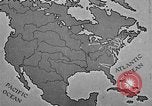
British film intended to acquaint British people with United States landscape, rail transportation, and farming history.
British World War 2 era film showing scenes in the United States from earlier in the 1900s. Film opens showing 19th Century animated map of the United States. It traces the development of the railroads in the U.S. It shows rail lines reaching the Missouri River by the year 1860. (Narrator states this took 250 years to happen.) But in another 10 years, the map shows the Union Pacific and other rail lines extending two the West Coast, and U.S. commerce shifting, from North-South movement, to East-West (with an animated steam locomotive moving across the map). Chicago is highlighted as the greatest railway junction in the world (the "Piccadilly Circus" as the British narrator describes it). View of a late 1800s model steam locomotive train pulling freight railroad cars on railroad tracks in a desert area of the Western United States. Point of view from camera on moving railroad train pointing straight down at railroad tracks moving by at high speed. Landscape and wide views of the arid Western parts of the U.S. Group of Native American Indians watching a railroad train pass. Construction supplies being offloaded from a train. A wind-driven water pump. Buffalo herds affected by the railroads. Wire fencing installed to control cattle on large Western ranches. Large team of horses pulling late 1800s wheat harvesting farm equipment as it harvests wheat in fields. Views of wheat grains being poured at high volume. Cattle roaming in the high country. Views of Chicago stock yards. A man marking in chalk on a Board of Trade chalk board, indicating the prices of farm commodities including wheat, corn, oats, and rye. Various views of steam locomotives pulling trains throughout the rail network, including some 20th century trains near the end of the film, and some close-up views of wheels turning fast on moving railroad trains.
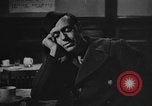
Model community, growth in cities, and town meetings in the United States.
A U.S. Army soldier seated on a chair takes a nap. A cup kept in front of him on the table. Children walking on sidewalk in small town America. Downtown view of small Indiana town. View of an American family of a small town seated in dining room for a dinner meal. Children exit a one room school house. Both a well-kept high school building and a rural simple school are shown, with boys and girls in bare feet exiting the poor rural school down a wooden ramp. Men lined up for work. Children playing in slum and tenement areas in poverty stricken areas. Quick views of skyscrapers, new schools, buildings, colleges (including view of Rice University in Houston Texas) and art galleries in the United States, including the National Gallery of Art entrance. A Texan in a cowboy hat delivers a John Randolph famed "Texas Brag" saying, "If all the hogs in Texas were one big hog, he could dig the Panama Canal with three roots and a grunt.” The National Gallery of Art in Washington, D.C. Labor organizer John L. Lewis, president of the United Mine Workers of America (UMW) states, "The American Federation of Labor can help if it will, it can uphold anything, but we shall carry on." An American town hall meeting in progress. (World War II period).