


 Francais
 Deutsch
 Italiano
Refine Your Search
+"United States USA" +1942 stock footage and images
- Showing 241 to 246 of 520 results more
more Hide
Hide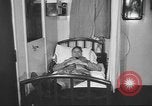
An officer proceeds further on a message and operates an equipment aboard a ship off the shore of the United States.
An navy officer works on a message aboard a ship off the shore of the United States. An officer lying on a bed. A man comes in and delivers a message to the officer. The officer gets up and processes the message. He works on an equipment using a headset. The officer comes on the bridge of the ship and operates an instrument. He looks through binoculars.
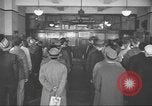
Seamen stand in queues and sign Maritime Commission papers in the United States.
Merchant seamen sign Maritime Commission papers in the United States. The seamen standing in several queues. United States Merchant Marine personnel sitting at a table. The seamen sign Maritime Commission papers. They leave the queues after signing.
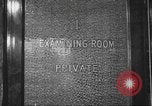
A doctor checks height, ears, blood pressure and undertakes dental and body check up of seamen in the United States.
Physical examination of U.S. Merchant Marine seamen in the United States during World War 2. A sign on a door: 'Examining Room Private'. Interior of the room. A doctor measures the height of the seaman. He checks blood pressure. Man receives dental check up and ear check. Respiration and lung check up is done with a stethoscope. Cars parked outside a building. A sign on the building: 'Standard Shipping Office'.
A man applies and receives a courier of his acceptance from the Merchant Marine Cadet Corps in the U.S.
A film titled 'Tomorrow's leaders of the Merchant Marine' shows merchant marine officer candidates in the United States. Sail boats at sea. Seamen operate artillery aboard a ship. The seamen take transfer to another ship. Men aboard a ship. A man applies to the Merchant Marine Academy to become a Merchant Marine Officer. He writes the address of the Merchant Marine Cadet Corps. The man works in his office. His mother receives a courier from the Merchant Marine Cadet Corps. She calls her son. The man reads the news of his acceptance and the order to be present for a physical examination.

U.S. citizens invited to send vacation photographs taken abroad to OSS in the United States during World War 2
Public service announcement to be shown to American citizens going to move theaters during World War II. U.S. OSS (Office of Strategic Services, precursor to Central Intelligence Agency or CIA) headed by Colonel William Joseph Donovan asks the public to send in vacation photographs taken abroad. Narrator explains that photos of overseas ports, docks, railroads, and places of strategic importance in cities can be useful for the U.S. war effort (for intelligence and targeting purposes). Women workers remove pictures from mail sacks, view them for useful information, and sort them. Men examine images by magnifying glasses. Closeups of example photos are shown. Colonel L. E. Norris takes a look at photographs at his desk and holds up a card with his name and address. Narrator invites viewers to send photographs to Colonel Norris as a civilian contribution to the war effort and says, "it's one way you can help win the war."
U.S. citizens send movies and photographs taken abroad to OSS Colonel L. E. Norris in the United States during World War 2
U.S. OSS (Office of Strategic Services) headed by Colonel William Joseph Donovon asks the public to send pictures taken abroad to Colonel L. E. Norris in the United States during World War II, to assist in war planning and intelligence. Passengers arrive. Cameras on a conveyor belt. Passengers on a ship. Colonel L. E. Norris of the OSS sorts war photographs in his office. Employees examine film strips and photographs. OSS staff watches a movie. Still photographs of various locations including the Solomon Islands.