


 Francais
 Deutsch
 Italiano

Refine Your Search
+"United States USA" +1943 stock footage and images
- Showing 145 to 150 of 523 results more
 Hide
Recognition, capabilities and similarities of Japanese Zero fighter plane and United States P-40 Warhawk (WW2)
Recognition and capabilities of Japanese World War II Zero fighter plane. Japanese Mitsubishi A6M Zero in flight. Animated diagram of Zero fighter plane shows its wings, tail and engine. Animated picture of Zero fighter plane and United States P-40 Warhawk. The similarities and differences of both the aircraft is shown. United States P-40 Warhawk in flight. Actor Ronald Reagan dramatizes the experience of mistakenly shooting at a P-40. Officers converse with each other. Pilot looks at pictures of P-40 War Hawk on wall. Airmen discuss the differences and similarities between Japanese Zero fighter plane and the United States P-40 Warhawk. Pilot seated in cockpit of P-40 Warhawk. Airmen ask questions of Ronald Reagan. Pilot Ronald Reagan then takes to the air, correctly identifies a Japanese Zero fighter plane and shoots at it.
United States Army soldiers make artificial rocks that camouflage in rocky terrain during World War 2.
Camouflaged dummies and decoys in World War II. Realistic looking artificial rocks made by United States soldiers. Framework made of wire. Soldier lifts the framework from ground and places white paper on it. A group of soldiers paints the covered framework with natural mud color. The wired framework is removed from inside. Black paint sprayed on the imitation rock. Soldier removes cover from ditch on ground and emerges with a rifle in his hand. Soldier enters a camouflaged rocky area on ground. Tents covered with nets.

United States soldiers paint jeep with camouflaged natural paint in rocky terrain, United States.
United States Army soldiers gather natural mud and soil. They mix it to make a paste. Soldier draws markings on jeep. He paints the jeep with natural paint using his hands. Jeep's windshield and hood painted with the help of brush. Soldier drives camouflage painted jeep on road. Tanks painted with camouflaged natural paint. (World War II period).

United States soldiers make framework of a tank and place it on jeeps for disguise in World War II
Disguise and camouflage techniques for U.S. Army military equipment in World War 2. United States soldiers place lightweight framework over tank to make it look like a truck, during World War II. Soldier removes framework from the tank when not in use. Jeep moves with a decoy framework on it. Soldier parks the jeep and comes out of the framework. Soldiers cover the assembled framework with cloth. The dummy tank lightweight construction is easily lifted by two men and placed over a jeep. Soldier drives away with the tank dummy. Aircraft flies overhead. Camouflaged tank drives on road.
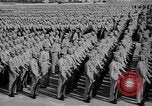
Studies to determine attitude of American soldiers towards their jobs in United States (WW2)
Attitude of United States Army soldiers towards their jobs and World War II. Soldiers stand in formation. Chart reveals their ignorance of jobs. Soldiers march with flags. Charts of the Signal Corps and Corps of Engineers show the percentage of the ASF liking their own jobs most. Soldiers parade. Buildings in the background. The study reveals that most of the United States soldiers not like their job. The percentage of the soldiers in the army reduced to 50 percent in the last few months. A study is made to find out other information. An airplane in flight. Soldiers were asked about their understanding of their jobs, what do they feel about combat and the effects of war films on them produced by the army. They were also asked about their opinion as which country do they feel is trying hardest to win the war.
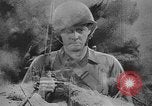
Training the soldiers and providing them with an understanding of their jobs in United States (WW2)
The ignorance of soldiers about their jobs and the war, United States. Stresses the psychological need for hating the enemy. Dramatizes the battlefield treachery of soldiers. Soldiers fire and bombard on the battlefront in World War II. Smoke arises from firing and bombarding. Tank moves on field and fires. A soldier bombing a barbed wire entanglement. Other soldiers fire machine guns. They advance forward on the front. News headlines about the soldiers and their ignorance of job reveals that the soldiers are not prepared to fight. They do not have the understanding of their job. An officer gives lecture to soldiers in the 'Classification Section' to provide them with a proper understanding of their job. The soldiers read books and magazines. They work on the tanks and other war equipment. Training the soldiers mentally. Weekly news about the war on boards.