


 Francais
 Deutsch
 Italiano
Refine Your Search
+"United States USA" +1943 stock footage and images
- Showing 205 to 210 of 523 results more
more Hide
Hide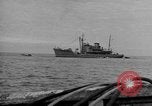
Ground mines laid by Destroyer Minelayer in harbor and destruction of enemy vessels, United States.
Ground mines aboard a Destroyer Minelayer (DM) underway in harbor. Ground mines planted in the harbor. Cover of ground mine is opened and cable to the distribution box is attached. A crane lowers the mine into the water. Cables connected from mines to distribution boxes that control firing. Distribution box is lowered in water. Animation shows the laying of ground mines by a DM. View of switchboards in the central control station at the harbor. Demonstration of reports received, interpreted and acted upon. Enemy vessels are destroyed. Huge explosions in water (World War II period).

Production of petroleum at oil refineries and its transportation in United States, before and during World War II
Documentary titled, ' Oil Is Blood ' on production and transportation of petroleum and its by products in United States. Crude oil in a pit. Man takes samples from the pit. View of derricks at an oil drilling site. Derricks at sea. Exteriors of a building near the derricks. Service station attendants, pumping gas and cleaning the windshield, on a 1942 Lincoln Continental convertible, at a "Tydol Flying A" gas station. Scenes of busy highways and plenty of fuel give way to empty roads, closed gas stations, and restricted hours for obtaining fuel, as it is rationed during World War 2. Views of persons obtaining ration stamps and books. Various gasoline ration books including the "A" books (allowing the smallest amounts) and "B", "C", and other books allowing larger rations to more essential users. Oil rig "roughnecks" inserting new sections of pipe and proceeding to drill. Closeup of a "gusher" before it is capped. Men filling railroad tank cars with petroleum products. A long train of tank cars pulled by a steam locomotive. Animated map illustrates the ocean shipping lanes that formally served as means to transport fuel and oil, before the German U-Boat threat made them too dangerous for general use. Drums of fuel and oil being loaded aboard a ship to supply the Allies during the war. A convoy of ships heading to the war zone of North Africa.
Men learn to operate DUKWs in a training school in the United States.
A film titled 'DUKW: the sea going truck' on working and general features of DUKWs. Soldiers at a beach in the United States. Cargo and equipment stacked on the beach. A landing craft and a DUKW underway at sea. A truck moves along the beach. Men learn to operate DUKWs at a training school. They learn how to drive it on land. Men seated in DUKWs and operating them. The DUKWs moving along a street. A man comes out of a DUKW. He works on a tire and boards again. The DUKW moves. DUKWs moving along an area. Men shovel mud on a beach. A man comes out of a DUKW. Men standing behind the DUKW shovel mud. The importance of proper tire pressure for roads and beaches is emphasized. A bogged-down DUKW winches itself free. (World War II period).
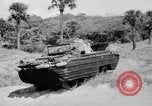
A DUKW moves across a field and along a street in the United States.
A film on workings and general features of amphibious trucks DUKWs. A DUKW moves along a field in the United States. Tire pressure must be adjusted to get maximum speed and prevent damage to the tire. The DUKW moves along a street. A man comes out of the DUKW and checks the tires. He boards again and the DUKW moves.
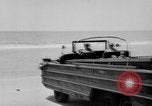
Men aboard a DUKW don life jackets before it enters water in the United States.
A film on workings and general features of DUKWs in the United States. Precautions must be taken before a DUKW enters water. Tire pressure should be checked and hatches and other things should also be checked. Men aboard a DUKW. They don life jackets. The propeller of the DUKW. The truck enters water and moves. Men work on the truck. A cable is tied on the bow of the DUKW.
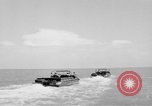
Men clean and check the lubrication of a DUKW in the United States.
A film on workings and general features of DUKWs. Men aboard DUKWs underway at sea in the United States. They learn about navigation. Men discuss the course undertaken by the DUKWs. They don life preserver jackets. They head in for a landing. Traffic rules should be followed while driving a DUKW. The DUKWs move along a beach. They move in water. An officer addresses men at a beach. The men at work. They clean the DUKW. Lubrication is checked and rechecked.