


 Francais
 Deutsch
 Italiano
Refine Your Search
+"United States USA" +1943 stock footage and images
- Showing 511 to 516 of 523 results more
more Hide
Hide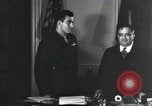
The Mayor of New York La Guardia interviews Sergeant John Basilone after he received the 'Medal of Honor' (WW2)
United States Marine Corps Sergeant John Basilone being interviewed in New York during World War II. The Mayor of New York Fiorello Henry La Guardia interviews him. The mayor in his office with the sergeant. La Guardia welcomes Basilone and they shake hands. Sergeant Basilone received the Medal of Honor for his work for the country. The mayor interviews him about the combat against the Japanese. The mayor makes a statement concerning war bonds.
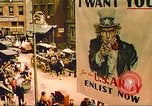
Men leave for Camp Upton in New York after their enlistment in the U.S. Army.
An American feature film depicts the life of professional dancer Jerry Jones enlisted in the U.S. Army during World War I. A poster on a wall reads: 'I Want You for the U.S. Army Enlist Now'. People walking and vehicles driving past in a vegetable market. Jerry Jones leaves for a training camp. He bids good bye to his mother. Buildings along the sides of a street. Two woman talk amongst themselves. A man plays a bugle in his house. His wife talks to him about his enlistment in the U.S. Army and cries. He leaves for the camp. Men enlisted for the U.S. Army at Camp Upton in New York. Men sleep on their beds at the camp. They wake up after a call at 5:30 am. A sergeant arrives and asks them to wake up. He scolds them. They get off their beds. The sergeant talks to two of the soldiers and scolds them. The soldiers holding rifles stand in formation on the ground.

Soldiers practice for a musical show at a camp in New York.
An American feature film depicts the life of professional dancer Jerry Jones and how he puts on musical shows for the U.S. Army during World War I. Soldiers march in a camp in New York during their training. A sergeant instructs them. The sergeant talks to dancer Jerry Jones. He says that he wants to dance and perform for the army. The sergeant talks to an officer about Jones wishes. The officer tells him to arrange a musical show for the army. Newspaper headlines about the musical show. Men practice for the show in a mess. Some of the men prepare food and sing. Others play musical instruments. Jones practices for his performance. He dances and other men sing and play instruments. The sergeant watches the practice. They prepare boards and banners for the show and practice. They discuss amongst themselves about the show. A bugler plays his bugle. Interior of a theater. The soldiers perform on a stage. People watch the show.
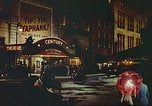
Soldiers perform on a stage in New York and leave for the front after the performance.
An American feature film depicts the life of professional dancer Jerry Jones and conduction of musical shows for the U.S. Army by him during World War I. Exterior of a theater in New York. 'Century Theater' written outside the theater. 'Yip Yip Yaphank' written on a board outside the theater. Men in a jeep arrive at the theater. People arrive to watch the live musical theater production. Officers discuss amongst themselves and salute each other. People watch the show. Soldiers perform on a stage. Family members of the soldiers watch the show. People applaud. The soldiers march from the stage. They bid good bye to their family members and leave for the front. People applaud.

French ships arrive and sailors march up the Broadway in New York, United States (WW2)
A French ship arrives at New York Harbor in the United States during World War II. The skyline of Manhattan at New York Harbor. French warship Richelieu arrives at the harbor. The French flag flies aboard the ship. Crew members on the deck of the ship. The ship anchored at the dock. Another ship named Mont Calm arrives in the U.S. Crew members hold kittens. A French officer salutes. Women serve refreshments to French sailors. French sailors and marines march up the Broadway in New York during a parade. People cheer as French troops march. People gathered in front of the New York City Hall. Mayor Fiorello H. La Guardia and French officers on a review stand. French sailors lined up.
Cars are stored because of the gas shortage and consumers use ration books for food during wartime in New York.
War time conditions and life in New York City during World War II. Automobile traffic on streets before war time. Cars and other vehicles move on road. Sign: 'Sorry No Gas, Don't Blame Us, Blame Hitler'. Cars are stored because of the gas shortage. Views of road showing no traffic. Skyscrapers of the city. Neon signs and lights on buildings with war time blackout conditions. Consumers buy food from stores. Sign: 'only one to a customer'. Booklet of 'United States of America, War ration Book One'. Women prepare list of required food items and receive ration books. Consumers use ration books for food. Carton are loaded onto ship.