


 Francais
 Deutsch
 Italiano
Refine Your Search
+"United States USA" +1945 stock footage and images
- Showing 319 to 324 of 405 results more
more Hide
Hide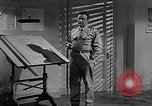
Effects of conventional bombs compared to incendiary bombs in tests against wooden structures, at Eglin Field in World War II
Tests to compare effects of conventional bombs to those of incendiaries,on wooden structures. Test conducted at Eglin Field, Florida, during World War 2. Actor Lee J. Cobb, portrays an Air Force Captain, seated at Project Officer's desk. He shows photographs of a wooden test house constructed similar to houses in Japan. View of wooden structure being ignited from within. The resultant fire is put out promptly. B-17 airplane in flight over the test area, drops conventional bombs, which destroy some of the test village houses. A second bombing using incendiary bombs that break apart and ignite many fires, produces greater destruction across the test village.
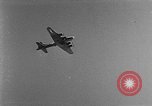
Bombing tests using conventional and incendiary bombs against wooden structures, at Eglin Field, Florida, in World War II.
Tests by the U.S. Army Air Forces to assess the effectiveness of incendiary bombs against wooden structures (typical of Japanese homes) during World War 2. Tests conducted at Eglin Field, Florida. B-17 bomber drops conventional bombs on test village, producing considerable damage where they strike. In contrast, bombing with incendiaries produces fire and smoke engulfing the entire complex, and greater destruction and confusion on the ground.
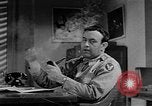
Testing various types of bombs against Japanese-style wood construction, at Eglin Field, during World War II
U.S. Army Air Forces tests of conventional and incendiary bombing of Japanese-style wooden structures, at Eglin Field, Florida, during World War 2. An Army Air Forces Captain (portrayed by actor, Lee J. Cobb) discusses bombing tests conducted at Eglin Field. He holds a pipe in his hand. B-17 bomber takes off over the camera. The plane in flight over the test area. Clusters of small incendiary bombs fall on the test village, causing it to be engulfed in flames. Immediately, thereafter, conventional bombs are dropped on the smoking test village, causing large explosions. The Air Force Captain (Cobb) discusses the results.
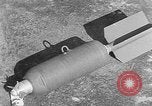
Optimum mix of fragmentation and incendiary bombs is determined during tests at Eglin Field, Florida, during World War II
Conclusions of tests conducted by U.S. Army Air Forces, at Eglin Field, Florida, seeking best way to attack Japanese homeland during World War 2. Actor Lee J. Cobb, portraying an Air Force Captain, smoking a pipe in his "office." Views of M-41 fragmentation bomb and a bundle of M-69 incendiary bombs. The Captain holds a model of a B-17 bomber and uses it to discuss bombing techniques. B-17 in flight. Views of effects of fragmentation bomb, showing numerous small holes produced by it. Aerial view of the test area houses. Mixture of M-69 incendiary bombs and M-41 frag bombs being dropped by the plane on the test area. Various views of resulting damage and effects. Test report is shown, concluding that demolition bombs are not effective against congested wooden structures; that M-41 frag bombs deter early firefighting efforts; and that a mix of 80 percent M-69 incendiaries and 20 percent M-41 frag bombs is optimum. Views of Japanese cities burning, from such bombing, during the war.

View of many city skylines, town centers, and war industries in Texas during World War 2
Cowboys approaching ride horses into a stable. Cattle graze. Oil wells and military airfield from overhead. Distant view of Dallas Texas city skyline. Night view of streets and signs in Amarillo Texas. Daytime view of a tall skyscraper building and wide street in Houston Texas with cars and traffic View of the Hotel Nimitz in Fredericksburg Texas. Downtown Fort Worth Texas city street with shops, offices, and cars. Downtown area in Pampa Texas. Street corner view in Kerrville Texas. Two different views of The Alamo and surroundings in San Antonio, Texas. A water tower and oil rigs in Kilgore Texas. Downtown area of El Paso, Texas from elevated view. Street view in downtown Beaumont, Texas. Downtown view in Wichita Falls, Texas. Downtown San Angelo Texas views. Distant view of the city of Austin Texas from an elevated position, and then in downtown Austin featuring the State House Capitol building. Cattle, sheep, and sorghum farming views. Rice fields and Turkey ranches. Many oil rigs and oil wells. A busy shipyard in Texas making ships for World War II war effort. A sprawling aircraft factory. Oil rigs pumping oil. Farmer on tractor plows wheat field. View of rice harvesting (Massey Harris Self Propelled Harvest Brigade). Men stack magnesium bars. Magnesium factory next to ocean in Texas. Hand cotton picking and view of a mechanical cotton picker. Tractor pulling sorghum harvester. Sulfur mining and Helium plant in Amarillo. Black clouds in sky from burning natural gas in making synthetic rubber for war effort. Cliff of sulfur dynamited and loaded by railroad train crane. Cowboys herd cattle and view of Fort Worth Stockyards and Exchange. Angora goat farm and turkey farming. War time production workers busy in various manufacturing and industrial jobs, showing both men and women workers contributing to the effort. View of sign pointing to the Alabama and Coushatta Native American Indian reservation. Flag with many service stars for men in the war from the reservation, on display at the Indian Agency Office. Native American Indian children with an elder and workers busy at an Indian logging camp. Close-up views of faces of some Native American Indian boys as they listen to the man speak. Campus of University of Texas, with mostly female students walking on the campus. View of State Capitol building in Austin. Well dressed women exit Dallas department store. Narrator points out an attractive woman waiting for someone. View of a large church building with people departing after the end of the church service.

Relief workers rescue people from the houses damaged by tornadoes in Alabama and Mississippi, United States.
Tornadoes kill 47 and injure many causing $1,000,000 property damage in Alabama and Mississippi, United States. Damaged houses and rubble and debris in cities. People and military troops at relief work. Box cars damaged by the tornadoes. Relief workers and Red Cross servicemen rescue people from the debris.