


 Francais
 Deutsch
 Italiano

Refine Your Search
+"United States USA" +1946 stock footage and images
- Showing 55 to 60 of 184 results more
 Hide

An insurance agent highlights the benefits of Veterans Administration's insurance policy in United States.
United States Veterans Administration's role for the war veterans of World War II. An enactment: A World War 2 veteran talks to a man at desk. An insurance agent named Joe speaks about the insurance provided by Veterans Administration. A graph depicts the business that Veterans Administration has surpassed the business of all the insurance companies put together in last five years. He lights a cigarette and then explains the reason for low insurance premium rates available especially to veterans. Piles of insurance mail received at the United States Veterans Administration. Postal letters and mail being sorted out. A map of United States shows the number of civilian deaths and accidents during World War II years. A man at desk as he reviews an insurance coverage document.
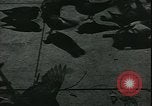
War veterans look for employment as others work in their own establishments in United States.
United States Veterans Administration's role for the war veterans of World War II. An enactment shows a war veteran as he feeds a pigeon as another looks for a job in a newspaper. Veteran at an interview but fails to get a job. He walks out of the office. A self employed veteran at a farm as he feeds the cattle. Another self employed veteran at a coffee shop.
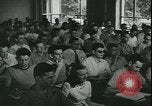
War veterans return to colleges to complete their education in United States.
United States Veterans Administration's role for the war veterans of World War II. An enactment shows students in a classroom. War veterans return to educational institutes to complete their education as Veterans Administration supports them with subsistence allowance. Veterans in a lab getting technical training. A war veteran at his study table.
War veterans being provided employment under the financial rehabilitation benefits provided by the veterans administration, U.S.
United States Veterans Administration's role for the war veterans of World War II. An enactment shows Veterans administrations role in terms of physical and financial rehabilitation of war veterans. A service disabled war veteran being provided technical training to enable him to get a job. War veterans being imparted technical training. A war veteran meets a vocational guidance officer. The officer guides him about the jobs he can take up and puts him through a series of scientific tests. A blind ex- Sargent in his gift shop set up by veterans administrations help under financial rehabilitation measures. A veteran in his home purchased under the financial rehabilitation benefits provided by the veterans administration.

Setting up of hospitals to serve the veterans in the United States.
Medical facilities provided by the Veterans Administration in the United States. An official at a desk talks about location of hospitals for war veterans in the United States. A map of the U.S. shows the distribution of veteran population and the location of hospitals throughout the country. Men look at the model of a hospital. A hospital building under construction. A bulletin of the School of Medical Science as they agree to work with the VA ( Veterans Administration ) hospitals. A Deans' Committee at a meeting as the members discuss various issues like the maintenance of standards at the hospitals. Men work in a laboratory. The official at the desk explains the organization of medicine and surgery under the Veterans Administration. He points at an organizational chart. Officers and officials at a meeting.
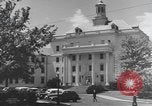
Setting up of hospitals to treat veterans suffering from neuropsychiatric disorders in the United States.
Medical facilities related to neuropsychiatric disorders being provided by the Veterans Administration in the United States. Exteriors of a V.A. hospital building. Animation shows the increase in number of neuropsychiatric patients from 1942 to 1950 and forecasts growing through the 1980s. Narrator describes high prevalence of such problems among veterans. (Also known as "shell shock" or, more recently, Post Traumatic Stress Disorder, or PTSD.) Exteriors of hospitals and training schools where neuropsychiatric specialists train. A doctor talks to a patient in a bed. Neuropsychiatric research being conducted in a laboratory. A technician works on an instrument. A neuropsychiatric specialist being trained. A technician works on an instrument. Psychiatrists discuss. They give various therapies to patients like the shock therapy, the socializing therapy in which a patient plays golf.