


 Francais
 Deutsch
 Italiano
Refine Your Search
+"United States USA" +1961 stock footage and images
- Showing 1 to 6 of 210 results more
more Hide
Hide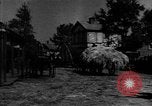
(Mostly reenactment) 1961 film showing advances in commerce, communication and transport in United States in mid 19th Century.
Mostly reenactment footage showing how post-civil war Industrialization leads to a market surplus in United States giving a boost to commerce. (Film made in 1961) Development of communication system, system of sending mails by horsemen. Telegraph poles and cables set up. Construction of Transcontinental railroad tracks to develop a vast transport network. Sketches of men laying telegraph cable across Atlantic to set up link between east and west. Expansion of petroleum industry: Dramatization of an oil well "gusher" as it gushes oil upward and excited well workers celebrate. Following scene is of actual oil wells gushing and a field of oil wells and derricks in place.
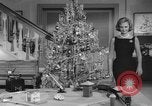
Actress Donna Reed suggests giving United States Savings Bonds as a Christmas gift in 1961
Christmas time advertisement for U.S. Savings Bonds. Interior of a house decorated for Christmas, with Christmas tree and toy train running on a table. Actress Donna Reed walks to the table, stops the train and holds up a December 1958 U.S. Savings Bond. She speaks about the Savings Bond, places it on a toy train car, and starts the train. As the train moves along the track, it passes signs reflecting successive passing time increments: Dec 1961 (three years), Dec 1964 (3 more years), and Aug 1968 (3 more years and 8 months). By staying on track to maturity, the bond is worth much more. Donna Reed notes this and suggests Savings Bonds as a Christmas gift. She closes by wishing everyone a Merry Christmas. (Note: The original maturity period for a Series E Bond was 10 years. But the U.S. Government reduced it to 9 years and 8 months, in 1952. That revised maturity period is reflected in this advertisement.) (Additional note: The trains are by Lionel, and include "The General" locomotive, a New York Central boxcar, a Lionel flatcar, and Lionel Lines caboose.)

Major events in various countries during 1961 including Lumumba's death, Algerian and Vietnam War and Congo crisis.
Major events around the world in the year 1961, causing international tensions and crisis after crisis. A large crowd runs on roads during riots in Cairo caused by death of African anti-colonial leader Patrice Lumumba. Fidel Castro strengthens his regime in Cuba. Castro addresses a large crowd of his supporters. Warfare splits newly formed nation of Congo. Katanga President Moïse Tshombe waves hands towards crowd of his supporters. Soldiers fire rifles and advance cautiously in grasslands of Laos and South Vietnam during Vietnam War. War between brothers in Algeria. Soldiers fight on streets of a town.

Minnesota Twins play first baseball game in new city, April 1961
Newsreel clip on Minnesota welcoming major league baseball to the state in April 1961. Exterior views of Metropolitan Stadium, the home of the new Minnesota Twins. Banner reads "The Minnesota Twins Welcome You." Announcer notes team is playing in Bloomington, seven miles from each of the state's two major cities, Minneapolis and St. Paul. View of 25,000 spectators, most bundled up for a chilly day, inside stadium for the home opener against the Washington Senators. Those on hand include baseball commissioner Ford Frick, American League president Joe Cronin, and Minnesota Governor Elmer Andersen. Announcer notes the previous Washington team moved to Minnesota and was replaced with a new Senators team in Washington. Dignitaries walk on field trailed by Minnesota manager Cookie Lavagetto and Washington manager Mickey Vernon. Dignitaries raise the American flag. Governor Andersen kisses a baseball and throws out the ceremonial first pitch. Announcer notes Twins lost this game, but says "Who cares?" because Minnesota is in the big leagues.
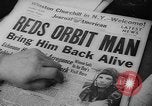
Russian cosmonaut Yuri Gagarin returns after his historic space walk and NASA launches Mercury spaceships for sub orbital flights.
Soviet and American achievements in space travel in the year 1961, during the so called "space race". Russian cosmonaut Yuri Gagarin returns after his historic trip in space and NASA launches its Mercury Freedom 7 spaceship for sub orbital flight by Astronaut Alan Shepard. A news paper reports about the success of Russian space mission as the Yuri Gagarin returns after a space trip. A large crowd gathered cheers for Gagarin. National Aeronautics and Space Administration (NASA) workers work on Mercury-Redstone 3 spacecraft "Freedom 7" for carrying out sub-orbital flight, manned by Alan Shepard. Scene shows launch of the Mercury MR-3 mission on May 5, 1961. View of Commander Shepard in capsule during flight. Helicopter lifting Alan Shepard to safety after the successful flight. Commander Shephard shown beside the spaceship capsule on deck of aircraft carrier after recovery. View of flight preparations for Mercury-Redstone 4 (MR-4). Liftoff of MR-4 on July 21, 1961, commanded by Astronaut Captain Gus Grissom. NASA scientists in Mission control room. Helicopter rescues astronaut Grissom from sea after safe splashdown of MR-4. View of bridge of ship USS Randolph (USS-15) during recovery effort. Astronaut Grissom walking on the deck of the aircraft carrier after recovery.
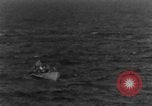
Search for survivors after collapse of U.S. Air Force Radar Station (Texas Tower No. 4,TT-4) in the Atlantic ocean, off Long Island.
Search and rescue efforts after the destruction of Texas Tower Number 4, a U.S. Air Force Air Defense Command Offshore Radar station, in 1961. It was located off Long Island (39degrees48'N 72degrees40'W) and operated by airmen of the 646th Radar Squadron. It had experienced structural difficulties including damage from Hurricane Donna, on September 12, 1960 and was being scheduled for repair or dismantling. The USNS New Bedford and the USS Wasp were in the vicinity, on January 15, 1961, when the storm caused the Tower to collapse and sink.But they were unable to save anyone. In subsequent search and rescue operations, after the storm, The USS Sunbird (ASR-15) submarine rescue ship is seen at the site, along with sailors in a motor whaleboat from the USS Blandy (DD-943). A helicopter from the USS Wasp (CV-18)flies overhead. A scuba diver surfaces near the whaleboat and is taken aboard. A motor whaleboat from the USS Sunbird maneuvers in rough water. Whaleboats seen returning sailors and divers to the Sunbird.