


 Francais
 Deutsch
 Italiano
Refine Your Search
+"United States USA" +1967 stock footage and images
- Showing 103 to 108 of 339 results more
more Hide
Hide
A disabled aircraft lands smoothly on the ground with the help of a parachute in the United States.
Demonstrations of a huge parachute helping a disabled plane to land. A group of airmen turn an aircraft. Pilot Walker taxis the aircraft on a runway. A parachute opens up and the aircraft descends smoothly on the ground without any damage. Pilot Walker walks out and shakes hands with an official.
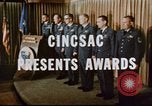
Crew of U.S. Air Force KC-135 aerial refueling tanker aircraft are awarded medals by General Joseph J. Nazzaro.
Crew of a U.S. Air Force Strategic Air Command (SAC) aerial refueling KC-135 tanker aircraft stand on a stage. They stand at attention as a Lieutenant Colonel at a podium reads the citation accompanying their award , in recognition of a unique refueling mission they performed during the Vietnam War. The crew members are Major John H. Casteel, Aircraft Commander; Captain Richard L. Trail, Pilot; Captain Dean L. Hoar, Navigator; and Master Sergeant Nathan C. Campbell, Boom Operator. During Operation "Daisy Chain," they performed the first ever three-level aerial refueling operation that saved six carrier-based U.S. Navy aircraft critically low on fuel, over the Gulf of Tonkin. Each crew member is awarded the Distinguished Flying Cross by SAC Commander in Chief. General Joseph J. Nazzaro. Closeup of the medal on Sergeant Campbell.
U.S. Army soldiers undergo simulated combat and perform physical fitness drills in the United States
Training film "Physical fitness U.S. Army." Shirtless U.S. Army soldiers jogging together in a tight column, toward a moving camera position. Soldiers conducting armed maneuvers during combat training at an American base, including running and crawling as they advance. American soldiers do push ups during training in United States. Series of scenes shows soldiers conducting maneuvers in the field, followed by soldiers conducting similar training exercises to build strenthy, agility, and endurance for conducting those maneuvers. Emphasizes the importance of physical fitness for soldiers. Simulated combat scenes, soldiers fire rifles and soldiers undergo physical training. Views of radar dishes and antennae representing new technology, while narrator stresses that physical fitness is still vital. Soldiers in M47 Patton tanks conduct live firing exercises and maneuvers during training.
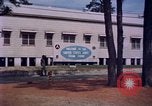
Arrival of new U.S. Army soldier recruits for training; soldiers engaged in fitness training in United States
Arrival of new cadets with poor physical fitness at Army training academy in the United States. Group of new U.S. Army recruits exit a Greyhound bus, dressed in civilian clothes. Some are white and some are African American. They line up for instructions from a uniformed officer. Drill Sergeant trains the cadets in physical fitness. Cadets do push ups and other exercises for strength and coordination. Cadets march, run and sprint to improve physical fitness. They relax and cool off after the training session.
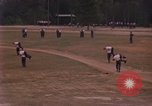
Physical combat proficiency test conducted at an Army training academy in United States
Physical combat proficiency test (PCP Test) conducted to judge the level of physical fitness among cadets in Basic Training at a United States Army training academy. The cadets undergoing the test perform events like 40 yard low crawl, dodge run and jump test, 150 yard men carry, mile run. A Drill Sergeant makes the cadets perform exercises. Cadets trained in guerrilla warfare. Cadets undergo dual combat training and hand to hand combat training. They again undergo tests as officers judge them.
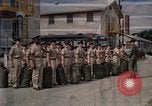
American soldiers undergo Advanced Individual Training at unit level in United States
American soldiers undergo Advanced Individual Training (AIT) for maintaining physical fitness at the unit level. Group of U.S. Army recruits having completed basic training stands in line and boards a bus with their duffel bags to head to initial assignments. At initial assignments, physical training continues, as drill trainers give technical instructions to the soldiers. They undergo physical exercises, rifle drill, marching, rugged grass drill, obstacle course. U.S. Army soldiers practice bayonet tactics. Soldiers also learn hand to hand combat tactics and play soccer to maintain their fitness.