


 Francais
 Deutsch
 Italiano
Refine Your Search
+"United States USA" +1975 stock footage and images
- Showing 85 to 90 of 136 results more
more Hide
Hide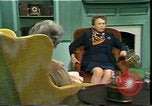
Jessie Bernard and Edna Rostow discuss about the role a woman plays and the need to cope up with the society in the U.S.
A film about problems faced by working women in the United States. American sociologist Jessie Bernard and Edna G. Rostow, a mental hygiene consultant at the Yale University, discuss about the increased dependency age of children on their parents. Prolonged education and industrialization being one of the reasons for the dependence. Children leave home as they realize their dependence. They talk about the role of women in the society and the changes needed in women to cope up with their children and the society. They talk about broadening the life of a woman and expanding her role in the society and the change in the relationship between a man and a woman. Jessie Bernard shares her personal experience and difficulties in being a single mother. Edna G. Rostow talks about the understanding between a husband and a wife while sharing her personal experience.

Jessie Bernard and Edna Rostow discuss problems women face to balance personal and professional life in the United States.
A film about problems and challenges faced by women in the United States in the 1970s, as the traditional roles of women are changing, with more women in the workplace working to balance home life. American sociologist Jessie Bernard and Edna G. Rostow, a mental hygiene consultant at the Yale University, discuss that often women don't think that men are contributing much towards their progress. The pattern of the society being industrialized and nuclear families creating more problem for women to balance between their social and professional work lives. They insist upon development of child care centers and fathers' contribution in the development of children. They discuss about women going to work in urban and industrial areas.

Jessie Bernard wand Edna Rostow discuss generation gap and sharing of vital life phenomenas by a couple, United States
Film about the problems faced by working women in the United States. A American Sociologist Jessie Bernard along with Edna G Rostow a Mental Hygiene consultant at Yale University discuss about the generation gap. They also state that they get to learn a lot of things from their children. They share their personal experiences with their children. They discuss about men and women sharing the vital life phenomenas.
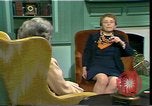
Jessie Bernard and Edna Rostow discuss about sharing of roles and image of working women in old society in the United States
Film about the problems and challenges faced by the changing roles of women in the United States in the 1970s. A American Sociologist Jessie Bernard along with Edna G Rostow a Mental Hygiene consultant at Yale University discuss about the importance of sharing of role between men and women. They state that one has to be aware, and not afraid of the responsibilities in a time when women are holding jobs outside the home and also having home roles. They discuss about the old society and traditional roles of men working outside the home and women as home makers or housewives, along with its pros and corns. The image of working women not opting to marry in olden days. Their views contradict on women not opting to marry for career. Views of women in various activities: Women walk across street. A woman laughs. Women practice dance in a group. A woman works as a dentist or dental hygienist. Two women bird trainers. A woman plays a cello in an orchestra, and another woman sings while holding a microphone. Women U.S. Navy personnel take oath. A woman teaches, while showing words on a blackboard. A woman works in a film edit room, winding and loading motion picture film onto a film reel.

U.S. servicemen are kept informed through Stars and Stripes newspaper, radio and television telecasts in the United States.
American servicemen are kept informed through newspaper and radio telecasts in the United States. A man operates a recording machine and records the interview of an officer. Printing of Stars and Stripes newspaper. A truck loaded with bundles of newspaper moves through streets. Soldiers aboard a ship underway at sea read a newspaper. They listen to the radio. A man operates a recording device at a American Forces Radio and Television Station. American military men watch television shows. Newspapermen discuss news material. Broadcast technical specialists operate devices at a station.

News report and informational programs are broadcast to a large majority of servicemen in the United States.
American servicemen are kept informed by American Forces Radio and Television Station facilities. A soldier listens to a radio and writes a letter. Another soldier in southeast Asia looks at a post with directional arrows showing distances thousands of miles away to cities like Seattle, San Francisco, and Denver. He sits on a bench and listens to the radio. Aerial view of the broadcasting station part of the American Forces Radio and Television Station. Power is supplied by portable generators housed in wooden shacks. View of radio studios, control rooms and administrative blocks. A man serving as Disc Jockey or DJ operates a control panel and a phonograph turntable to play a record. He turns dials on the control panel and works on a program schedule. View of a reel to reel tape machine running. News report and informational programs are broadcast to a large majority of servicemen. Military cooks working in a kitchen to prepare food. Army soldier standing at washroom sink and shaving, while listening to a portable radio. Two Army soldiers, one white and one African American, playing pool or billiards while listening to a portable radio. Soldiers on a rest break during a patrol in the Vietnam War listen to a radio.