


 Francais
 Deutsch
 Italiano
Refine Your Search
+"Washington DC USA" +1944 stock footage and images
- Showing 37 to 42 of 42 results
Dr. Ramon Grau arrives for official visit and Dr. Wellington Koo arrives for conference in Washington DC (WW2)
Dr. Ramon Grau San Martin and Dr. V. K. Wellington Koo arrive in Washington DC. Dr. Ramon Grau San Martin, president elect of Cuba, disembarks plane at Nation airport of Washington DC for official visit. Troops standing in attention. Cordell Hull greets Dr. Ramon Grau. Dr. V. K. Wellington Koo, Chinese ambassador to Great Britain arrives to represent his government for peace in World War II. He is greeted by Under Secretary Joseph C. Grew on his arrival. Troops march.
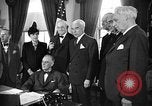
U.S. delegates meet with President Franklin Roosevelt before UN Security Conference; San Francisco city views (WW2)
United States delegates to the United Nations Security Conference meet with President Franklin Delano Roosevelt in Washington DC, United States. Seen are: Congressman Sol Bloom, of New York; Virginia Gildersleve, Dean of Barnard College; Senator Tom Connolly, of Texas; Edward Stettinius,Jr., Secretary of State,Commander Harold Stassen, USN, former Governor of Minnesota; In San Fransisco : Senator Arthur Hendrick Vandenberg, of Michigan; and Congressman Charles Eaton of New Jersey. View of Golden Gate Bridge and street scenes of San Francisco. Views of San Francisco hotels. The San Francisco Civic Center. Hotel buildings. Veterans War Memorial building. In Washington DC, U.S. delegation meets to form preliminary plan for their part in the organization of the World Security Council and International Court of Justice. Secretary of the State Edward Reilly Stettinius as Chairman of the U.S. delegation, speaks about their mission. (World War II period)
Delegations from the US, Britain and the Soviet Union attend the Dumbarton Oaks Conference in Washington DC, U.S.
Delegations from three Allied nations arrive in Washington DC, United States to study post-war security during World War II. Delegates disembark from aircraft and review a parade of troops. Soviet Ambassador to the United States Andrei Gromyko, U.S. Secretary of State Cordell Hull, British Permanent Under Secretary for Foreign Affairs Alexander Cadogan, U.S. Under Secretary of State Edward Stettinius arrive and attend the Dumbarton Oaks Conference. Secretary of State Hull speaks at the conference. Alexander Cadogan speaks.
Mr. and Mrs. Thomas Sullivan receive five purple hearts for their deceased sons during World War 2
Mr. and Mrs. Thomas F. Sullivan of Waterloo, Iowa receive Purple Heart medals from Rear Admiral Clark H. Woodward at Navy Headquarters in Washington, D.C. USA. They receive the Purple Hearts in memory of their five sons who all died together while serving aboard the USS Junea on November 13, 1942. Brief shot of woman rocking in a chair while holding a young boy in her arms. Close up of Purple Heart medal in case. The Sullivans holding all five Purple Hearts together.
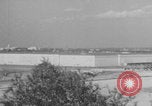
Major General Lucius D. Clay speaks of importance of scrap metal for war production (WW2)
Exterior view of the Pentagon building in Washington DC. Entrance facade of The Pentagon. Inside the Pentagon, sign says “Director of Materiel Army Service Forces Major General Lucius D. Clay”. Major General Lucius D. Clay, Director of Materiel speaks about the importance of steel in the production of US war materiel for World War 2. A secretary writes down his speech. “However our contribution to the collection of scrap can in no way meet the demand. We must depend on our home front, to exert its best effort, to collect the huge tonnage of scrap. The steel industry must have the scrap if our arms services are to obtain the high quality of steel needed for invasion. The collection of steel scrap is a vital part of our war supply program” Major General Lucius D. Clay says as he concludes his speech.
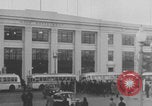
Rear Admiral Edward L. Cochrane speaks about United States Navy shipbuilding steel needs during WW2.
View of the Navy Department building, also known as the Main Navy and Munition Buildings (now demolished and turned into Constitution Gardens. Constitution Ave. NW, Washington, DC 20024, United States). Sign says “Bureau of Ships”. Rear Admiral Edward L. Cochrane speaks about the United States Navy’s shipbuilding and maintenance program during World War 2 and great needs for steel. To underscore his point, he notes that, "A single salvo of the main battery guns of such a ship as the South Dakota, for example, will take 10 tons of finished steel." He goes on to say, “Our job in the Navy until the war is over is using steel to build and to fight. We must continue to rely on the Homefront efforts to collect the big tonnage of heavy industrial scrap which is needed to make a fine quality steel in huge quantities which we need in the Navy” concludes Rear Admiral Edward L. Cochrane.