


 Francais
 Deutsch
 Italiano
Refine Your Search
+"Washington DC USA" +1948 stock footage and images
- Showing 7 to 12 of 37 results
Life of U.S. President Dwight Eisenhower after World War 2; NATO; Columbia University; U.S. President; advisor to Presidents
Dwight D. Eisenhower during presidency of the Columbia University in 1948. Eisenhower walking at a Columbia University graduation ceremony in New York City and speaking to the group assembled. Two years later, views of Eisenhower as NATO supreme commander in Europe. Eisenhower seated in NATO Conference. Citizens in United States prepare signs and urge Eisenhower to run for President. He salutes a parade in 1952 as he begins a run for the Presidency. Pamphlets and posters read 'we need Eisenhower'. An animated cartoon shows a smiling and marching Uncle Sam with an "Ike for President" jingle song playing. Cartoon shows animated citizens and an elephant supporting Eisenhower. Scenes from Republican National Convention, and Nixon and Eisenhower holding their arms up together. Citizens voting, using ballot boxes, and voting machines. A nun votes. Eisenhower casts his vote. People hold U.S. flags and cheer. Signboards and neon lighting on a building track vote tally and proclaim Eisenhower victory in 1952 presidential election. Eisenhower in Korea after the election. He meets and eats with American troops in the field and studies the war effort. South Koreans wave flags on announcement of truce (cease-fire armistice) in Korean War Eisenhower takes presidential oath of office in Washington DC. He signs document for Civil Rights Act of 1957 (voting right act). View of African American students of the "Little Rock Nine" entering a military station wagon under armed troop escort during integration of Little Rock Central High School in Little Rock Arkansas. U.S. Army troops escort the African American students into school. Exterior view of United Nations building in New York. Eisenhower delivers speech on Atoms For Peace. Winston Churchill of Britain and Nikita Khrushchev of the Soviet Union visit Eisenhower in America. Scenes of John F Kennedy inauguration in 1961. Eisenhower with Kennedy and later with President Johnson. In 1968 address to Republican Convention Eisenhower notes risk of growth of Communism.
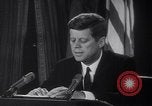
President John F. Kennedy address from White House about U.S. action against Cuba and addresses Cuban people also.
President John F. Kennedy addresses people of United States about recent events in Cuba from White House (during Cuban Missile Crisis). President repeats commitment of peace. He warns further action of Cubans towards collection of nuclear weapons. He gives reference of constitution and briefs seven steps he has instructed. First to halt any offensive shipment and cargo carrying weapons to Cuba. He states that they wont stop any essential goods carrier as Soviets did in 1948. He talked to foreign minister of Organization of American States(OAS) and instructed arm forces to stay prepared. Second he warns any launch by USSR to U.S. Then he tells about meeting with organization of Consultation regarding regional security arrangements. He refers about meeting with security council. He discusses Soviet threat to world. President invites Chairman Khrushchev to mediate between Cuba and UN on this matter. He restates no wish to war but difficulty in living in atmosphere of timidness. President Kennedy addresses Cuban people who would be listening this telecast by special radio telecast. He states we respect justice and peace for all. He expresses sorrow for Cuban people. He pronounces Cuban leaders puppets of international conspiracy. He then asks U.S. citizen to be prepared for paying cost of freedom as sacrifice and patience. He states doing nothing to be greatest hazard. He restates U.S. commitment to never choose the way of surrender and work for freedom with peace.
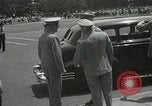
U.S. military officers, government officials, and family members at General John Pershing's funeral in Washington DC.
The state funeral for United States Army, General of the Armies John J Pershing in Washington DC. U.S. Army General Omar Bradley greets a civilian who shakes hands with other officers present. The casket is removed from the car and pallbearers proceed with it up the U.S. Capitol steps. The late General's son, sister, Secretary of State George C Marshall and others in the background. A long line of citizens enter the Capitol building to view the body. Several crippled veterans entering the building. Citizens entering the Capitol. A long line of people waiting to enter. Men, women, children, soldiers, sailors, veterans, nuns, and African American citizens waiting in line. Four men standing in the line.
Humanitarian and diplomatic efforts of President Harry Truman
President Harry S Truman marches in a parade with members of his World War I unit, Battery D. He shakes hands with disabled veterans, on the White House lawn. Aerial and ground views of encampments of homeless war veterans. President Truman signs Veterans Low Cost Housing Bill. Narrator discusses Truman's 10 Point Plan. Scenes of lower price tags on vegetables and meats in a market. President in a meeting with Bishop Henry Knox Sherrill, head of the Civil Rights Commission, discussing Civil Rights issues. President Truman shaking hands with Mexican President Miguel Aleman Valdez at the White House.
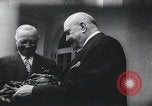
President Harry S Truman with Chaim Weizmann and with George Marshall
President Harry S Truman at the White House receives gift of a sacred Torah from Israeli President Chaim Weizmann. Truman poses with Secretary of State George Marshall at the White House. President Truman signs a document dealing with the Marshall plan. Marshall Plan food aid lowered from a ship. President Truman speaking to an audience about peace and describing it as the goal of his life. View of the White House.
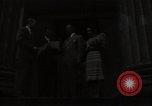
At entrance to Supreme Court, Official gives certificates to two men and congratulates them. A woman with them holds flowers.
Flanked by the huge columns at the entrance to the Supreme Court Building, in Washington,DC, four persons stand on the steps. One, an official, presents certificates to two men and congratulates them. A woman standing with them holds bouquet of flowers. They all turn and walk into the Supreme Court Building entrance.