


 Francais
 Deutsch
 Italiano
Refine Your Search
+"Washington DC USA" +1963 stock footage and images
- Showing 7 to 12 of 141 results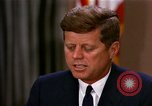
President John F Kennedy addresses nation and delivers Integration speech at White House, Washington DC.
President John F Kennedy delivers 'Integration speech' at the White House, Washington DC, addressing issues of race discrimination, civil rights, and racial integration. Seated at his desk in the Oval Office, President Kennedy says he will ask Congress to pass legislation giving all Americans the right to be served in facilities that are open to the public, thus banning separate facilities for whites and blacks, also known as "Jim Crow" discrimination laws. Kennedy says this is an elementary right. He further notes that Jim Crow laws are an "arbitrary indignity that no American in 1963 should have to endure." Exterior view of White House. United States flag flying on the White House. View inside the Oval Office before the event. Cameramen, press, and journalists with motion picture and still cameras. President Kennedy arrives and sits at the desk in the Oval Office.
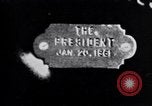
President John F Kennedy in a meeting with military advisors; also scenes from March on Washington
A plate on chair reads 'The President, Jan. 20 1961'. President John F Kennedy in a meeting with cabinet and military advisors during the Cuban missile crisis of October 1962. Aerial view of the Lincoln Memorial. Large crowd gathered for the March on Washington for Jobs and Freedom on August 28, 1963. They carry banners and signs. A sign reads "Jim Crow must go" (reference to racial segregation practices during Civil Rights movement). Demonstrators and speakers on on steps of the Lincoln Memorial during speeches. View of crowd listening to speeches.
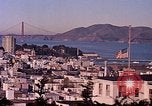
President Lyndon B. Johnson leaves the House of Representatives chamber in the U.S. after first address to Congress
U.S. President Lyndon B. Johnson takes new responsibilities as the President in an atmosphere of grief in the U.S, following the assassination death of President John F. Kennedy. Elevated sweeping view of city of San Francisco, with a flag at half staff in the foreground and bridge, bay, and mountains in the background. Flags waving at half mast on the grounds of the Washington Monument in Washington DC. U.S. flag at half staff over the Supreme Court. View inside the House chamber of the U.S. Capitol. The House of Representatives members stand and applaud for President Johnson as he leaves the chamber following his November 27, 1963 address to Congress. Citizens of the United States descending the stairs of the U.S. Capitol, after viewing the coffin of President Kennedy lying in state.
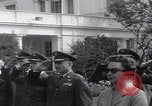
President Kennedy presents Distinguished Service Medal to General Emmett O’Donnell
United States Army military officials salute during a ceremony at the at the White House, Washington, D.C. on 6 September 1963. President John F. Kennedy presents the Distinguished Service Medal to retired General Emmett O'Donnell Jr. of the United States Air Force in the Rose Garden. President Kennedy and General O’Donnell speak in the ceremony. They shake hands with other dignitaries. Two Air Force men hold banners and flags. Cameramen with their cameras. President Kennedy greets the guests. Honor guards salute before President Kennedy and General O’Donnell takes their place. A group of men greet President Kennedy. Secretary of the Air Force Eugene M. Zuckert and President Kennedy speak before President Kennedy presents the medal to General O’Donnell. General O'Donnell delivers a speech. Photographers take pictures of President Kennedy, General O’Donnell, and other dignitaries. Guests socialize and talk after the ceremony. President Kennedy is seen talking to guests.
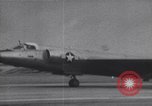
The Cuban Missile Crisis. The Limited Nuclear Test Ban Treaty.
October, 1962, U.S. Air Force U-2 reconnaissance aircraft, tail number 56-6707, of the Strategic Air Command (SAC) 4080th Strategic Reconnaissance Wing, lands at Laughlin Air Force Base, Texas. View of Photographic evidence, brought back by the U-2, showing Soviet missiles being set up in Cuba. President John F. kennedy broadcasts to the nation about the crisis on October 22, 1962, announcing measures being taken by the USA to address the situation. A B-58 Hustler bomber landing. Airmen removing camera from nose of a reconnaissance aircraft. Air Force Sergeant, photo interpreter, reading wet film in a base laboratory. U.S. Naval officers and sailors in Command Center viewing large wall map of the world. U.S. Air Force SAC B-52 bombers taking off. View of United Nations Headquarters building in New York City. On October 25, 1962, U.S. Ambassador to the UN, Adlai Stevenson, confronts Soviet Ambassador Valerian Alexandrovich Zorin about missiles in Cuba.He looks at Zorin, and says,"Don't wait for the translation, yes, or no." Zorin smiles as the room fills with laughter. He then responds. View of a Soviet ship bound for Cuba being monitored by a U.S. aircraft overhead. Pilot in cockpit of the aircraft. View from U.S. aircraft flying low past a Soviet ship. Crew in cockpit of the aircraft. Soviet ships turning away. Helicopter flying over sandy beach area of Hyannis Port, Massachusetts. The helicopter parked and Undersecretary of State, Averell Harriman, steps from the helicopter and is later seen with President Kennedy, and Secretary of State, Dean Rusk, at the President's Weekend White House. Harriman reports on the successful negotiation of a limited nuclear test ban treaty. Glimpse of Moscow. U.S. Secretary of State, Dean Rusk, Soviet Foreign Minister,Andrei Gromyko, and British Foreign secretary, Alexander Douglas-Home, are seen signing the document for their respective nations, August 5, 1963.
President John F. Kennedy addresses the U.S. on its economy, advocating a cut in income taxes in the near future
President of the United States John F. Kennedy addresses the nation in Washington D.C. President Kennedy outlines the existing state of affairs of the economy of the United States. He talks about the steps to be taken to prevent recession, the family budget and the national budget. He talks about increasing the revenue by increasing the number of jobs. He states about the cut in the corporate and personal income taxes in early 1963.