


 Francais
 Deutsch
 Italiano
Refine Your Search
+"Washington DC USA" +1964 stock footage and images
- Showing 7 to 12 of 44 results
President Lyndon B. Johnson signs the Civil Rights Act at the White House in Washington DC.
United States Congress passes the Civil Rights Bill. After the House votes on the measure, President Lyndon B. Johnson signs the Civil Rights Act of 1964 into law before an audience of Legislators and Civil Rights Leaders at the White House in Washington DC. He calls it 'a turning point in history' and uses one hundred pens to affix his signature. Many civil rights and government leaders seen behind the President, including Everett Dirksen and Hubert Humphrey, Marting Luther King Jr., and J. Edgar Hoover, all of who receive signing pens. President Johnson hands several signing pens to Attorney General Robert Kennedy, for members of the Kennedy family.
U.S. President Lyndon Johnson signs Civil Rights Act and shakes hands with Martin Luther King at U.S. Capitol in Washington DC.
Civil Rights Bill passed in the U.S. Congress signed by President Lyndon B. Johnson at the U.S. Capitol, Washington DC, United States. The U.S. Capitol and national flag on it. A woman with two children visits the Lincoln Memorial (2 Lincoln Memorial Cir NW, Washington, DC 20002). The U.S. President Lindon B Johnson along with other U.S. Congressmen during the signing of the Civil Rights Act of 1964. President Johnson signs the bill and shakes hands with Martin Luther King.
U.S. President Lyndon Baines Johnson signs the Civil Rights Act at the White House in Washington DC, United States.
United States President Lyndon Baines Johnson signs the Civil Rights Act of 1964 in Washington DC, United States. The meeting of the Congress for the signing of the bill. View of car and other vehicle traffic on Pennsylvania Avenue in Washington DC, looking toward the Old Post Office building (1100 Pennsylvania Avenue NW, Washington, DC 20004) and the U.S. Capitol building beyond. The exterior of the Capitol building with American flag waving on flagpole. People walking on the street in front of the building. People gather in front of the Lincoln Memorial. The exterior of the White House. Officials gather inside the building. U.S. President Lyndon Baines Johnson seated at a desk. The President addresses the legislators and people and talks about civil rights, justice, and peace for the people. President Johnson signs the Civil Rights Bill. Lawmakers and guests gather around him. He gives signing pens to Everett Dirksen and Hubert Humphrey, and then to civil rights leader Martin Luther King Jr., and to FBI chief J. Edgar Hoover. Several pens are given to Attorney General Robert Kennedy, to be given to various members of the Kennedy family.

President Johnson arrives for a baseball match between the Washington Senators and the Los Angeles Angels in Washington.
The 1964 season-opening baseball game at Griffith Stadium in Washington DC. Spectators and fans in the stadium. The seal of the President of the United States. U.S. President Lyndon B. Johnson arrives to throw out the first pitch at the opening game of the season. Photographers take photos. President Johnson gives his autograph on a ball for a player. The players of the Washington Senators and the Los Angeles Angels play the baseball game. The President watches the game, as the Los Angeles Angels win 4 to 0.
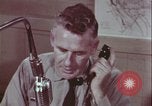
Police dispatch, crime recording, and response in Washington D.C.
A police dispatcher answers a call at the D.C. Metropolitan Police Central Complaint Room in Washington D.C. A city map inside the dispatch room. Dispatcher speaks into microphone and then staples a Central Complaint Room Report. Police dispatcher marks a check mark on a Complaint Room Report before speaking on microphone. A Metropolitan Police car (1964 Plymouth) parked at K Street and Connecticut Ave. NW Washington D.C. starts driving down K Street after turning on siren light, passing the YWCA building at 17th and K. Police hands holding a clip board and microphone while writing out a report. A question mark surrounded by words “who”, “when”, “how” “where”, “what” and “why”. A policeman questions a victim and a witness inside a small grocery store after a robbery. A policeman records an incident in precinct Register of Persons arrested. Hands searching through an arrest index file within a file cabinet. A detective taking notes while holding card from file cabinet. A bar chart for most committed types of crime. A graph depicting auto-theft arrests according to criminal’s age group.

President Lyndon Johnson signs the Tax Cut Bill in Washington DC.
President Lyndon B. Johnson shakes hands with the Congressmen and then sits on chair. 64 pens along with the Tax Cut Bill document lying on table in front of him. A large gathering surrounds him. He takes a pen and signs the bill. Then he addresses the gathering. “No economic system anywhere has ever had the success of the American economy. By placing maximum reliance on the initiative and the creative energies of individual businessmen and workers, we have created here in our land the most prosperous nation in the history of the world.” President Johnson remarked on his speech upon signing the Tax Bill.