


 Francais
 Deutsch
 Italiano
Refine Your Search
+"Washington DC USA" +1969 stock footage and images
- Showing 49 to 54 of 103 results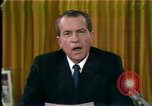
U.S. President Richard Nixon addresses nation about steps to end the war in Vietnam. He asks support of the "silent majority"
Stand of U.S. President Richard Nixon on Vietnam War. President Nixon addresses the nation about the Vietnam War from White House. He details how United States got involved in the war. He talks of protests and demonstrations of anti war activists and wants an everlasting solution to the problem. He reminds of Woodrow Wilson's efforts to end wars and peace. Nixon tells the youth of America about their demonstrations: "I respect your idealism. I share your concern for peace. I want peace as much as you do." He speaks to the "great silent majority" of Americans (contrasted with the youth demonstrators) and asks for their support in fighting "the forces of totalitarianism" and in supporting his plans for fighting and ending the war. He asks that Americans be united for peace and united against defeat. In the final part of this speech segment, President Nixon invokes the term "silent majority."
U.S. President Richard Nixon's silent majority speech from White House about Vietnam War.
A news special report about U.S. President Richard Nixon's speech from the White House about Vietnam War. A news correspondent reads news about the current status of war in Vietnam. President Nixon speaks from an office in the White House. President Nixon during his famous 'Silent Majority' speech. Richard Nixon details the history of Vietnam War and the ways North Vietnamese communists adopted to impose their government in South Vietnam. He says that immediate withdrawal of the United States forces would be a disaster for South Vietnam and the U.S. as well. He talks about steps taken to resume peace in the region and the progress of Paris Peace Talks.
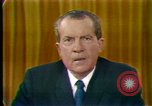
U.S. President Richard Nixon talks about peace talks in Vietnam, during his report to the nation from the White House.
News special report about U.S. President Richard Nixon's 'Silent Majority' speech from the White House about Vietnam War. President Nixon addresses the nation from an office in the White House. He points about the fault of North Vietnamese government to negotiate about a just peace. He talks about the U.S. foreign policy regarding assuring peace in other countries against communist or any other sort of aggression. He talks about the training given to South Vietnamese to defend their freedom.
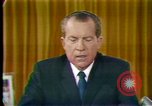
U.S. President Nixon speaks about programs of U.S. withdrawal from Vietnam, during his silent majority speech from the White House.
News special report about U.S. President Richard Nixon's 'Silent Majority' speech from the White House about Vietnam War. President Nixon addresses the nation from an office in the White House. He speaks of U.S. programs in future and replacement of all U.S. ground forces by South Vietnamese forces. He denies a fixed timetable of U.S. withdrawal and about Paris Peace Talks. He says that if violence from North Vietnam continues, the U.S. can take strong steps. He appreciates the concern of young Americans to restore peace. He calls to get united for the existence of peace. He recalls the efforts of former President Woodrow Wilson to reassure world peace during World War I
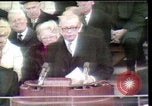
Senator Dirksen and Rabbi Magnin during 1st Inauguration ceremony of President Richard Nixon at U.S. Capitol, Washington DC.
First Inauguration ceremony of President Richard Milhous Nixon at the U.S. Capitol, Washington DC. Senator Dirksen on the speaker's podium during the ceremony. Rabbi Edgar F Magnin from the speaker's podium speaks words of praise. Swearing President Nixon and Vice President Spiro Agnew stand by him. After the prayer Magnin shakes hands with Nixon as all other guests sit on their seats.
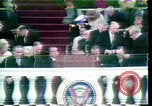
Senator Dirksen administers oath of Vice President to Sprio Agnew during Nixon's 1st Inauguration at U.S. Capitol, Washington DC.
First Inauguration ceremony of President Richard Milhous Nixon at the U.S. Capitol, Washington DC. Senator Everett Dirksen on the speaker's podium administers the Vice-Presidential oath to Spiro Agnew. Agnew arrives at the podium, lifts his right hand and repeats the oath after Senator Dirksen. President Nixon and Mrs Agnew watch him closely. The dignitaries in the stands applaud. Agnew walks back and takes his seat near former Vice President Hubert Humphrey.