


 Francais
 Deutsch
 Italiano

Refine Your Search
+"Washington DC USA" +1971 stock footage and images
- Showing 25 to 30 of 62 results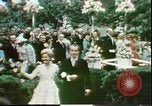
U.S. President and First Lady Nixon attend the wedding of their daughter Tricia Nixon at the White House, Washington DC.
U.S. First Lady Patricia Nixon as a public figure and as a companion of President Richard Nixon. Patricia Nixon arrives with her husband, President Richard Nixon at the wedding of their daughter Tricia Nixon in the White House, Washington DC. Tricia dances with her husband Edward Cox. President Nixon dances with Pat Nixon and daughter Tricia.
President Nixon during the swearing in ceremony of John Connally as Secretary of Treasury in the White House, Washington DC.
Swearing in of Secretary of Treasury John Connally at the White House in Washington DC. Secretary Connally, his wife and a judge arrive for the oath taking at a room in the White House. President Richard Nixon addresses the invited guests and dignitaries from a platform during the ceremony. Nixon speaks about the importance of the post of Secretary of Treasury. He finishes his speech and invites Connally to swear in.
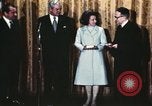
U.S. President Nixon at the swearing in ceremony of John Connally as Secretary of Treasury in the White House, Washington DC.
Swearing in of Secretary of Treasury John Connally at the White House in Washington DC. Secretary Connally, his wife and a judge stand along with President Richard Nixon for the oath taking in the East Room of the White House. The judge swears in Connally as Secretary of Treasury. He raises his right hands and repeats the oath after the judge. Mrs. Connally stands by him and watches him taking the oath. The guests at the ceremony applaud as Connally completes his remarks.
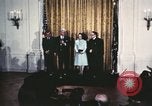
U.S. President Nixon and new Secretary of Treasury John Connally address the guests at a ceremony in White House, Washington DC.
Swearing in of Secretary of Treasury John Connally at the White House in Washington DC. Secretary Connally, his wife and a judge stand along with President Richard Nixon for the oath taking in the East Room of the White House. Connally delivers his speech at the ceremony and talks to President Nixon after he completes his remarks. He expresses his gratitude for President Nixon and admires his administration. The spectators at the ceremony applaud for Secretary of Treasury Connally. President Nixon invites guests for an official tea party at the White House.
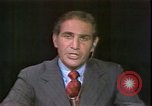
Irving R Levine and Paul Duke report and discuss the proposals stated by U.S. President on economic problems.
News analysis following Richard Nixon's speech on economy crisis from Washington DC, United States. Reporter discusses the speech with journalists Irving R. Levine and Paul Duke. Group reviews the proposal of President Nixon to end unemployment and economy crisis. The proposals to end unemployment by Nixon are 90 day wage-price freeze, additional action on wages and prices, temporary suspension of full convertibility of dollar into gold (later called the "Nixon shock"), investment of tax credit, temporary surcharge of 10% imports, repeal of excise tax on automobiles, speeding of personal tax exemption to get more money in pocket and reduction of federal expenditure. Journalists Irving and Paul Duke also question why the President made the proposal now when the graph of dollar and unemployment begins to fall after sitting on President's seat for two years.

Paul McCracken, an American economist, comments on the economic speech by U.S. President Nixon in the United States.
Discussion and analysis following U.S. President Nixon's speech on the economic crisis from the White House, United States. Reporter Bill Gill sits with Bob Clark, a White House correspondent, and economic advisor Paul McCracken. Both the reporters ask Paul McCracken to make a comment on the proposals of President Nixon dealing with the American economy (a speech later known as the "Nixon shock" speech). Paul McCracken speaks on the advantages of the 90 days wage-price freeze. He tells how to secure cost price level, how to control unemployment and inflation. He states the 90 days wage-price as the strongest economy program and how it will give foundation to more companies. He also speaks on dollar rate and foreign exchange and how to maintain its position, and the closing of the gold window.