


 Francais
 Deutsch
 Italiano

Refine Your Search
+"Weimar Germany" +1945 stock footage and images
- Showing 7 to 12 of 25 results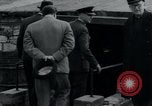
UNWCC officers examine ovens used to burn bodies of inmates at the Buchenwald concentration camp near Weimar, Germany.
UNWCC (United Nations War Crimes Commission) officers visit the Buchenwald concentration camp near Weimar, Germany towards the end of World War II. Officers including Mr. Oldham from Australia, Mr. Staurvopolos from Greece, Wing Commander Hopkins from Canada, Lieutenant Colonel Hodgson from the US, Commander J. Latta and Lieutenant Prowse of Admiral Stark's staff arrive at the camp. UNWCC officers examine ovens used for cremation of victims. A pile of dead bodies of Jewish victims. The ovens in which the bodies were burned. Human bones inside an oven. A monument commemorating 51,000 Jews who died in the camp.
U.S. Generals tour newly liberated Ohrdruf concentration camp near Weimar, Germany towards the end of World War II.
Nazi atrocities at Ohrdruf concentration camp near Weimar, Germany towards the end of World War II. U.S. Army Generals Dwight D. Eisenhower, Omar N. Bradley, George S. Patton and Walton H. Walker inspect the camp. The Generals inspect the scaffold and talk to prisoners. A woodshed is filled with dead bodies stacked in piles. The Generals view lime-covered corpses. Inmates demonstrate how they were tortured. Dead bodies are strewn on the ground. U.S. Congressmen also view the camp. A crude cemetery with charred remains.
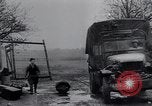
Colonel Sears compels Nazi officials to tour Ohrdruf concentration camp near Weimar, Germany towards the end of World War II.
Nazi atrocities at newly liberated Ohrdruf concentration camp near Weimar, Germany towards the end of World War II. A truck brings local townspeople, including Nazi party officials, who are forced to accompany the townspeople. Commander of U.S. 4th Armored Division Combat Command A Colonel Hayden Sears stands near Nazi officials. The visitors view dead bodies of inmates shot on the eve of U.S. arrival. Two slave labor bosses are shown at the camp. The Nazis are forced to go into a woodshed. Visitors view the charred remains of victims at a crematory near Ohrdruf.
Dead bodies piled up at Buchenwald concentration camp in Weimar, Germany.
Concentration camps in Germany. Male survivors at Buchenwald concentration camp in Weimar, Germany. Red Cross trucks from Switzerland arrive at the camp. Male survivors leave the camp. Bodies of dead inmates lay on ground with nationality and prison number tattooed on their stomachs. Male survivors from various European countries. Starved and feeble bodies of the victims. Dead bodies piled up outside the crematory. Pile of dead onto a truck. One of the weapons used by the SS guards upon the prisoners. A number of ovens at the crematory. The name of the firm on the oven door. A heap of bone ash. (World War II period).

Piles of dead, mutilated and emaciated bodies at the Buchenwald Concentration Camp in Weimar, Germany.
Survivors and emaciated bodies of prisoners at the Buchenwald Concentration Camp in Weimar, Germany immediately after World War II. Prison gate with sign "Jedem das seine" (To Each His Own) integrated on the iron gate. A Swiss Red Cross truck arrives at the Buchenwald Concentration Camp with aid for survivors. The survivors line up at the prison after their liberation. Allied soldiers stand around. Nationality and prison number tattooed on the stomach of inmates. Piles of dead, mutilated and emaciated bodies. Some survivors among the dead. Mutilated faces of the survivors at the camp. A truck loaded with piles of emaciated dead bodies outside a crematorium. Allied soldier show a weapon used by SS (Schutzstaffel) soldiers. Ovens inside and piles of bone ash on the floor of the crematorium.

Officers talk to senators and senators view stack of naked bodies at Buchenwald concentration camp in Weimar, Germany.
A U.S. Congressional group at Buchenwald concentration camp in Weimar, Germany during World War II. Officers speak to senators at the concentration camp. The senators walk and view stack of naked bodies. Senator Alben William Barkley stands next to a pile of bodies.