


 Francais
 Deutsch
 Italiano
Refine Your Search
+"Western Front" +1916 stock footage and images
- Showing 1 to 6 of 16 results more
more Hide
Hide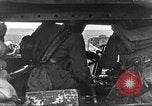
Extract from British Feature film portraying events of World War I on the Western Front in 1916
Scene from British postwar film, circa 1927, shot on the Salisbury Plain, in England. It reconstructs World War 1 events from 1916 on the Western Front. Two "German soldiers" are shown in a machine gun nest. One is shot and slumps down. The other continues to fire as a British Mk V Supply Tank ( fitted with dummy guns to simulate a fighting tank) approaches their position. The tank rolls over their position, crushing it.
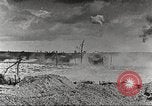
Extract from British feature film "The Somme," made in 1927, depicting warfare on the Western Front during WWI.
Reenactment of scenes from 1916 in World War 1, filmed in 1927 in Southwest England. Two British Mk V Tanks advance through shellfire. One has its gun mountings plated over and has dummy guns; the other has its gun mounts intact, though the guns might be dummies, and carries anti-grenade mesh on its roof. (These are by historical errors by the film makers, since this type of anti-grenade protection was not carried on Mark V [Mark 5] tanks, and the Mark V did not enter service until 1918.) The tank advances towards enemy trenches, followed by British soldiers who pursue German soldiers fleeing along the network of trenches. The tank, filmed from below, in the trench, as it moves over the trench. Note: (The film "The Somme" can be seen in full on the British Film Institute website.)
French General Joseph Joffre reviews Russian troops on the Western Front during World War I.
Russian troops on the Western Front during World War I. Russian soldiers march along a field on the front. The soldiers march and pass in a review. French General Joseph Joffre reviews Russian troops.
French troops taking a break during a lull in fighting on the Western Front in World War I
French troops taking a break on the Western Front during World War I. They are in a deep trench. Many smoke cigarettes. One plays a flute. Some share food. Scene shifts to a deep dugout with substantial structure, where several soldiers relax. Another scene shows several rifles arranged in a group at edge of a trench and French soldiers afixing grenades to their barrels and firing them. French soldiers in a deep trench behind sand bags. Officer reads a dispatch brought to him by a courier.
British troops in trenches don gas masks after hearing a warning by a Strombos horn on the Western Front in World War I
British troops in deep trenches lined with woven branches, on the Western Front in World War 1. Slate refers to gas alarm with Strombos horn. British soldiers immediately don their gas masks and take up defensive firing positions in their trench. Gas fumes are seen drifting over the trench. View from the trench, of gas cloud over No-Man's land, with barbed wire and some snow on the ground. [Note: The Strombos horn,was operated by compressed air and could be heard for several miles. But as use of gas shells increased, and such attacks tended to be localized, other alarms were employed, instead, such as metal shell cases, steel triangles, watchmen's rattles, klaxon horns, etc.] (World War I; World War 1; WWI; WW1)
German troops operating on the western Front during World War I.
German troops in action along the Western Front in World War 1. Troops in trenches. German artillery firing from concealed position. Slate refers to Guns at Aisne, Nieuport, Perthes,and Soissons. German artillerymen pulling 77mm field guns with horses. German cavalry charging across a field. German troops guiding horses across a deep stream. Some of the troops are in bathing suits and others, in boats, guide the horses across. German cavalry riding past the camera in full battle gear. Artillerymen using horses to move a battery of 77mm field pieces. German troops playing cards during a lull in battle.They are interrupted by a call to action. Troops on horseback pulling supply wagons through a stream. Artillerymen firing a field piece. Trench filled with German soldiers firing rifles with bayonets afixed to them. A German Skoda siege mortar with shells.