


 Francais
 Deutsch
 Italiano
Refine Your Search
"Bethlehem Pennsylvania USA" 1918 stock footage and images
- Showing 625 to 630 of 1835 results more
more Hide
Hide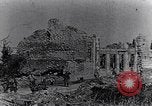
Scenes at the Western Front, World War I.
Allied soldiers escort German prisoners of war through utterly destroyed town. American soldiers run across open space in French village. Damaged wooden church and disabled tank seen. French soldier walks near broken wagons and dead horses. French Corpsman, with cross on uniform sleeve, looks at dead French soldier. Another soldier removes trenching tool from the fallen soldier's equipment. Lines of horses seen coming in the background. French troops begin digging trenches and fortifications.
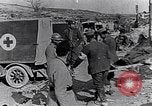
Scenes at Western Front, World War I.
During World War 1, French troops carry casualties to Red Cross Ambulances for evacuation to the rear, as fresh troops pass them moving toward the front. Armored personnel carriers transport some to the front. Scene of utter desolation. No Man's Land. Nothing is left standing except broken fragments of some trees. American and French wounded being carried to the rear on stretchers. German prisoners of war being escorted. Allied tanks moving toward the front. American troops moving forward with mule trains carrying supplies.
Aerial views of a French encampment near the Western Front in World War I
Opening slate describes aerial view from and aeroplane traveling 100 miles per hour. French conical tents are laid out below in military precision at a camp in World War 1. Dirt roads and a river appear in the scenes. Large oblong tents with peaked roofs and several entry flaps are seen in other camp areas. Utility areas with a large piece of equipment are seen plus more conical tents and various pieces of military equipment.
French Naval hydroplanes in World War I
A French ground crewman hands small bombs to another man who stores them in the cockpit of a French bi-wing hydroplane (seaplane) during World War 1. The aircraft is equipped with a large open raeial engine. The propeller appears to be split with one segment in front of the lower wing and the other behind it. Change of scene shows a foldable seaplane suspended from cranes on the deck of a French warship. Crewmen fold the wings aft. Closeup of the aircraft and men rotating the propeller. Next the plane is seen in the water on its pontoons as a pilot standing in the open cockpit fastens an overhead cable to the plane. Aerial view of a convoy of several ships seen from an overflying airplane. A naval port facility seen from the air. Back to the Naval hydroplane, again, as it its being raised from the water by a crane. The pilot stands on one of the large flat main pontoons. Closeup of the plane and pilot as they are lifted high above the water level and deck hands pull the plane over the ship's deck.
French Naval seaplanes (hydroplanes) in World War I
A sleek hulled French bi-wing seaplane equipped with a single radial pusher engine, taxis from shore during World War 1. It is then seen in flight and making a smooth landing in the water. Next, a French single-engine pontoon-equipped float plane is photographed from a larger seaplane as they both fly with sight of one another.
Cartoon of Charlie Chaplin as "The Little Tramp" is painted on nose of a French Farman bomber in World War I
Opening scene shows nose gunner compartment of a parked Fremch Farman biplane bomber as viewed upward from the ground below. It is embellished with a painting of Charlie Chaplain as the iconic "Little tramp." Above, the nose art, a French gunner displays the maneuverability of his machine gun mounted in the open nose position of the aircraft.