


 Francais
 Deutsch
 Italiano
Refine Your Search
"Bethlehem Pennsylvania USA" 1918 stock footage and images
- Showing 883 to 888 of 1835 results more
more Hide
Hide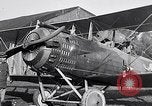
28th Escadrille fliers of French Air Service in a Salmson 2, and posing with Americans of the 79th Division Army Infantry
28th Escadrille fliers of French Air Service with a Salmson plane during World War I. Two French fliers climb into the Reconnaissance plane and take off. The plane seen in flight. Group of French 28th Escadrille and U.S. Army 79th Division Infantry (operating as observors) seen smiling and talking in front of a SPAD (Societe Provisoire des Aeroplanes Deperdussin and Bleriot) French airplane. American flag hung on the wing. They talk and share cigarettes. View of just the American group in front of the aircraft, posing for the camera.
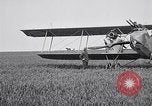
79th Division U.S. Army Infantry observers in France with a twin-engine biplane and a Salmson 2 of the 28th Escadrille
U.S. Army Infantry of the 79th Division at an airfield in France during World War I. They are functioning as observers. Crew in and around a French large twin-engine biplane aircraft, possibly a modified Caudron R.11. American observers demonstrate aiming techniques involved with the twin, Scarff ring mounted Lewis Guns on a Salmson 2A2. Firing the Lewis gun of a Spad XVI.
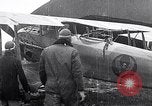
U.S. Army Air Service fliers with 28th Escadrille of French Air Service - observation mission during World War I
Two fliers -- Pilot Lieutenant Kelly and observer Lt. Jay Paul Harman -- approach a Spad XI with U.S. Army Air Service logo on it during World War I. They consult over some notes and then board the aircraft, takeoff, and fly on an observation mission. Spad XI flying overhead. The original Spad XI seen landing and taxiing. A Frenchman of the 28th Escadrille runs up to meet the plane and is handed something (a negative?) by the rear gunner/observer, Lt. Jay Paul Harman. Next scene shows U.S. and French military personnel gathered reviewing photo images brought to them by a runner. The officers include American officers Lieutenant J. P. Harmon, Lt. John S. Beekley and Lt. R. T. Maddock and Frenchman Captain DeSaint Cerau.
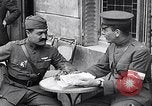
Officers and personnel of French 28th Escadrille and of the U.S. 79th Infantry Division with a crashed biplane
Officer of the 28th Escadrille and the 79th Division of the U.S. Army Infantry (functioning as observers) during World War I. They are seated at a small table smoking, talking, and reviewing notes. Large group of French and American military personnel inspect a crashed biplane. French crew repairing a SPAD aircraft.
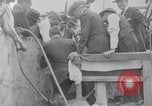
President Wilson drives the first rivet in the first ship to be built at a new shipyard in Alexandria, Virginia.
President Wilson is seen leaning over part of a steel ship being constructed by the the Virginia Shipbuilding Corporation, in Alexandria, Virginia, where he is using a pneumatic gun to drive in the first rivet in the first steel ship to be built at the new shipyard. Afterwards, he steps to a platform decorated with bunting, for the occasion, and descended steps together with his entourage. Next, Speaker of the House, James Beauchamp “Champ” Clark of Missouri and his predecessor, Joseph Gurney Cannon, Republican from Illinois and other officials are seen walking in the newly opened shipyard. Closeup group photograph of them along with others in the visiting party. A closeup of shipyard worker, Charles Knight, the nation's champion riveter, who drove 4875 rivets in 9 hours. Views of Knight using a pneumatic gun to drive rivets in ship framing.
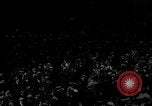
Brokers Cafe and Restaurant with outdoor Curb Market on Broad Street in New York City
The New York Curb Market of Curbstone brokers at work on Broad Street, New York City. A large number of brokers knowns as 'Curb' brokers gather in the street, dealing in unlisted securities. They were also sometimes called the Sidewalk Stock Exchange or Curb Exchange. They communicate with clerks and counterparts leaning out through the open windows of the nearby buildings, shouting and waving hand signals, and recording trades. Crowded street of Curb Brokers in front of Brokers Cafe and Restaurant.