


 Francais
 Deutsch
 Italiano
Refine Your Search
"Bethlehem Pennsylvania USA" 1918 stock footage and images
- Showing 1165 to 1170 of 1835 results more
more Hide
Hide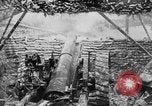
Various artillery pieces being fired during World War I
French gunner, in camouflaged position, firing Canon de 155 Grande Puissance Filloux (GPF) mle.1917 (155mm gun) during World War 1. German gunners firing Krupp 7.5 cm Model 1903 field piece. Closeups of the Krupp gun barrel during firing. American soldiers run to front of their French 75 artillery piece and use ramrod to clean the barrel. Final images show U.S. gunners operating French 75 field pieces in routine as well as rapid fire mode.
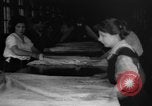
Women work at a curtain manufacturing factory in United States
Curtain manufacturing factory in United States. Women inspect the length of curtains by spreading them on a table. Women sew curtains using Singer machines. Curtains processed on a machine by men.

Selvage of curtain woven by women at a curtain manufacturing factory in United States
Curtain manufacturing factory in United States. Selvage of curtains woven by women as they work on a machine to prevent damage to the lace. Selvage is trimmed off. Piles of curtains lying at the factory as women work. Curtains scalloped and over locked in a single operation.
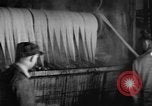
Washing and bleaching of curtains at a curtain manufacturing factory in United States
Curtain manufacturing factory in United States. Curtains washed and bleached. Five miles of curtain sewed together travels through porcelain rings into boiling vats. Piles of curtains on floor as curtains pass through porcelain rings and roll along the machines as they undergo washing. Curtains poured into a whizzer to be rinsed and dried. Men on work on various machines in the washing process.
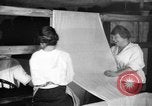
Dressing of curtains at a curtain manufacturing factory in United States
Curtain manufacturing factory in United States. Curtains starched as they roll along machines, women work on machines. Curtains assorted, stretched with rollers and ironed.
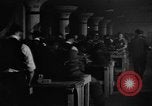
M1917 helmets painted and packed for shipment at Ford Assembly Plant in Philadelphia (WWI)
Ford Motor Company employees paint and finish United States Army Brodie-patterned M1917 helmets at a factory in Philadelphia, Pennsylvania during World War I. Factory workers working in assembly line. Worker hammers a bolt in the center of the helmet. A worker attaches chin strap into the helmet. A machine attaches a bolt into the chin strap. Helmets are prepared for the paint tank. Workers dip helmets into paint tanks. Men wipe off helmets to remove a coat of tallow applied to prevent rusting. Helmets placed on rack, dipped in paint tank, and hung to dry on stands. Helmets are treated with sawdust applied with air pressure (“sawdusting”). Workers are seen wearing goggles as they apply sawdust in helmets. After applying sawdust, racks of helmets are placed in bake oven. The workers close the bake oven door. Workers sort and stack new helmets. Military and quality control personnel inspect helmets carefully. Finished U.S. Army helmets put into wooden crate and shipment lid placed onto it. Helmets are packed with air pressure. Crates stenciled, seals soldered, and crates fastened with wires. A man places a receipt on top of helmets before another man seals the crate. Wooden crates piled up for shipment. [Note: This was filmed at the Ford Motor Company assembly plant on Broad Street and Lehigh Avenue in Philadelphia. Helmet shells were manufactured by other firms and sent vie rail to the Ford plant where they were painted and finished. This video depicts that finishing process.]