


 Francais
 Deutsch
 Italiano
Refine Your Search
"Bethlehem Pennsylvania USA" 1918 stock footage and images
- Showing 217 to 222 of 1835 results more
more Hide
Hide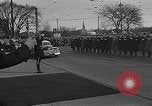
Queen Elizabeth, the Queen Mother, places a wreath and greets veterans at the Canadian National War Memorial, Ottawa, Canada.
Queen Elizabeth Bowes-Lyon of the United Kingdom (Queen Elizabeth the Queen Mother) arrives at the Canadian National War Memorial (Wellington St, Ottawa, ON K1P 5A4, Canada) in a Cadillac automobile with a clear plastic roof. She walks along a line of Canadian war veterans and converses with some of them. Royal Canadian Mounted Police officer holds back crowd of enthusiastic spectators. The Queen Mother places a wreath at the base of the war memorial, which is already adorned with countless wreaths placed there on Canada's Remembrance Day. Memorial is engraved: "1914-1918." The Queen Mother wears three pearl necklaces. Canadian spectators pack the sidewalks, as the Queen Mother rides along the streets of Ottawa. Views, from a height, of the ceremony at the National War Memorial. The Queen Mother stands before assembled officials. A military band is in formation. Large numbers of spectators are assembled to watch. The Queen Mother's wreath is shown with its card reading: “From Her Majesty Queen Elizabeth, The Queen Mother."
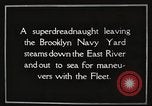
U.S. sailors board Super-dreadnought, USS Tennessee, in the Brooklyn Naval Yard in New York.
U.S. Superdreadnought, Battleship USS Tennessee (BB-43) in the Brooklyn Naval Yard in New York City. U.S. sailors look at the battleship in the harbor. A navy officer with a mascot dog. Sailors ready to board the battleship. They carry sea bags and embark on the battleship. The USS Tennessee, underway. Different time: December 25, 1918, Cluster of ships and boats in the East River, in New York City, during Naval Review. The Presidential yacht, Mayflower, in the river.

People listen to the song 'God Bless America' sung by singer Kate Smith in the United States.
An American feature film 'This is The Army' depicts a performance by singer Kate Smith at the 21st anniversary of the armistice of World War I. Animated map shows Europe with fire in Poland. A man in the radio studio announces the name of Kate Smith on the stage, and noting the 21 anniversary of Armistice Day. A studio audience is present and applauds. Kate Smith introduces "God Bless America" as a new song, and then sings the song "God Bless America" with in-studio orchestra accompaniment. People watch the performance. An old man listens to the song, standing in front of his shop 'The Bugle Call.' He dusts a console radio with a feather duster and then goes inside and removes a bugle from a case labeled, ' Yip! Yip! Yaphank! 1918 ' At the Twardofsky business across the street, a man puts a small American flag into a basket as his father listens to the song on a small radio on the counter. People listen to the song in their houses and buildings. In a family living room: A couple seated in their living room listen to their console radio. A man, likely their son, seated at his desk listens to the song while studying. A woman looks at the photograph of a soldier, named Blake. Blake is then depicted listening to the same Kate Smith performance over a radio while stationed at Hickam Field in Hawaii. Characters Jerry Jones and Johnny Jones, played by actors George Murphy and Ronald Reagan are seen at the Jones and Jones production office. They listen to the radio. The character played by Ronald Reagan reads Variety Magazine.
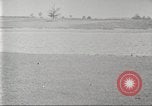
Walter Hagen demonstrates golf techniques and plays golf with two other men at a golf course in Michigan.
Walter Hagen and two other players demonstrate and play golf in the United States. Walter Hagen demonstrates several different shots from varying terrain. Water in the background. Ball roles into the hole and Hagen takes it out. Hagen hits the ball from a sand bunker. Hagen is joined by two other players and the golfers tee off. The course is likely Oakland Hills Country Club, where Walter Hagen was the first club professional beginning in 1918.
General Officer visits AEF Motor Transport Corps Reception Park in France during World War I
View of soldiers with automobiles in an American Motor Transport Corps Reception Park, in France, during World War 1. A general, in a trench coat, is being escorted by another officer as he examines automobiles in the park. atop the main garage, the letters, "M.T.C." and "Motor Reception Park" are painted. The general's car sits with driver, awaiting him. It appears to be a Locomobile touring car, and bears the identification number: 1111. (Note: The American Expeditionary Forces Motor Transport Corps (M.T.C.) was formed out of the Quartermaster Corps on 15 August 1918. As the name implies, Reception Parks were where newly arrived vehicles were uncrated, assembled, and made ready for service.) (World War I; World War 1; WWI; WW1)
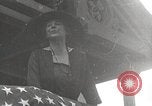
Jeannette Rankin, first woman elected to U.S. Congress, speaks in Union Square, New York City
Jeannette Rankin, of Montana, the first woman elected to U.S. House of Representatives (served April 1917 through December 1918). A pacifist, co-founder of the American Civil Liberties Union, and champion of humanitarian causes, she is seen addressing a group from a speakers pavilion in Union Square, Manhattan, New York City, in September, 1924. She accepts a glass of water from an associate (unseen). Closeups of Rankin leaning over the railing above an American flag, as she speaks to assembled group of men and women. From further away, several men and women associates can be seen at work behind her in the pavilion. Views from behind and to her right, with listeners below and cars parked in the square. Street scene in background. As before, Ms Rankin leans forward to be better heard. (There is no evidence of microphone in use.)