


 Francais
 Deutsch
 Italiano
Refine Your Search
-Cebu,-Philippines stock footage and images
- Showing 7627 to 7632 of 58885 results more
more Hide
Hide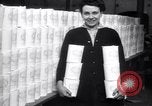
British women work at the James Keiller and Son's Dundee Marmalade factory doing fruit preparation and canning operations
British women work at the James Keiller and Son's Dundee Marmalade factory in London, England, United Kingdom. A woman stands holding some packaged 1 pound jars of marmalade in her hands, ready for sale. Women workers gather outside the marmalade factory. A wooden wagon with the Dundee Marmalade sign on it is behind the women who stand in a line entering the plant. They work in the factory. The jar canning operations and assembly line are shown, with women (some very young -- almost girls, and some older) working in the factory. A group of women wearing aprons stand in groups cutting and separating the fruit from the rind of oranges for marmalade jelly or jam. A pair off women pound on the top of a wooden fruit crate to break it open for more fruit. Equipment in the factory.
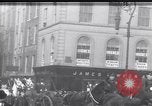
British soldiers march in recruitment parade, Dublin, Ireland
Soldiers march on a recruitment parade in Dublin, Ireland. A team of horses pulls a caisson, followed by infantry with shouldered arms. Commercial buildings in the background. One displays sign for James H. Webb & Company. Band marches along with them (although not playing at this instant). Spectators line sidewalks. (World War i; World War 1; WWI; WW1)
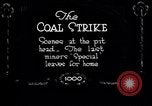
Coal miners stand at railway station and vote in the United Kingdom.
Coal miners stand at a railway station in United Kingdom. A train arrives on the railway track. Other miners come out of the train. They hold lamps in their hands. The miners cast their votes in Tredegar. They walk on the street. Houses along the sides of the street.
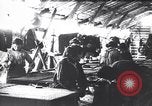
Women work at a factory and hammer nails into wooden boards, making panels or wooden boxes in the United Kingdom.
Women work at a factory in the United Kingdom. A bicycle in the background. The British women are seen hammering nails into wooden boards and panels, possibly building wooden boxes or wooden panels.
Aerial views of a French encampment near the Western Front in World War I
Opening slate describes aerial view from and aeroplane traveling 100 miles per hour. French conical tents are laid out below in military precision at a camp in World War 1. Dirt roads and a river appear in the scenes. Large oblong tents with peaked roofs and several entry flaps are seen in other camp areas. Utility areas with a large piece of equipment are seen plus more conical tents and various pieces of military equipment.
French Naval hydroplanes in World War I
A French ground crewman hands small bombs to another man who stores them in the cockpit of a French bi-wing hydroplane (seaplane) during World War 1. The aircraft is equipped with a large open raeial engine. The propeller appears to be split with one segment in front of the lower wing and the other behind it. Change of scene shows a foldable seaplane suspended from cranes on the deck of a French warship. Crewmen fold the wings aft. Closeup of the aircraft and men rotating the propeller. Next the plane is seen in the water on its pontoons as a pilot standing in the open cockpit fastens an overhead cable to the plane. Aerial view of a convoy of several ships seen from an overflying airplane. A naval port facility seen from the air. Back to the Naval hydroplane, again, as it its being raised from the water by a crane. The pilot stands on one of the large flat main pontoons. Closeup of the plane and pilot as they are lifted high above the water level and deck hands pull the plane over the ship's deck.
CRITICALPAST.COM: About Us | Contact Us | FAQs - How to Order | License Agreement | My Account | My Lightboxes | Shopping Cart | Advanced Search | Featured Collections | Website Terms & Conditions | Privacy Policy ©2026 CriticalPast LLC.
License Agreement |
Terms & Conditions |
Privacy Policy
©2026 CriticalPast LLC.