


 Francais
 Deutsch
 Italiano
Refine Your Search
-Cebu,-Philippines stock footage and images
- Showing 763 to 768 of 58885 results more
more Hide
Hide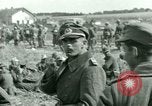
German prisoners taken to a compound in Bizerte and prisoners in vehicles during Tunisian Campaign in Tunisia.
German prisoners taken to Bizerte and vehicles loaded with prisoners during the Tunisian Campaign in World War 2. Faces of German prisoners many of them stand and seated. German prisoners along with their luggage move into the compound. Around 2000 Prisoners of War taken or voluntarily having turned themselves into Military Police (MP). Prisoners relax themselves and talk. After a break they march forward. Roads filled with vehicles loaded with German prisoners. Prisoners on car, jeeps and trucks. A U.S. vehicle reads 'Hell's-half Acre'. Vehicles loaded with German prisoners. U.S. officer keeps a watch on the prisoners. Officer drinks.
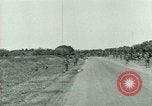
Allied soldiers and French civilians during the Tunisian Campaign in Tunisia.
The Tunisian Campaign in North Africa. A man rides a motorcycle. Allied soldiers walk on either side of the road. A terrain and road marker reads 'Bizerte 10'. French civilians on road. A man holds flag of France. Civilians wave. (World War II period).

Scenes from 1929 Geneva Convention; surrender of 20,000 Germans to U.S. General Macon by German Major General Elster near Loire
A U.S. Army Signal Corps training film on Rules for controlling German prisoners of war in World War 2. International conference 1929 in Geneva, Switzerland. Various officers and dignitaries in the conference where the Geneva Convention was agreed-upon by many nations. Image of Field Manual 27-10 states the Rules of Land Warfare based on the Geneva Conventions and describes standard procedures for handling Prisoners of War. Scene of 20,000 Prisoners of War who surrender under Nazi Major General Eric Elster at Loire, France September 16, 1944 to the United States 3rd Army, 83rd Division, under General Macon. General Elster salutes General Macon, then approaches the microphones in the middle of a roadway and delivers a surrender speech. General Macon then replies accepting the surrender on behalf of General Simpson. General Macon states that the men will be treated according to the rules made during the conference in Geneva.
Prisoners reach a surrender junction in different vehicles, all supplies confiscated and taken to Britain.
German Prisoners of war in France in World War 2. They come to surrender to American forces at a junction set up tor the purpose. They arrive on all kind of vehicles, including supply trucks, command cars, fuel trucks, horse wagons and bicycles. Enemy war materiel and assets, including livestock and other supplies, are confiscated. Some prisoners are marched to locations. At one outdoor enclosure, a sign reads 'German Enlisted Men.' Documents and weapons are confiscated. A stack of rifles. German POWs stand disarmed. Prisoner discusses map of American and German positions with a U.S. Army Sergeant. Prisoners are questioned and searched. Some wounded German prisoners are carried by other German soldiers. Others are transported by Americans. A wounded prisoner lies on a stretcher. A jeep with Red Cross flag carries wounded. Group of German prisoners of war eating a hot meal. Others eating regular U.S. rations.
SPF-X Prisoners interrogated by a U.S. Army Major at a compound in France.
SPX-F Prisoners interrogated in France. A U.S. Army Major with the help of an interpreter interrogates prisoners in compound area. He questions a prisoner on what do they think about American soldiers and how did they get this compound. The prisoner answers his questions and shows his U.S. pass, a leaflet which allowed him to cross the line by safety. (World War II period).
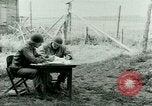
SPF-X Prisoners interrogated by a U.S. Army Major asking about Hitler, Nazi party and Japan as ally at a compound in France.
SPX-F Prisoners interrogated in France. A U.S. Army Major with the help of an interpreter interrogates prisoners in compound area. A soldier stands at the back. The German prisoner comes and the Major asks questions about Adolf Hitler, members of Nazi party and views about Japan as an ally. (World War II period).
CRITICALPAST.COM: About Us | Contact Us | FAQs - How to Order | License Agreement | My Account | My Lightboxes | Shopping Cart | Advanced Search | Featured Collections | Website Terms & Conditions | Privacy Policy ©2026 CriticalPast LLC.
License Agreement |
Terms & Conditions |
Privacy Policy
©2026 CriticalPast LLC.