


 Francais
 Deutsch
 Italiano
Refine Your Search
-Cebu,-Philippines stock footage and images
- Showing 8119 to 8124 of 58885 results more
more Hide
Hide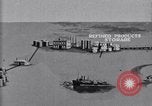
Transportation of the refined gasoline from supply to the final consumer, United States.
Transportation methods of gasoline in United States. Animation shows the shipping of the gasoline from storage to the refined products. Carrying the refined gasoline in ships. The refined gasoline is taken in tank cars to the main distributing stations. A man takes out the gasoline from tank cars at the distributing stations and load in the tank trucks. The tank trucks then supply the gasoline to various large consumers and filling stations. At a gasoline station, while making a delivery of gasoline, a man connects a wire to the steel rod in the truck to serve as a ground and prevent any fire. Gas station attendant fills a man's car with gasoline.

The processing of creating lubricating oil in distillation stills in Indiana, United States.
The processing of creating lubricating oil from crude oil in refineries in, Indiana, United States. Crude oil is taken to the refineries from various oil field through pipelines and tank cars. Smoke from the chimneys of refineries. The first method in the processing of lubricating oil is the distillation of the crude oil in pipe stills. Animation shows the distillation in a simple shell still. Distillation of the other non-lubricating parts from the crude oil. As the temperature rises, the steam is turned into still. It lowers the boiling point and prevents the 'cracking' process. Then the light lubricating oil condenses first and then the heavier portion. The remainder called the 'residuum' is sent to the asphalt department for further refining into asphalt, road oil. A still man controls the operation of the distillation process at the 'receiving house'.
The creation and purification of lubricating oil through various methods in Indiana, United States.
The processing of lubricating oil from crude oil in refineries of Washington DC, United States. The purification of the lubricating oil by chemically treating it in agitators. Animation shows that the oil is pumped into the treating tank where it is treated with chemicals. By this, the asphaltic or the tarry material having no lubricating value settles down. The oil is then taken and is pumped into the wash tank for further treatment. In the wash tank, it is mixed with hot water and agitated with air which washes out the chemicals. This oil contains paraffin wax which has no lubricating value and has to be removed. The oil is chilled to remove the wax and then pumped under high pressure through large filter presses. Filter press is composed of steel ring. The side plates are made of perforated steel. A blanket cotton duck, cake space and distillate inlet. The oil is forced through press. Stillman performs the work. The oil is then divided into various grades of lubricating oil in the reducing stills.
Lubricating oil is distilled and purified using various methods in Indiana.
The processing of making lubricating oil from crude oil in refineries in Indiana. The lubricating oil is further purified by passing it through a 15 foot Fuller's earth bed in large filters. Animation shows that the filter is charged with fuller's earth. The oil is passed into the filter. The oil percolates through the fuller's earth and becomes lighter in color. The clay is withdrawn after it completes its work from the filter and is burned for reuse in a revolving kiln. The filtered lubricating oil is then pumped into storage tanks.
Lubricating oil is made using various methods in Indiana.
The process of gaining lubricating oil from crude oil in steam and fire stills in Indiana, United States. Smoke from the chimneys. The distillation of the crude oil takes place. Animation shows the process. Steam is passed into the still to prevent the 'cracking' process. The lighter portion of the oil vaporize and condense first. Then the oil is treated chemically, freed from wax, filtered and sent to storage. The remainder called the 'bottom stock' is treated with chemicals to remove further impurities. The stillman performs the process. This oil contains petrolatum which is to be removed. It is mixed with naphtha and chilled in cold settling tanks. The petrolatum settles to the bottom of the tank due to this process.
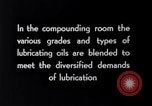
A pour test and a flash test is used to assess the efficiency of lubricating oil in Indiana, United States.
The testing of oil for its lubricating efficiency in Indiana. Stillman blends the various grades and types of lubricating oil in the compounding room. The 'pour test' of the oil is done to determine the lowest temperature at which the oil will flow. Then the oil is passed through the 'flash test' to determine the temperature at which the oil will flash when a lighted taper is passed across its surface.
CRITICALPAST.COM: About Us | Contact Us | FAQs - How to Order | License Agreement | My Account | My Lightboxes | Shopping Cart | Advanced Search | Featured Collections | Website Terms & Conditions | Privacy Policy ©2026 CriticalPast LLC.
License Agreement |
Terms & Conditions |
Privacy Policy
©2026 CriticalPast LLC.