


 Francais
 Deutsch
 Italiano
Refine Your Search
-Cebu,-Philippines stock footage and images
- Showing 8929 to 8934 of 58885 results more
more Hide
Hide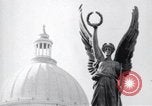
Racial segregation and unrest of 1957 in Arkansas; Reporter interviews the Governor of Arkansas, Orval Faubus.
Reporter interviews the Governor of Arkansas, Orval Faubus about racial segregation of 1957 during his term. The Governor says that he is always ready to accept changes, but he conveys support for segregation by equating it to an "old building" or a "fine painting" and saying that it is "not good to tear down such a building or destroy such a painting simply because it is old." He continues saying, "These things are not good because they are old; many of them have grown old because they are good. And the experiences of many people have proved them to be good." Montage shows buildings, courthouse and justice statues, and public protests, with police arrests of African American marchers and demonstrators during the civil rights movement. Police beat some protestors. Jim Crow era signs segregating whites only versus colored waiting room facilities. Signs read "Colored Waiting Room" and "White Waiting Room." Local Arkansas officials and police beating back protestors with clubs and batons, and police seizing African American protestors and making arrests. U.S. troops in jeeps and trucks arriving and deploying in Arkansas. Included are scenes with signs of Jim Crow segregation practices, with separate entrances for white versus colored patrons at an Intra-state bus depot.
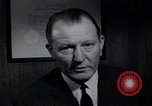
Reporter interviews U.S. Attorney General Robert Kennedy, about civil rights
Reporter interviews U.S. Attorney General Robert Kennedy, who speaks about the steps the Federal government took in the field of Civil Rights after the racial segregation strife of 1957. He discusses actions under the administration of his brother, President John F. Kennedy.
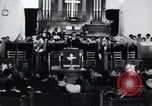
AME church service in Little rock, Arkansas; recognition for Little Rock Nine; scenes after 1957 church bombing in Montgomery
A service at the AME Church in Little Rock, Arkansas. Pastor addresses the African American congregation that includes several of the original "Little Rock Nine." They receive life membership in the National Association for the Advancement of Colored People (NAACP). Bombing damage done to the First Baptist Church (347 N Ripley St, Montgomery, AL 36104, United States) in Montgomery, Alabama is shown. African American women leave the Little Rock AME church after the service. (During Civil rights movement.)
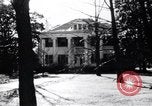
Old woman speaks about integration of public facilities for Blacks and Whites.
Elderly woman gives an interview in her palatial home. She says that every public facility should be integrated including library, hospitals and schools. She speaks for the civil rights of African Americans and the importance of integration based on her Christian faith. She was on the board of the Public Library when it was integrated 10 years prior.
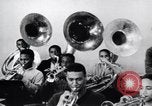
An African American high school band and chorus performs the Battle Hymn of the Republic.
Shows a director conducting African American youth of a high school band in Arkansas playing and singing the Battle Hymn of the Republic. Young men and women singers sing in the choir and an orchestra of various instruments plays the hymn.
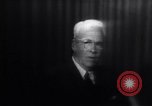
Mayor Ivan Allen of Atlanta Georgia speaks about African Americans and expresses his tribute to Dr. Martin Luther King.
Mayor Ivan Allen of Atlanta Georgia speaks out of affection and admiration for Dr. Martin Luther King. He expresses his tribute to Martin Luther King and speaks for the rights of Black American citizens.
CRITICALPAST.COM: About Us | Contact Us | FAQs - How to Order | License Agreement | My Account | My Lightboxes | Shopping Cart | Advanced Search | Featured Collections | Website Terms & Conditions | Privacy Policy ©2026 CriticalPast LLC.
License Agreement |
Terms & Conditions |
Privacy Policy
©2026 CriticalPast LLC.