


 Francais
 Deutsch
 Italiano
Refine Your Search
-Cebu,-Philippines stock footage and images
- Showing 12883 to 12888 of 58885 results more
more Hide
Hide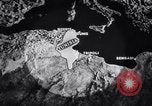
Allied soldiers in North Africa celebrate Christmas in 1942 and assemble for Roosevelt visit in January 1943
Allied Forces in North Africa during Christmas, 1942, during World War 2. Map of Tunisia. Ancient Roman ruins, including the Amphitheater of El Jem. A native plows a field. Children ride mules. Christian Cathedrals in various places. Interiors of a cathedral. At various places Allied soldiers hold Christmas Services outdoors. Camel Corps troops astride their camels. A Christmas service in front of a Curtiss P-40 aircraft displaying an American flag on its right wing and a Christian flag on its left. Scenes of children celebrating Christmas in different parts of the world, including boys throwing snowballs at each other outside a school building in the United States (Lettering above doorway of school reads "Durham Public School", possibly in Durham, NC. Graves of dead soldiers. Religious services held for the allied soldiers. British General Montgomery attends a religious service. Bells ring in churches across the world Sign reads 'A Happy Christmas'. Soldiers carry sacks. Letters brought for soldiers on a jeep. Soldiers run to get their letters. A soldier reads his letter. A soldier wakes up to find a filled stocking hung on his tent. Another soldier opens a parcel. 'Pine Grove USA' and 'Birney Cave Mincoka' written on two signs. Soldiers open parcels. Empty boxes, cups and bottles on a table. Preparation for the Christmas feast. Feathers are plucked from a turkey. Many bottles of rum in a row. Chickens are removed from an airplane. Soldiers in a chow line. A pudding on a plate is put on the table. A bowl of oranges on a table with some WAC (Womens Army Corps) service members. A sign in the background reads 'A Merry Xmas' Soldiers feed their pets. A puppy is fed. A donkey and a pig are fed. A pet monkey grooms a soldier's head. Candy is thrown to the native children. The Red Cross dispenses milk given by soldiers to native children. Soldiers go sightseeing in Egypt and observe an Egyptian magician. The Great Sphinx of Giza with the Pyramid of Khafre in the background as Allied soldiers fall off a camel they are trying to ride. Native people of Morocco in a city market area. Women pass in veils. British Soldiers play Cricket. American soldiers play baseball. A soldier plays a guitar. Another soldier views a magazine with a young woman centerfold picture. Soldiers polish uniform brass and shine shoes to prepare for assembly. Others take baths in tubs outdoors. With all troops assembled, President Roosevelt visits, riding in a jeep (while in the area for the Casablanca Conference). He is accompanied by Lieutenant General Mark Clark and General George Patton, riding in the back of the jeep. Later the President is seen sitting sideways in the jeep, holding his hat over his heart as he passes troops lined along the roadside. Secret Service agents ride behind carrying machine guns. The generals in his jeep salute as they pass the colors. Next, British Prime Minister Churchill is seen greeted by an honor guard of four British soldiers during his time in Casablanca for the Casablanca Conference. He is seen beside a gate labeled "Villa #3" which was the Villa “Mirador in the complex of Villas beside the Anfa Hotel.
Allied leaders at the Casablanca Conference in Morocco during World War II. Allied forces battle Germans in Algeria and Tunisia
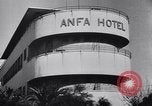
Film begins showing the Anfa Hotel in Casablanca, North Africa. Inside, Allied generals meet to plan further steps in World War 2, against the Axis powers. Charles de Gaulle and French General Henri Giraud are seen walking together at an airport. Closeup of the two. View of Allied General staff members around a table. U.S. principals include Army Chief of Staff, General George Marshall and Air Force Chief, Lieutenant General Henry H. Arnold. Views of General Dwight D. Eisenhower, Supreme Commander of Allied forces, His deputy for land forces, British Field Marshal Harold Alexander, his deputy for sea forces, British Admiral Andrew Browne Cunningham, and his deputy for air operations, British air marshal, Arthur William Tedder (1st Baron Tedder) Outdoors. President Franklin D. Roosevelt and Prime Minister Winston Churchill are seen seated, conversing. Churchill's airplane, named Commando, a very long range Consolidated Liberator II aircraft adapted for passenger transport is seen ready to take him to Tripoli to greet the victorious British 8th Army. Churchill greeting British Field Marshal Bernard Montgomery at Tripoli. Animated map shows battle lines and disposition of Allied forces along the Algiers-Tunisian front. View of German Field Marshal Erwin Rommel inspecting defenses at the Mareth line in Tunisia. Fifteen divisions of German, and 7 divisions of Italian troops entering the front lines. German Panzer IV aus d tanks moving on a dirt road. German infantry marching along a road. Seasoned German troops in camouflaged vehicles. Formation of German Focke Wulf 189 aircraft and view of one dropping bombs. General Rommel pointing to something at the front. Animated map showing the battlefront. (Narrator says German orders were to hold Tunisia at all costs.) View of Rommel, eating a sandwich as he studies document in a defensive position behind the Mareth line. German soldier using periscopic binoculars to view the front. German forces initiating an attack westward driving Allied forces back. Map show German forces advancing beyond the Kasserine pass. Rommel in a staff car, as he learns that the Allied forces have counter-attacked and are driving his forces back to the original battle lines. American infantry marching Eastward to reoccupy Kasserine Pass and beyond, past destroyed German tanks. Rommel's forces make an attack Southward toward the British 8th Army positions. View of new Tiger tank employed by the Germans. A British soldier removes the cover from their new 17 pounder anti-tank gun. View of burning Tiger tanks destroyed by the new British guns. (Narrator says 52 were left burning hulks.)
Allies force German forces almost completely out of Tunisia, North Africa, during World War II
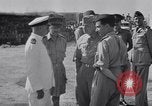
Opens with General Dwight D. Eisenhower, Supreme Commander of Allied forces conferring with his deputy for land forces, British Field Marshal Harold Alexander, his deputy for sea forces, British Admiral Andrew Browne Cunningham, and his deputy for air operations, British air marshal Arthur William Tedder, during North African campaign in World War 2 . Map illustrates Allies military plans as analogous to internal combustion engine. General Eisenhower on an airfield consulting with his British Deputy commanders. B-17 bomber in background. Eisenhower salutes the British officers as he walks away. Lieutenant General Carl Spatz, Commander of the North West African Air Force, confers with British air marshal Tedder. Major General Jimmy Doolittle briefs airmen and smiles for camera. Strategic bombers with nose art names Pluto, Yankee Doodle, Jersey Jackass, Alice the Goon, and Fancy Pants. Picture of British Air Vice Marshal, Sir H.P. Lloyd, chief of Coastal air Force. A British Avro Anson aircraft flying air cover over a convoy of Allied ships. Diagram shows how all British and American fighter aircraft and attack bombers were placed under the command of British Air Marshal Cunningham, who is seen stepping from an airplane. British Field Marshal Harold Alexander in command of all ground forces is also seen stepping from an aircraft. Both are seen at a small camp trailer that they shared in the Tunisian mountains, where they work together, at a planning table. Marshal Cunningham is seen briefing air crews in mid March, 1943. B-24 Liberator bombers fly in formation and drop bombs on German Mareth fortifications in Tunis. German anti-aircraft guns create many black flak clouds among bomber formation. View from B-24 aircraft of the bombs exploding on the ground. British Field Marshal Harold Alexander is seen walking with a member of his staff across the sands. Diagram shows planned advance of the British 8th Army. Numerous British heavy guns fire nighttime barrages against the German positions, as British infantry advance during battle. They use scaling ladders and sappers detonate charges. Soldiers carry sticks to line trenches and set up defensive fortifications. Tanks advance. Heavy rain creates problems and some armor bogs down in mud. The next morning British troops are seen in their trenches as smoke drifts across the area. British soldiers moving cautiously under fire. German Field Marshal Rommel looks through binoculars. Additional German armored units entering the area. British gunners firing field artillery and mortars. Map illustrates how 2nd New Zealand Division under Lieutenant-General Bernard C. Freyberg, swings around behind the German line. Formation of British B-26 Marauder aircraft flying over desert. British Vickers Wellington bomber in flight. Bombardier in aircraft pressing a release button and close-up view of open bomb bay door with bombs away view as each bomb is released, followed by huge explosions on ground. British mosquito bomber flying low. Bomb explodes on ground and Mosquito aircraft pulls up and away. Another Mosquito aircraft flying low on a strafing run. Tanks of 2nd New Zealand Division welcomed into El-Hamma, Tunisia, in the Battle of the Mareth line. View of South African army engineers using caterpillar tractor to build roads for Allied forces. Glimpse from rear of three British warships underway in the Mediterranean sea. Front view of a British Queen Elizabeth Class battleship underway. The battleship firing her 15-inch guns. U.S. P-38 fighter planes in formation. Glimpse of pilot in cockpit wearing leather helmet and earphones. Formation of German Junkers Ju-52 aircraft flying low over sea, carrying German troops to reinforce those in Tunisia. View of German soldiers inside the cabin of a Ju-52. Closeup of three Ju-52 transports flying very low over water. Several U.S. P-38 fighter planes attacking the transports. Pilot in one, pressing button to fire his guns. Scenes of aerial dogfight combat between U.S. Army Air Force aircraft and German Luftwaffe aircraft. Gun camera images of P-38s shooting down German transport planes. Map shows American, British, and French forces pressing Eastward against Germans. Views of battle and U.S. Lieutenant General George Patton at the front as his forces move forward during Battle of Guettar. American patrols of light tanks meet up with British patrols from their 8th Army on April 7. Views of the U.S. and British soldiers happy to meet one another and sharing cigarettes. Map shows Allied forces pushing the Germans further. Allied infantry walking into town of Enfilaville. Local families returning to their homes with all their belongings, in carts pulled by donkeys and other animals. In the town, encouraged by British troops, a group of Jewish boys remove Jewish star of David emblems from their jackets that had been used by occupying Germans to identify them as Jewish. British army doctors tending to local women and children.
Allied Forces defeat Axis forces in Tunisia during World War II
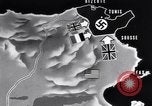
The final battle of Tunisia, North Africa during World War 2. An animated map shows Allied Forces moving on all sides pressing forward against German forces still remaining in Northern Tunisia. in World War 2. Map outlines battles of Hill 609, Longstop Hill, Goubellat Plain, and Dejebel Mansour, and Takrouna. U.S. forces move 200 miles from the south to confront German forces in the north. Views of U.S. soldiers in trucks and M3 half-tracks, and towing heavy artillery with a tractor. Views of hills where Germans are positioned, west of Tunis and Bizerte. Allied guns firing. French forces sweeping for mines and digging some up with bayonets. French General Alphonse Juin confers with his staff as they review a large map laid out on a jeep. Brief view of French infantry in the field and gunners firing artillery. German Panzer IV tanks moving to counter British attacks. German tanks and artillery firing barrages against the British. Camera pans over destroyed German armor. British 78th Division attacks Longstop Hill. A long line of British infantry moving single file up a hillside. British soldiers firing Vickers machine guns from protected positions and infantry moving uphill, carrying small arms and Bren light machine guns. British troops scaling steep hills, using ropes, as shells burst close to them. One throws a hand grenade that explodes on the hilltop. After reaching the hilltop, the infantry scamper down the other side and continue moving forward, firing their weapons. Several dead German soldiers are seen as the British troops overrun the German positions. British engineers and pioneers working with caterpillar tractors and shovels to build roads. Later, trucks are seen using a new road. In the meantime U.S. troops are seen arriving to commence their assault on Hill 609. It begins with long range artillery firing from camouflaged positions and shells exploding all over on Hill 609. It continues into the night. View of soldiers in artillery headquarters, under a tent illuminated by lanterns. Long sequence of nighttime artillery fire. Medical Corps doctors treating wounded as the nighttime artillery barrages continue. U.S. infantry digging in after taking Hill 609. View of American soldiers walking up Hill 609. View of British Field Marshal Bernard Montgomery consulting with staff officers in the field. British 8th Army commander, Lieutenant General Sir Oliver William Hargreaves Leese, looking through binoculars as he stands with staff members at the front. Scene shifts to U.S. airmen arming machine guns on a parked P-38 fighter plane. Others roughly handling bombs to be placed into U.S. bombers. Bomber with nose art of devil riding a bomb and name "Hell a Poppin." Air crews arrive by jeeps at their B-25 Mitchell bombers and others arrive at their B-17 bombers. View of B-25 number 41-13202 named "Idaho Lassie" of the 321st BG, 445th BS, 12th Air Force. Engines running on bombers and on a British spitfire fighter plane. Formations of Allied aircraft, including B-24 liberator bombers, Martin B-26 Marauder bombers, British spitfire fighters, and B-17 Flying fortress bombers. British and American armor moving forward firing guns. French artillery firing and French infantry advancing. French machine gunners in white hats. U.S. B-24 Liberator aircraft dropping bombs. German fighter planes attacking allied bomber formations. Gunners in the bombers firing at them. Gun camera view of German fighter being shot down. More views of Allied aircraft bombing and strafing. Map shows American forces reaching Bizerte, the British capturing Tunis and German forces split and defeated.
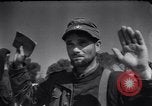
15 Divisions of German troops (266 thousand) surrender to the Allies, ending the Tunisia campaign during World War II
At beginning, the film shows German soldiers surrendering in World War 2. First they surrender in small groups and then in increasingly larger numbers. Eventually whole divisions are seen surrendering, some even marching behind their Division brass band. They are being interned in outdoor areas under guard. A U.S. Military policemen monitors some and collects identifications papers from them as they enter a barbed wire enclosure. Numerous views of the German soldiers, some arriving in full open railroad cars. German commander of the Army Group Africa, Generaloberst (Colonel-General) Hans-Jürgen von Arnim, followed by British officers, steps from a U.S. C-47 transport airplane and salutes. (He was captured by the British Indian Army’s 4th Infantry Division). Aerial view of the wheat field where the German prisoners were interned for processing. Views of numerous destroyed German aircraft, artillery, fuel trucks, tanks, and other war materiel. A pile of German steel helmets. Closeups of German prisoners in the outdoor compound. An unidentified German General stepping from the cab of a truck, to join the other prisoners. German Colonel-General von Arnim leaving a building and standing as if waiting for a car. Series of closeup views showing soldiers from the various countries comprising the Allied forces. Allied soldiers wading through deep waters; and elsewhere in amphibious assaults, as World War 2 continues. Cheering crowds in Tunis welcoming French, Free French, and British forces occupying the city. General Eisenhower standing before Allied flags, with British Field Marshal Harold Alexander, and French General Henri Honoré Giraud, as Allied warplanes fly in formation overhead. Film ends with "V" for Victory.
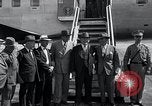
Vice President Alben Barkley and members of Congress pose near the Presidential DC-6 aircraft named the "Independence"
Vice President Alben Barkley and members of Congress, including Senator J William Fulbright of Arkansas, pose by the DC-6 Presidential aircraft, the "Independence." Vice President Barkley takes off his hat and waves. Closeup of Senator Fulbright. An officer stands nearby. Members of the party wave their hats as they board the aircraft, which then taxis out for takeoff.
CRITICALPAST.COM: About Us | Contact Us | FAQs - How to Order | License Agreement | My Account | My Lightboxes | Shopping Cart | Advanced Search | Featured Collections | Website Terms & Conditions | Privacy Policy ©2026 CriticalPast LLC.
License Agreement |
Terms & Conditions |
Privacy Policy
©2026 CriticalPast LLC.