


 Francais
 Deutsch
 Italiano
Refine Your Search
-Cebu,-Philippines stock footage and images
- Showing 1735 to 1740 of 58885 results more
more Hide
Hide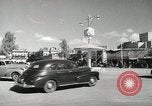
Scenes of Baghdad and environs, Iraq, circa 1942
Several cars drive past a traffic policeman, standing under a large umbrella in a circular post at the center of a road, in Baghdad, Iraq. He signals as cars pass. Workers construct new buildings in a housing development. Workers mix mortar that women carry in containers on their heads, to masons working on the buildings. A man drawing water from a river, by means of a "Sanya," a pulley arrangement using self-emptying leather bags (called dalw) hauled by donkeys walking up and down a small hill.
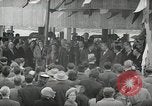
Iraq Petroleum Company (IPC) facilities post World War II
Iraqi and British officials at an event involving visitors at a facility of the Iraq Petroleum Company, following World War 2. Officials emerge from a warehouse building. One official wears sunglasses and holds a tobacco pipe. British officials accompanied by wives, walk along a boardwalk to a gangplank, where they climb aboard a ship. Change of scene shows a. street scene at a bridge where several street vendors display their wares. City buildings across the bridge, in background. A man wearing keffiyeh walks past. Camera moves to the wellhead inside an oil drilling rig, where Iraqi "roughnecks" are working with Byron Jackson Company oil drilling equipment. They insert a new section of pipe and proceed with drilling. Views up and down of the drill rig in operation. Views of other areas at the petroleum complex. Two huge pipes lying parallel. A worker climbs stairs of oil tank no. 235. Technicians work on large pieces of piping. View of a ship docked near the facility, on the Shat Al-Arab. At this point, the scene switches completely to the Persian Gulf City of Dubai and a waterfront scene dominated by Ali Bin Abi Talib mosque. (This is number 3, of three mosques by that name in the area, and is located on the creek in the old Bur Dubai part of the city.)
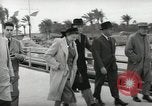
Operations at Iraq Petroleum Company (IPC) facility after World War II
Brief glimpse of British visitors walking toward a ship, after a postwar visit to an IPC facility in Iraq. Scene shifts to an oil derrick and drilling rig rising above oil storage tanks at a sandy site. Camera pans up the derrick. Change of scene shows gathering of British people with IPC officials at some kind of event. Next, a group of officials is seen briefly, outside a facility warehouse. Two men greet each other. A military officer stands nearby. Camera then jumps to inside the oil rig, shown earlier where Iraqi "roughnecks" wrestle pipe, insert a new section, and continue drilling. View of worker walking among oil tanks at the facility. Views of natural gas compressors; large transmission pipes; and a worker closing one, in a set of valves at the site. Broad view from the derrick, showing supplies and equipment laid out in the sand and a vista of miles, with distant structures including (possibly) worker housing and support facilities.
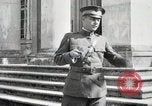
General Roy Hoffman and aides at Division headquarters, Maffrecourt, France.
U.S. Army Major General Roy Hoffman, Commander, U.S. 93rd Infantry Division, with staff officers at Division headquarters in Maffrecourt, France during World War 1. They discuss a document, and pose. for a photograph.
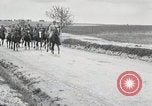
African American soldiers of 369th Infantry, 93rd Division, U.S. Army marching on road in Maffrecourt, France, during World War I
African American soldiers of the 369th Infantry Regiment, 93rd Division ("Harlem Hellfighters"), United States Army, march in formation along a road in Maffrecourt, France, in World War 1. They are led by mounted officers, and a brass band (likely under the direction of band leader Lt. James Reese Europe). Unit leaders salute as they pass the camera. Mules pull several artillery pieces and caissons. Several medics march with stretchers. The U.S. flag is the only one carried by the color guard. No unit colors are seen. The 369th Infantry soldiers wear French helmets because they were assigned to the French Army during the war, as the U.S. Army (American Expeditionary Forces) did not permit African Soldiers in combat.
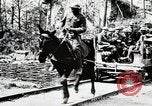
369th Infantry, 93rd Division United States Army African American soldiers occupy trenches and fire at Maffrecourt, France.
369th Infantry Regiment, 93rd Division United States Army African American soldiers occupy trenches near Maffrecourt, France during World War 1. They were also nicknamed the Harlem Hellfighters. Troops fire from trenches. Though American, the 369th Infantry soldiers are wearing French helmets because the U.S. Army (American Expeditionary Forces) did not permit African Soldiers in combat, so the unit was assigned to the French Army during the war. In one scene the African American soldiers are seen putting on gas masks during a gas attack drill. Soldier shows a document to Colonel. He ties a message to the carrier pigeon and releases it. African American soldiers rush from a trench toward the front with their rifles.
CRITICALPAST.COM: About Us | Contact Us | FAQs - How to Order | License Agreement | My Account | My Lightboxes | Shopping Cart | Advanced Search | Featured Collections | Website Terms & Conditions | Privacy Policy ©2026 CriticalPast LLC.
License Agreement |
Terms & Conditions |
Privacy Policy
©2026 CriticalPast LLC.