


 Francais
 Deutsch
 Italiano
Refine Your Search
-Cebu,-Philippines stock footage and images
- Showing 20935 to 20940 of 58886 results more
more Hide
Hide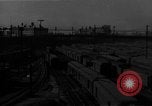
Railroad yard in Queens, New York. Locomotives and trains moving. Crowded streets of Times Square, New York City.
Locomotives move on railroad tracks in railroad yard in Queens, New York City, United States. Smoke rises up from chimneys. Manhattan skyscrapers seen in distance. Views of crowded street in Times Square, New York City. Street cars and taxis move through streets filled with pedestrians. A truck carries goods. Advertisements and marquees at Times Square theaters include "My Darling Clementine" as well as Katherine Hepburn, Robert Taylor, and Robert Mitchum in "Undercurrent", Bette Davis, Paul Henreid, and Claude Rains in "Deception", and Rex Harrison and Lili Palmer in "Notorious Gentleman"
Worldwide operations of United States Coast Guard in World War 2
Overseas activities of United States Coast Guard in World War II. U.S. Landing Craft Infantry, LCI(L) 617, part of LCI Flotilla 22 in World War 2. She is seen underway in rough waters of the Pacific ocean during 1945. Coast Guardsman ordered to Battle stations. A Coast Guardsman observes approaching enemy aircraft through binoculars. Coast guard gunner fires Antiaircraft guns using foot trigger. Enemy aircraft crashes in ocean. A Coast Guardsman signals using semaphore flags. Beachhead supply operations. Coast Guard Picket Boat, CG-42022, seen patrolling around U.S. transport ships in a Persian port, while they carry lend lease supplies to the Soviet Union. Coast Guard combat patrol in jungle using canines (dogs). The Cactus (A) Class 180 foot buoy tender, USCGC Tupelo placing a buoy at sea. Releasing a weather balloon. A Coast Guard wooden 83 foot cutter ("83 footer"). Loading a Coast Guard B-24 aircraft on Guam. The plane takes off. Invasion task force of U.S. warships underway. Coast Guard crews at various duty stations aboard their ships during the war. The former luxury ocean liner, SS Manhattan underway, her decks crowded with troops, following her conversion into the U.S.Coast Guard-manned USS Wakefield (AP-21). U.S. Navy attack transport USS Arthur Middleton (APA-25) at sea in the Pacific. Coast Guard operating transport ships unloading cargo for Allied invasion forces and running inter-island shipping service in the Pacific, during World War II.Landing Ship Tank (LST-788) arriving at the beach next to Landing Ship Medium, LSM-242, on Iwo Jima. A Landing Vehicle Tracked (LVT) being driven off LST-760. USS LCI(L)-87, Flagship of LCI Flotilla 10. Her Captain, M. E. Imlay, USCG, is seen on her bridge, before departing from England for the Normandy invasion. U.S. Landing Craft Infantry, LCI(L)-668 at beach and troops wading ashore.
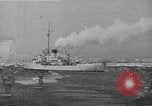
United States Coast Guard in Greenland during World War II
Overseas activities of U.S. Coast Guard in World War 2. View from ship bow in heavy North Atlantic seas. A map shows Greenland. U.S. Coast Guard Coast Guard Cutter in Greenland waters with mountains and snow behind. U.S. Coast Guard officers conferring with Danish Naval officer. James K. Penfield, first United States consul in Greenland, being brought ashore by U.S. Coast Guard officers. Coast Guardsmen supplying food and supplies to natives of Greenland. Views of Greenland's Cryolite mine with men rappelling down its sides. Coast Guardsmen, released from U.S. service, and employed as armed guards, by the Government of Greenland, are seen protecting the Cryolite mine. Topographic survey of Greenland being conducted by Coast Guard personnel. Coast Guard two-place Bi-wing float plane is seen at rest in harbor and then later taking off.. U.S. Coast Guardsmen install, and test fire,a 3 inch gun, to protect a Greenland harbor. Coast guardsmen capture and occupy radio stations planted by Germans in Greenland. Newspaper from December 14,1944 describes how three German Arctic expeditions were broken up by the U.S. Coast Guard. A ship is torpedoed and burns in convoy of ships in North Atlantic Captain of another ship observes through binoculars. Several crew members are rescued from a raft. Coast Guard Cutter fires depth charges. Ships fire deck guns and antiaircraft guns against enemy. Destroyer Escort Savage (DE-386) at sea, manned by U.S. Coast Guard crew.. Admiral Russell R. Waesche decorates Coast Guardsmen. Coast Guard Cutter "Hamilton", the first American warship torpedoed in the Atlantic in WWII. Commandant Russell Waesche gives a statement in Washington D.C.
Operations of United States Coast Guard at Shannon Islands in Greenland during World War II
U.S. Coast Guard Cutters on patrol in waters off Greenland in World War 2. Views of icebergs. The cutter 'Northland' trapped in pack ice. A party of crew members drag a depth bomb across the ice to explode and clear the way ahead. Off the coast of Shannon Island, American guns fire at a German trawler. Coast Guardsmen launch an amphibious assault against Shannon Island, and capture Germans at an outpost on the Greenland site. High powered radio equipment and weather instruments captured from weather stations. Small boats carry German prisoners -- the crew of German trawler captured by the U.S. Coast Guard.
Amphibious forces carried by U.S. Coast Guard, at Guadalcanal and in North Africa during World War II
United States Coast Guard operations in World War 2. Underwater views of ship's anchors being weighed, Convoy of U.S. ships in Pacific Theater, in July, 1942. The Attack Transport, USS Hunter Liggett underway, with crews doing amphibious training. Members of the 1st Marine Division aboard USS Hunter Liggett with Coast Guardsmen. Officers confer aboard vessel. Marines read books on ship. August 7, 1942, U.S. Marines begin amphibious assault against Japanese on Guadalcanal. Naval guns bombard Guadalcanal Island. Marines descend from the USS Hunter Liggett, on nets and enter LCVPs (Higgins boats) operated by Coast Guardsmen, to assault the island. Marines hit the beach from the boats. Marines firing small howitzers and advancing on the island. November 7, 1942, convoy of eight hundred ships en route to North Africa. Warships bombard the shore. An officer observes through binoculars. British and American troops descend on nets into LCVPs from Attack transports: USS Joseph T. Dickman (APA-13);USS Leonard Wood (APA-12); and USS Samuel Chase (APA-26). Troops hit the beaches of North Africa, under fire.
"Operation Husky" - the invasion of Sicily in World War II.
July 10, 1943, U.S. invades Sicily in Italy. Fleet of warships underway. Navy bombardment of Sicily. Coast Guardsman observes through binoculars. Coast Guardsmen carry troops and supplies in LCVPs (Higgins Boats). LST-356 approaching Blue Beach 2, in the "Cent" area on July 10, 1943, loaded with tanks and other vehicles. A beach master signals with semaphore flags. Troops landing from assault boats. Concentrated enemy air attacks destroy U.S. boats and ships. Enemy aircraft in flight. U.S. troops firing. A map shows Italy. September 9, 1943, amphibious assault on Anzio, Italy. Naval bombardment, followed by troop assault on the beaches.
CRITICALPAST.COM: About Us | Contact Us | FAQs - How to Order | License Agreement | My Account | My Lightboxes | Shopping Cart | Advanced Search | Featured Collections | Website Terms & Conditions | Privacy Policy ©2026 CriticalPast LLC.
License Agreement |
Terms & Conditions |
Privacy Policy
©2026 CriticalPast LLC.