


 Francais
 Deutsch
 Italiano
Refine Your Search
-Cebu,-Philippines stock footage and images
- Showing 21121 to 21126 of 58886 results more
more Hide
Hide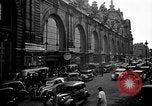
Travelers crowd in front of Gare d'Orsay station trying to leave Paris; Champ Elysees lights at night
Departing passengers and luggage crowd sidewalk outside of Gare d'Orsay train station in Paris, shortly before Battle of France in World War 2. Automobiles jam the street in front of the station. Travelers include very old people and families. Two women carry babies. View of the Champ Elysees at night. Cars and lights in shops.
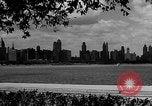
Places in Chicago. Chicago landmarks, skyscrapers, and skyline. Tribune Tower. Traffic on South Michigan. Cattle in stockyards.
Lakefront view of Chicago skyline. Paved roads and garden in the foreground. Crowds of pedestrians on Chicago street. Cattle being herded in Chicago stock yards. Visitor on bridge looks at Tribune Tower. View from car driving along city street. Cars parked "bumper to bumper" on street, under sign reading: 'No parking at any time'. Store front signs read: 'International Barber College' and 'Premier Laundry'. Nighttime street scenes with neon signs for Jim Saine's Restaurant and for Tradewinds Restaurant and Lounge. Visitor dancing with a woman in a dance club or dance hall. A man tries to "cut in." Traffic on South Michigan Avenue with many vintage 1940s and 1950s cars and automobiles. Visitor interrupts two men talking on the sidewalk, and offends them so they walk away. The Visitor rows a boat, alone, in a lake.
Causes of indicator jamming in military radio sets; also civilian couple listening to1940s console radio
Military training film depicts the causes of indicator jamming on the radio set, SCR-268. A ship underway. Newspaper headlines read about the German battleships which escaped British Army because their radio signals were jammed. Soldiers talk on radio. During Jamming weird pattern start appearing on the monitor screen. Sensitivity knob of the radio. Signs of jamming are seen. Scene changes to a civilian couple in a family living room sitting on a couch beside a console radio. They listen to the radio and talk. The man gets up and adjusts the tuning dial and the volume dial on the radio. The couple switches off radio because of interference in the radio broadcast. An animated diagram explains the jamming. Radio waves bounce back from the target. Target sends radio energy longer then those that bounce back. Jamming takes place. Jamming can be improved by making adjustments. (World War II period).
American troops welcomed in France, but suffer casualties when Germans counterattack in December 1944.
American troops welcomed in village, by Nuns and children, and in Paris, France, in August, 1944 during liberation of Paris. December 16, 1944, German counterattack causes American casualties. Dead and wounded shown being picked up on stretchers. American troops advancing across fields. Tanks and burning buildings. Americans fight in streets of town and from trenches, with snow on ground. Chaplain prays over body of fallen American soldier. More views of U.S. wounded on stretchers. German officers led by General Manteuffel planning actions. German home front civilian guards (Volkssturm national militia) seen on parade carrying rifles and Panzerfaust, dressed in civilian clothing. German Tiger II tanks ("King Tiger") of s.Pz.Abt.503 parade in a training area. German SS troops advance during the Battle of the Bulge. German V1 Flying bomb "buzz bomb" shown in flight. Smoke rises from buzz bomb strike on town. (World War II period).
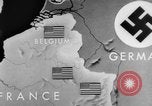
American advance in France and Belgium is stopped by German counterattack in December 1944. U.S. loses 78 thousand troops (WW2)
German forces smash into the U.S. First Army positions along a 45-mile front and advance deep into Luxemburg and Belgium, in Battle of the Bulge during World War II. Animated maps show Germany, France, and Belgium. German Panzer V "Panther" tank with several German soldiers riding on it approaches on road behind a large tree. German tanks, tank destroyers, troops, and artillery in transport on roads and then seen in action against American Army positions. Vehicles of a United States convoy wrecked and burning along road, as German troops advance past the burning vehicles. Fire and smoke rise from U.S. tanks, Jeeps, and trucks. U.S. soldiers captured as prisoner of war are marched on a town road. Frozen dead bodies of U.S. soldiers, victims of the Malmedy massacre, some with hands and feet tied, being placed army truck. Dead bodies of Belgian civilians being placed in large common grave. View of German officer ordering a firing squad to shoot. German troops smoke American cigarettes taken from dead U.S. troops. American troops in retreat and burning and destroying war materiel that could not be brought with them. American defenders firing artillery, including antiaircraft guns fired level, as antitank weapons. Skies streaked with contrails and dogfights between American and German airplanes. American aircraft bombing German positions after weather clears. American troops patrol in snow covered wooded areas. General Eisenhower talks with soldiers. German soldiers advancing. Newspaper headline reads: "Russians Smash Last Nazi Line." Another newspaper headline reads: "40 Jap Ships Sunk." Another reads: "3rd Army Deep in Germany." Narrator cautions against complacency, reminding of 78 thousand American soldiers lost during the Christmas holiday, in 1944. Views of dead U.S. Army soldiers following battles with Germans. Narrator offers closing public service war propaganda message: "If you have a War Job, Stick to it" and " If you Haven't, Get one!"
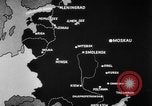
Spanish troops under German Army attack Russia during winter. Spanish troops and a General are decorated by Germany
Animated maps show locations in Russia. Cold and snow force Spanish Blue Division troops under German Army (250. Infanterie-Division) use dynamite for digging defensive positions near Leningrad. They explode dynamite and make room for gun emplacements. Blue Division soldiers fashion trenches in the snow and erect crude shelters of wood. After firing artillery, an officer looks through periscopic sighting binoculars. The troops engage in battle over snow covered field, pulling artillery piece. Chimney of Soviet blockhouse is hit. Spanish troops are decorated by German officials. German cavalry General Georg Lindemann presents Knight's Cross of the Iron Cross to Spanish commander, General Agustín Muñoz Grandes. (World War II period).
CRITICALPAST.COM: About Us | Contact Us | FAQs - How to Order | License Agreement | My Account | My Lightboxes | Shopping Cart | Advanced Search | Featured Collections | Website Terms & Conditions | Privacy Policy ©2026 CriticalPast LLC.
License Agreement |
Terms & Conditions |
Privacy Policy
©2026 CriticalPast LLC.